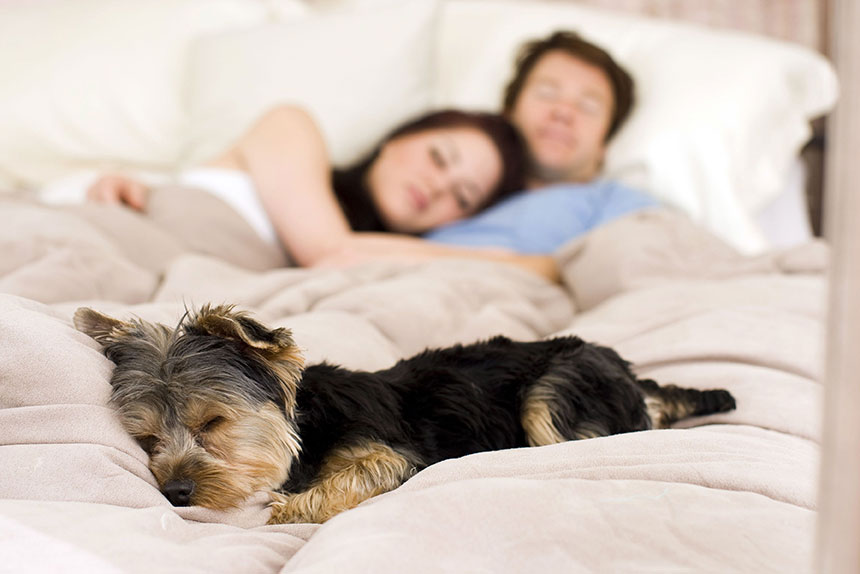
Is it Bad to Let Your Pets Sleep in Your Bed?

Pets Sleep in Bed

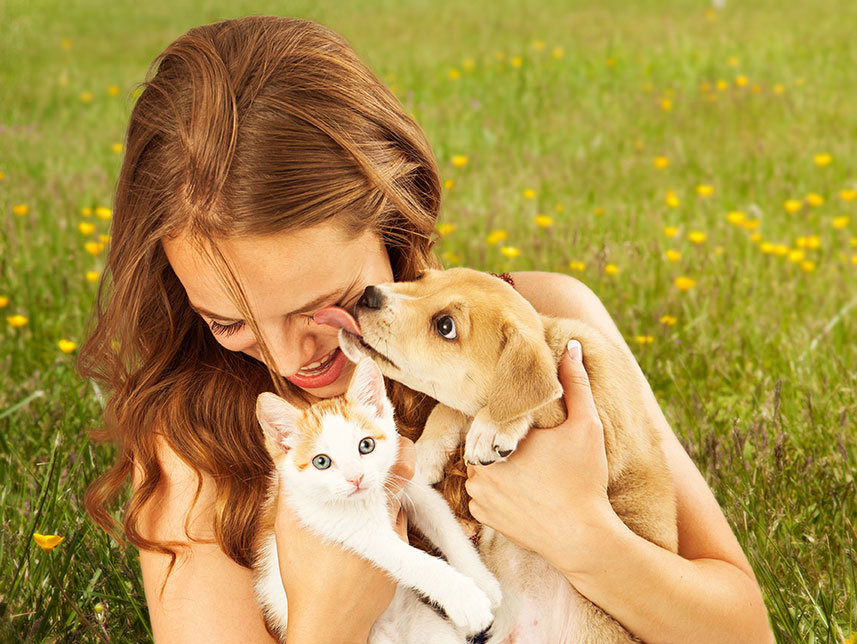
The great debate…do you let your pets sleep in your bed?

According to the 2021–2022 American Pet Products Association National Pet Owners Survey, 43 percent of pet dogs in the United States and 49 percent of pet cats sleep on their owner’s bed

Is it healthy, for you or your pet, to share a bed? There are a few reasons why it may not be, including allergies and asthma. If a pet owner experiences breathing problems, it’s probably a good idea to keep Fluffy off the bed. But most sources agree that, barring those major problems, there are no health risks to sleeping with your pets. In fact, there may be some major benefits of doing so.

Emotional Benefits

Owning a pet comes with many emotional benefits. It’s a commonly known fact that pets reduce stress, anxiety, and loneliness, especially among seniors or people who suffer from depression and other mental illnesses. Allowing your dog or cat to snuggle in bed, or even simply knowing that they are nearby, can be one way that they help reduce anxiety.

Additionally, dogs often provide a sense of safety for many owners. Alert dogs that will bark in the event that something happens make owners feel safer when they drift off to sleep.

Pet Health

Let’s face it, our pets love to be spoiled. Sleeping on a cushy bed feels good for them just as it does us, and who doesn’t want to spoil their pets? But the benefits for pets goes deeper than a simple bit of spoiling. Dogs, and to a certain extent, cats, are pack animals. Their brains are hardwired to seek the company and comfort of their pack, and that means you. Many pets feel separation anxiety when separated from their owners for too long. Knowing that you are nearby can reduce your pet’s stress, and allow them to get a good night’s sleep as well.

Potential Problems

There are a few obstacles that pet owners often face when co-sleeping with their pets. While these aren’t necessarily deal breakers, they are things to consider before you get your pet into an unbreakable habit.

While pets are warm and cozy, which may help you sleep, they can also be demanding bed mates. Dogs can snore, kick, steal covers, and take up more than their fair share of a bed. Cats have been known to “steal” air by sleeping near a child’s mouth, and to wake owner’s up in less than pleasant ways.

If your pet is used to coming to bed with just you, your spouse or partner needs to be on same page. Your pet may not understand why the door is closed on them while you and your partner enjoy some alone time. Some owners give their pets a treat, or train their pets to be equally happy sleeping with children on nights when they want to be alone.

If you want to train an animal to stay out of bed after they’ve learned that it’s okay, you’ll probably be facing many nights of distraction. Kennel training is one way to help an animal learn to love a new safe space; try putting the kennel in your room at first, until they learn to sleep on their own. Then move the kennel into a new space gradually.

Rest assured that no matter what you prefer, you won’t be harming either yourself or your pets if you do choose to cuddle up after a long day. 

What are your sleeping habits with your pets?

SaveSave

Secondhand Smoke is Bad for Your Pet


Most people know that secondhand smoke is bad for children or other adults nearby. In fact, the Center for Disease Control estimates that since 1964, nearly 2.5 million nonsmokers have died from health problems aggravated or caused by secondhand smoke. Those are staggering statistics that are hard for many smokers to face when they consider the health of their family or friends. But did you know that secondhand smoke is bad for your beloved pet as well?

What Counts as Secondhand Smoke

Before you can understand how secondhand smoke harms your pets, it’s important to understand what counts as secondhand smoke. Any smoke that comes from a tobacco product, such as cigarettes, pipes, or cigars counts. This include smoke that has been exhaled by a smoker.

Every cigarette creates more than 7,000 chemicals when it is burned, and about 70 of those are known to cause cancer. Many more are toxins that can affect health in other ways. Ammonia, arsenic, carbon monoxide, lead, methanol, and even formaldehyde are all toxins that are released when a cigarette burns.

Smoke in the environment can stay on fur and skin long after the smell has left the air. Animal fur is very absorbent, meaning that secondhand smoke can linger around their breathing space for days after being exposed.

Secondhand Smoke and Cats

Secondhand smoke is particularly dangerous for cats for one major reason: the way they groom. As cats clean themselves, they’ll lick and ingest any secondhand smoke lingering on their fur, which can lead to mouth cancer and lymph nodes. Remember that our pets are much smaller than we are; it takes a significantly lower amount of the toxins in cigarettes to affect them the way a lifetime of smoking would us.

One study showed that cats owned by one-pack-per-day smokers are more than three times as likely to develop lymphoma than a cat living in a nonsmoking home. And another found that any cat who is exposed to even a single cigarette every day is four times as likely to develop one of the most common types of oral cancers in cats.

Secondhand Smoke and Dogs

Dogs can also develop cancers of various sorts when exposed to secondhand smoke, as well as respiratory diseases like asthma and bronchitis. Studies have shown that dogs with long muzzles have a 250% higher chance of developing cancer in their nasal passages when they live with smokers than with nonsmokers. And dogs with short muzzles, like bulldogs, are more likely to develop lung cancer. Short-muzzled dogs are already at a higher risk for asthma and breathing problems; living with smokers makes it nearly impossible for these dogs to avoid developing issues.

How to Fix it

While some pet owners may think that simply smoking outside, or only in the car, is an easy way to solve this issue, that is not entirely true. Smoke travels on clothing, in hair, and in through windows and doors. When your pets cuddle or brush against you, their fur will pick up at least five to seven times as much environmental smoke residue as pets owned by nonsmokers. Vaping also isn’t an easy solution. The chemicals in many vape solutions is made up of chemicals with similar properties to ingredients in antifreeze, which can be deadly to pets when licked or ingested.

In fact, the only real way to save your pet’s life from the deadly side effects of secondhand smoke is to not expose them to it in the first place. The best option for both of you is to quit smoking altogether; don’t allow friends or family to smoke in your home; and avoid areas where smoking is allowed.

April is Prevention of Cruelty to Animals Month

Chances are, you’ve flipped through that Sarah McLachlan commercial that tugs at heartstrings with images of abused animals living in shelters or on the streets. While it’s difficult to see such things, it’s worth taking a few moments to talk about the issues facing abandoned and abused animals. April is the official Prevention of Cruelty to Animals Month, so what better time is there to consider what you may be able to do to help?

Animal Cruelty Facts

Nearly every type of animal that can be abused for human gain is abused, according to a huge database of statistics gathered by hundreds of reputable organizations around the world. Some of the most striking are related to man’s best friend, dogs. Dogfighting still occurs in many communities throughout the United States, where dogs are bred and trained to fight, and then pitted against each other for the amusement of their owners. Puppy mills churn out dogs for commercial sales; the stress on female breeding dogs often results in puppies that are diseased and disabled. In fact, dogs that are bred specifically for racing, like greyhounds, are often killed as puppies or young dogs, because they do not meet certain criteria for a good racer.

The animals that we rely on for food are mistreated in other ways. The average American eats more than 50 pounds of poultry each year, according to the Department of Agriculture. Chickens, which make up a large portion of this number, are bred in such a way that they cannot walk or move about easily. They often have their beaks “trimmed” in order to prevent aggressive behaviors. The fur trade is yet another way that animals are abused, as well as environments like the circus and rodeos. In fact, every single major circus that uses animals in their shows has violated the United States Animal Welfare standards at least once. More than one million animals, including dogs and cats, are killed each year in laboratory experiments.

Reporting Animal Cruelty

Clearly, animal welfare has a long way to go before we can truly say that we’ve made progress. While the arguments for animals that are largely for food and medicinal testing can get heated and controversial, no one can deny that the way our companion animals (such as dogs and cats) are often treated is wrong. One of the best ways you can help is by reporting animal cruelty when you see it.

Animal abuse is illegal in every single state. If anyone reports possible animal cruelty, authorities must investigate. Animal abuse doesn’t always appear as blatantly as a starved or beaten animal. There are an estimated 2,000 new cases of animal hoarding every year in the United States alone, which amounts to nearly 250,000 animals living in horrible conditions.

If you need to report an instance of animal abuse, it’s important to document as many details as you can. Watch for chained animals that don’t have access to water or shelter from extreme weather; animals that are obviously uncared for, with visible ribs or wounds; or properties with far too many animals.

Other Ways to Help

There are many other ways that you can help. Volunteer at your local shelter, or consider being a foster family to help relieve crowding in shelters. Support legislature that stops animal abusers, and above all, teach your children to be kind to animals. There are many studies that promote the idea that animal abuse is a learned behavior from a young age. Model compassion for your children, and you’ll be helping animals have brighter futures.

SaveSave

Basic Dog Obedience Tips

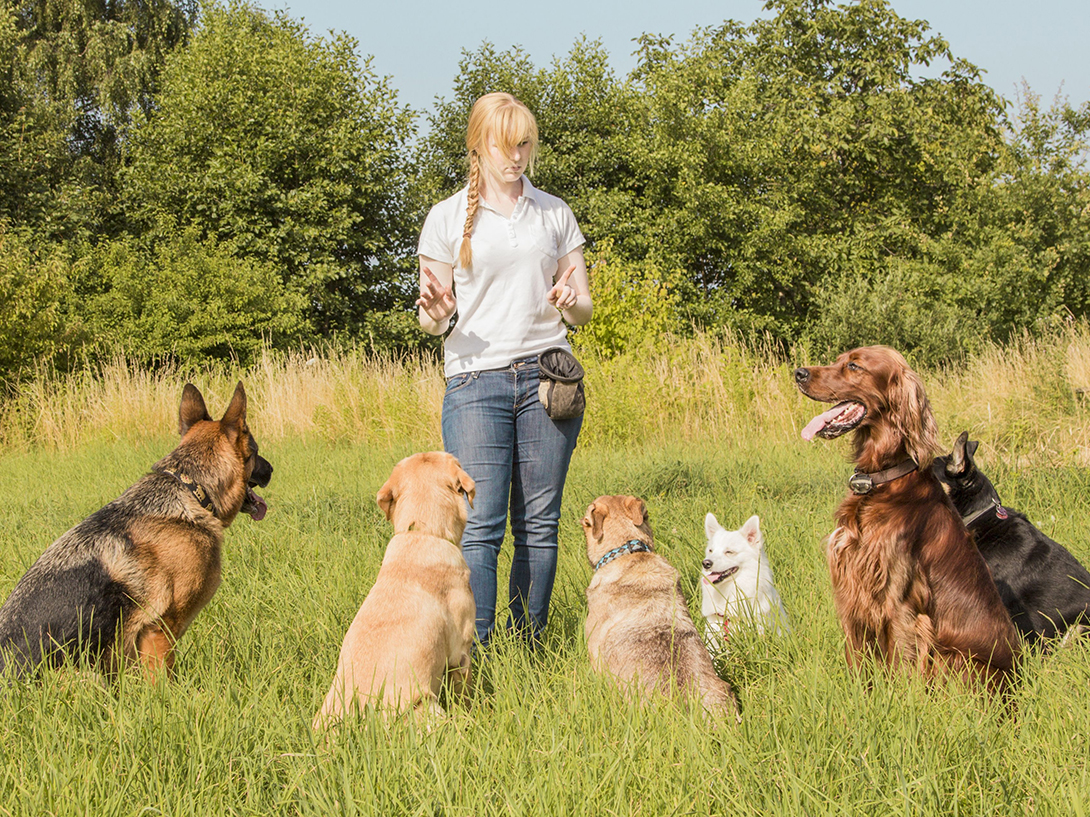
One of the best ways to teach your dog basic obedience is to take him or her to a training class. Most dog clubs offer them, and they’re a great way to train your dog while socializing him or her as well. You’ll probably even make some new friends.

Now, we have to point out that not everyone has the ability to commit to regular dog classes, and if that’s the case, you can always train your dog at home on your own time.  You can teach your dog basic obedience tips and commands at home in order to be sure that he or she behaves properly when out in public.

The Importance of a Mannerly Dog

You know the importance of good manners. They’re every bit as important for dogs as they are for people. You know how it is with people who don’t have good manners – they are not wanted in social situations, and they may find themselves left out of gatherings due to bad manners.

It’s the same with dogs. An unmannerly dog, one who pulls, barks, jumps, grabs hands or otherwise misbehaves is not going to be welcome among civilized company. Additionally, if your dog is poorly trained, he or she could, simply stated, get you evicted.

Easy Training

It’s not hard to teach your dog basic obedience. Sit, stay, down and come are very basic commands that are easily taught and reinforced, and once they are taught, you will have a well-behave dog who will be welcome in virtually any social situation.

Catch Him Doing Something Right

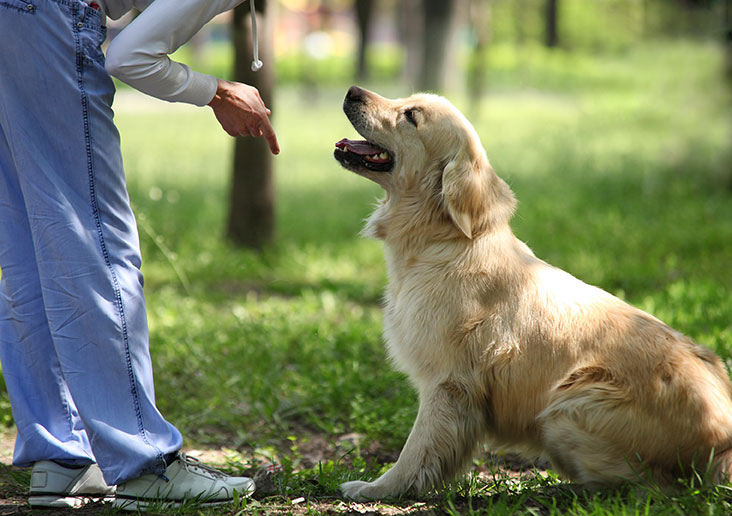
With dog training, timing is everything. As soon as your dog does what you want, reward him or her, either with words of praise or a treat. For “sit,” simply push your dog’s backside down to the floor, and once that butt is solidly on the floor, deliver praise and perhaps a treat. Your dog will immediately know that he or she has done the right thing, and will want to do it over and over.

Down

Down works the same way. Push down on the hindquarters, and then on the shoulders. When the dog gets it right, the dog gets a reward.

Stay

Tell your dog to sit. He or she already knows that. Now, hold out a treat, but don’t give it. If the dog moves toward the treat, offer a firm “No.” Then reiterate, “Stay.” The dog is going to want the treat desperately, but don’t give it until the “Stay” command has been firmly reinforced.

Basic Training Tips

Always be firm in training, but be kind. Don’t expect too much of your dog. He or she wants to please you, but has the attention span of about a two-year-old child. Don’t forget that.

Also, remember to take your training sessions out to various locations in your house. If you do it in just one place, your dog may think, “I have to do this in the kitchen… but nowhere else.”

If you work daily with your training sessions, eventually your dog will do what you want, everywhere, all the time. Therefore, start with basic obedience training and then move on to more complex training. Your dog will get the idea quickly, and you will end up with a good canine citizen who can move on to more complex training.

The Final Word

The key to good dog training is consistency and caring. Remember that you dog wants to please you, and structure your training program accordingly. With kindness and consistency, you can create a good canine citizen who will fit seamlessly into your neighborhood.

SaveSave

Is Your Dog a Fashionista?

You love to dress up your pet, don’t you?


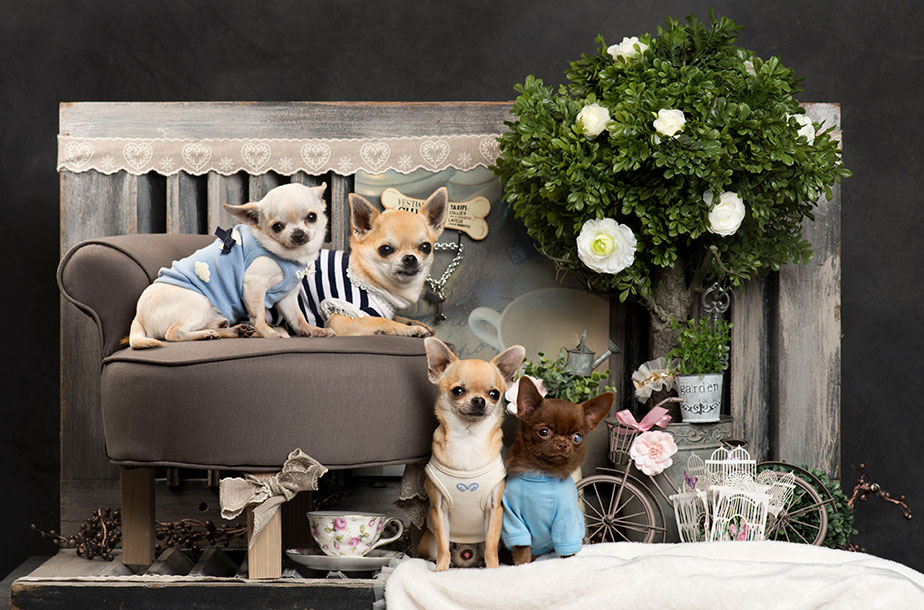
Maybe it’s Halloween and you can’t resist the cute pet costumes. Or maybe it’s Christmas, and you just love the way your little buddy looks in his light-up reindeer antlers. Or, you could just be a total fashionista, and want your pet to follow your lead. Whatever the case, there are tons of ways to dress up your best buddy.

Every year, new trends come out in both human and pet fashion. You hear that “Pink is the new black,” and that hemlines are going up or down, and that hats are in or out, and… well, you get the idea. You want to be on top of the trends, and you want your pet to be stylish as well. So, what’s new for this year?

Patterns and Textiles

This year, as was the case in 2015, contrasting textiles and patterns are at the top of the trends. You might want to mix plaids with polka dots, stripes with paisleys, wool with cotton, or any other mix of patterns and textiles. There really isn’t all that much that isn’t trendy, for both you and your pet. This is the year that you can mix and match to your heart’s content.

What’s Out

There are a few styles, though, that are definitely out and not likely to come back. Bling, for instance, is dead. You will no longer be seeing clothing embellished with faux gemstones the way they were last year.

What’s In

The trendy colors for the coming year are going to be soft and muted, or classic. Black is back. For that matter, black has ALWAYS been back, but this year, you will see it accented in tones of silver, royal blue, and mauve for the winter, and yellow and orange for spring.

Accessories

This year, you won’t see much in the way of scarves, hats, or other non-essentials. Instead, you will see jackets and boots making fashion waves.

For dogs, you can expect to see new, innovative collars with LED lighting – it only makes sense. Not only does it jazz up your dog’s outfit, it makes him or her easier to see if a “walkabout” seems like a good idea. Let’s face it, no matter how vigilant you are about looking after your dog, sooner or later, you’re going to end up with an escapee – and an LED collar is remarkably visible. They’re not just fashionable, they’re practical.

What the Stylish Dog Is Wearing

So, will people continue to dress their dogs fashionably in 2016? Certainly. In fact, dog fashion is likely to become a part of your everyday life. And designers will continue to create fashions for dogs.

Perhaps having a fashionable dog isn’t all that important to you. If it is, though, then for many people, if their dog is warm and comfortable, that’s all that really matters. But if you care about how your dog looks when you’re out taking walks, then you might want to consider what’s fashionable these days, and what is going to look best on your dog.

The Final Word

You like to look good and probably you like to have your dog look good as well. There are any number of outfits and accessories that can make your best friend stand out in the canine crowd, so why not consider dressing your dog up? It’s kind of a fun thing to do, even if you don’t take it all that seriously, so why not pick out a few great outfits and accessories for your best friend?

Some of our favorite Dog Fashion stores:

Dogo
Ruffwear
Yoyo Pet Fashion

Pet Friendly Vacation Spots

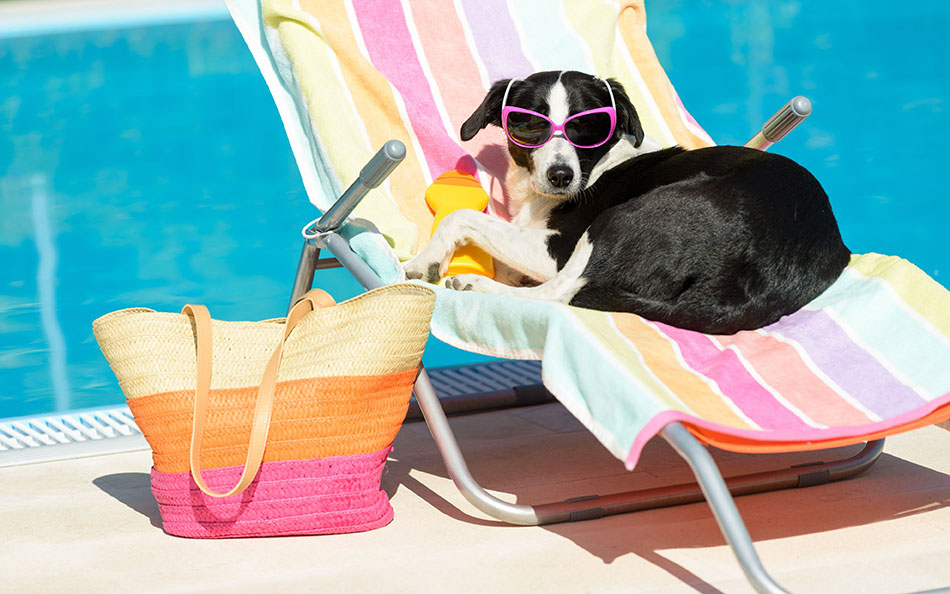
So, you want to go on vacation with your pet? That’s great – we don’t really much like people don’t want to leave your dog at home. However, you know that not all vacation spots are pet-friendly, so, where are you and your dog going to go on vacation?

Sonoma Valley, California

You will begin on the west coast of California, with its lovely vineyards. There are over 50 wineries in Sonoma, and they are almost all dog friendly. You can sample the harvests while wandering about with your dog. At the end of the day, you can visit any of a number of restaurants where dogs are welcome. They can sit next to your table, or even choose from their own menu.

Fort Collins, Colorado

The big attraction in Fort Collins is the huge number of breweries. You can sample local craft beers, and relax on patios where our dog will be welcome. At most breweries, you can even bring your furry friend inside the tasting rooms. Remember, though, it’s a very bad idea to allow a dog to consume alcohol.

Austin, Texas

There’s no such thing as a Texan who doesn’t love dogs. That means that in Austin, you and your best buddy can go wherever you like. You do have to behave yourselves, though. If your dog promises that you will behave, you can enjoy all the sights and sounds of this glorious city.

Chatanooga, Tennessee

Can you afford to board the Chattanooga ChooChoo? Sorry, we just couldn’t resist. Seriously, Chattanooga offers so much for you and your dog, including the Chickamauga Creek Pocket Wilderness trail. It’s a full 10 miles, but don’t worry about getting too warm – you can always take a dip in the creek, you and your dog together.

SaveSave

Biggest Mistakes You Make When Training Your Dog

Dog Training

Dogs have been companions for humans for many thousands of years. You’d think we’d have the process of training them down pat, but alas most people make some fundamental errors in their efforts to teach their pup how to be a good citizen. This can cause cracks in the bond between dog and owner, as well as cause you a lot of frustration and irritation.

Here are some basic mistakes and how to correct them.

Too Much Time Between Sessions

Training is not a simple matter of “set it and forget it”. Even after you’ve gotten your pooch to learn basic good behavior and maybe a few tricks like shake and sit, you can’t just let the whole thing go. Use commands, praise, and rewards consistently and regularly in order to keep your dog’s memory sharp and his behavior in line. Once in a while change it up, teaching something new, to keep him alert and motivated.

Using Emotion as a Training Tool

Just as with human children, it’s a bad idea to react strongly and emotionally to your pup messing up. Anger, yelling, and outbursts will not work to teach your dog how to behave properly, if anything they make matters worse by scaring him. Use a calm, neutral demeanor, and if he’s not getting the command right away, then just back up and repeat it until he does. Be confident and in charge, but not bullying. The same goes for praise – calm, positive reinforcement is more effective than over-the-top freaking out when he does something right.

Inconsistency

If you let your beloved pet sit on the couch with you one day but not the next, he will become confused and have no idea what the heck you actually want from him. Likewise, when teaching commands, you need to stick to one training method and use that technique, in the proper order, every time you work with him. Make your reactions calm and predictable so that he knows what to expect, rather than being unsure of whether you’re going to fly off the handle one day and stay quiet the next when he doesn’t obey.

Repeating Commands

We’ve all done it – our sweet little Fido won’t sit the first couple times we tell her to, so we say it 3…or 10…times more, thinking surely it will get through to her. This is a mistake, and can actually reinforce lazy behavior where the dog thinks it’s perfectly fine to take her time in obeying the command. If the first time doesn’t do it, go back to the basics and work on proper training again for that command.

Relying too Heavily upon Treats

Treats should be an initial training tool but not a long-term crutch. Focus more on praise and positive reaction on your part, and make it a goal to move away from the use of treats once the dog has begun to respond consistently to a command. Treat overuse can actually break the animal’s focus and cause them to lose sight of the desired behavior.

Not Training to the Specific Dog

While breed is partially responsible for how your dog reacts to training, your success also depends upon their individual personality. You might have a pooch that can handle the distraction of other humans, or an extraordinarily timid little guy who needs a lot of patience and repetition. Customizing your training to the dog’s characteristics will maximize both of your experiences.

Use these simple tips and your training journey is sure to be filled with rewarding results and a stronger bond than ever.

Test Your Dog IQ

How high is your canine intelligence quotient? You probably already know that dogs are loyal, protective, and pretty darn smart. But some of these little known tidbits may just blow your animal-loving mind.

Contrary to popular belief (because of their use of panting to disseminate body heat) dogs do indeed have sweat glands.  But they’re not in their armpits – they’re between their paw pads!

Remember the Michael Vicks dog fighting scandal? One of those rescued dogs, Leo (who sadly passed away in 2011 due to his seizure disorder) lived a full, happy life of servitude as a therapy dog who gave comfort to terminally ill kids.

Basic Dog Facts

(….how many of them do you already know?)

  • Dogs can actually count to five and are capable of simple math equations. Their intelligence is approximately equivalent to that of a two-year-old human.
  • The moisture on a dog’s nose actually has a purpose. It lets them identify the direction from which a smell is coming.
  • Dogs are so trainable they can even be taught to predict epileptic seizures.
  • Think you love your dog a little too much? Consider this – about one million American dog owners have named their precious pups as the beneficiaries of their wills.
  • With that devotion to our dogs comes true inclusion as a family member – 70% of pet owners sign their animal’s name to greeting cards.
  • Dogs have been man’s best friend – i.e. kept as pets – for at least 12,000 years.
  • Dogs’ olfactory abilities are 100,000 times that of humans’.
  • Dogs do not possess an appendix.
  • George Washington was a bigtime dog lover – he had 30 foxhounds, including one called Sweetlips.
  • Dogs not only have more teeth than humans, at 42 (humans have 32), but bones as well, at an impressive 321 (compared to humans at 206).
  • If you’ve ever wondered whether dogs and wolves can actually mate and produce puppies together – the answer is yes, they can.
  • Dog fossils have been discovered as far back as the year 10,000 B.C.
  • Boxers get their name from the way they move their front paws when they play. Now, that’s cute!

Other Stuff

If you thought that the spiked dog collars seen everywhere in stores were designed for the purpose of making your pooch look like a bad-a$$, you’re sort of correct. The collars originated in ancient Greece and were intended to ward off wolf attacks.

I’m sure you’ve heard an owner telling their seeing eye dog to “Get busy!” it’s because these amazing service dogs know how to do their potty business on command so that their owner is aware of it and can clean it up. Pretty dang savvy!

Does your pooch ever goes nuts at the end of the Beatles tune “A Day in the Life”? If so, it’s due to the fact that Paul McCartney added a high-pitched whistle specifically for his Shetland sheepdog’s pleasure.

Even though we want them to, dogs don’t really like hugs. To them, someone putting a “paw” over them means that animal is asserting dominance.

While humans can be positively identified by their fingerprints, a dog’s nose print is also completely unique and can be used as a way to identify them.

Raining cats and dogs” is a phrase that comes from 17th century England. It was thought that many animals drowned in heavy rainstorms, hence the idiom.

You may not know everything about your prized pup but now you know there’s a whole lot more to him than you ever thought possible!

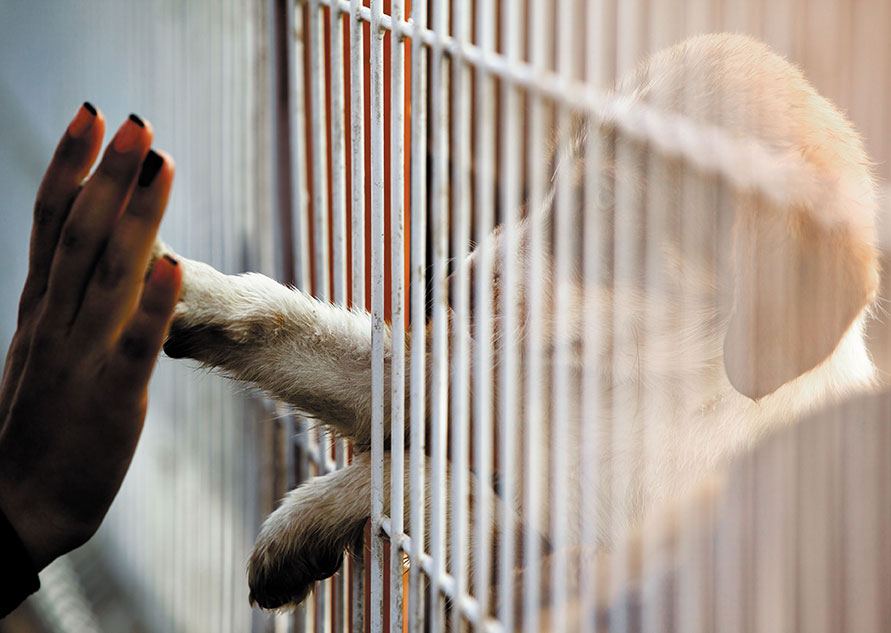
Creative Ways to Help Animal Shelters

Perhaps you have pets you love. Maybe you hope to have a pet one day. Or maybe you can’t reasonably foresee a pet in your life, but you love animals and you want to make life better for them. Either way, you may be considering ways to help shelter animals, and fortunately, there are many ways that you can do just that. Whether you have a lot of time at your disposal, or just a bit, there are things you can do to help your animal friends who have the misfortune to be living in shelters.

In 2014, an animal shelter in Australia developed a Human Walking Program for shelter animals in Melbourne. People were encouraged to devote their lunch hour to walking dogs in Flagstaff Gardens. This was a winning situation for everyone involved – shelter dogs got exercise, people got exercise, and some people even fell so in love with the dogs that they were walking, they ended up adopting them. Other shelters all over the world got on board, and now there are Human Walking Programs in many cities.

If you don’t have the time to set up a Human Walking Program, there are still things you can do to help animal shelters, and the animals who live in them. Here are five great ideas.

Dog in CarOffer a Ride

Sometimes, animals find a home that is right around the corner. Other times, an animal has to be transported to his forever home. It might just be a drive of an hour or so, or it could be halfway across the country. Can you give an animal a ride? Or even part of a ride? Often, people cooperate, each one taking a certain leg of the journey. If you can drive for even a few miles, you can help to get an animal to a home where he will be loved forever. You really can make a difference!

Do Your Spring Cleaning

This works for both you and shelter animals. If you’ve been putting off your spring cleaning, do it now – weed out all those sheets and towels you no longer want. Shelters always need bedding.

Maybe you also have leashes, collars and toys from a pet that you loved very much and who is no longer with you. You wonder why you’re keeping them. If it would break your heart to let them go, then by all means, hold onto them. But think about how proud your lost loved one would be of you if he knew that you were giving his possessions to another animal who has nothing.

Donate

You know how, around the holiday season, everyone wants you to donate to the food bank or the homeless shelter? We’re not suggesting that you don’t do that, but think about animals, too, whose only home is a shelter. A toy or a bag of dog food can make a huge difference to a shelter animal.

Man With DogFoster

Can you take an animal, even temporarily? Fostering can open up another space in a shelter. If a pet is living with you, there is room for another homeless animal at the shelter. You don’t have to be in it for the long term, just long enough – just until that animal finds a forever home. And who knows? You might find that your lifestyle really can accommodate an animal permanently.

Read to a Dog

Okay, this isn’t as crazy as it sounds. You have heard of therapy dogs who go to libraries so that kids with reading difficulties can read to a non-judgmental dog. Have you ever wondered why that works so well? It’s because it goes both ways. Dogs love to be read to as well. They love the sound of a human voice. So why not go to an animal shelter, and read “Goodnight Moon” to a dog who is starved for human attention and the sound of a kind voice?

These are just a few ideas. You may have thought of other ways that you can help shelter dogs. Now, stop thinking about it and just do it.

SaveSave

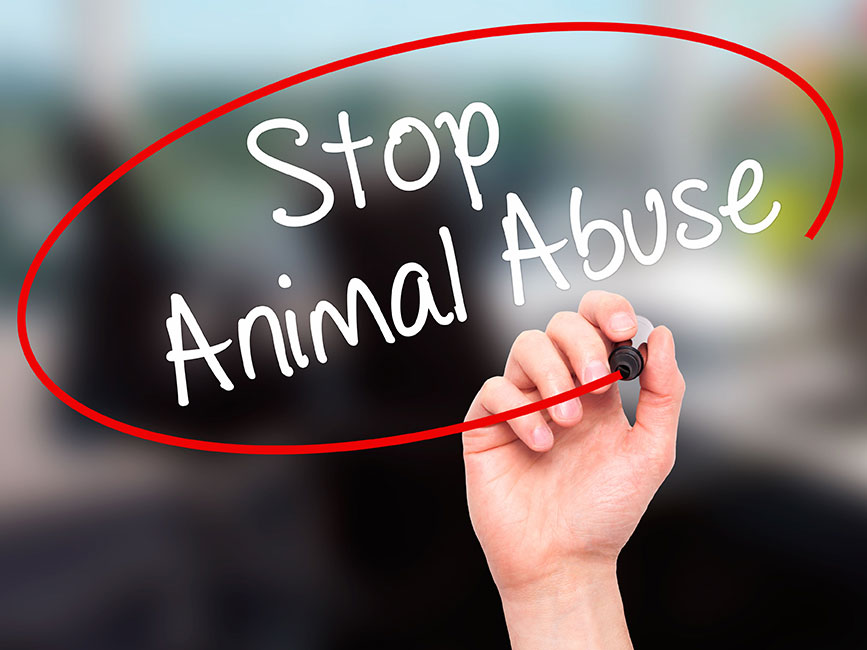
What To Do If You See Animal Abuse

No one ever wants to see an animal being abused, but sadly, it happens. So what are you going to do if you see a case of animal abuse?

First of all, you have to report it. That’s not even negotiable. After all, if you saw a person being assaulted, you would report it, wouldn’t you? Why should it be any different if the victim is an animal?

It’s the Law

The law says that animals cannot and must not be abused. Every single state has laws prohibiting animal abuse, and the law is meant to be enforced.

You know, it wasn’t all that long ago that people didn’t report child abuse. Why? Because it was thought to be a family matter. We didn’t see it as the crime it was. Now we do. We would never think of not reporting child abuse, so why would we turn a blind eye to animal cruelty?

Do What Is Right

Report animal cruelty. That is the first step toward stopping animal abuse. One of the most common types of cruelty is neglect, and we have all seen it – the dog that is left in a cold doghouse in the winter months, or is left to go without water in the hot weather. Ask yourself, how would you feel if you were left out in the cold, or if you had no water to drink in the summer heat?

Now, remember that the law is only as good as the way it is enforced. Your neighbor’s dog cannot pick up the phone, call 911, and say, “I am being abused.” That’s why it is up to you. It is your job to speak for those who cannot speak for themselves.

Be Alert to the Signs

The first thing you need to do in order to prevent, correct and punish animal abuse is to be alert to the signs. Does an animal appear to have inadequate shelter? Is the animal deprived of food or water? Does the animal appear to be in bad condition, with mangy hair or untreated wounds? Is the animal constantly chained outside?

Worse, does the animal appear to have been abandoned? You might be surprised to know that thousands of animals die every year, simply because people consider them to be disposable, “for now” pets who can just be left behind when people move away.

Worse still is direct violence. You know what we mean – you see someone beating an animal. Please don’t turn away – do something.

What to Do

If you see an animal being treated violently, consider it an emergency and call the police immediately. If it’s a case of neglect, you can also call the police or the local animal shelter. Please never do anything though. And while you are waiting for the authorities to arrive, take notes. Document what you see.

Take It a Step Further

Having called the authorities, and documented the incident, don’t stop there. If you truly care about the animal, be willing to go to court and testify to what you have seen. This is no different from any other crime – eye witnesses can be the key to a conviction.

The Final Word

Of course you would never abuse an animal. But if you see animal abuse happening, and you do nothing, you are every bit as guilty as the abuser. So do something to stop it – call the police. Testify. And maybe even adopt an animal who has been abused, and give him or her a second chance at a good life. It’s the right thing to do.

SaveSave

OUR STOREBeing Pawsitive is a print on demand shop for all animal lovers, vegans, and free spirits
CUSTOMER SERVICESWe pride ourself on customer satisfaction. View our policies and reach out with any questions.

Subscribe to Our Newsletter!

Subscribe

* indicates required

Intuit Mailchimp

Copyright© 2025 Being Pawsitive. All Rights Reserved. 

Add to cart