Spotlight on Brandon McMillan

I recently sat down and talked with Daytime Emmy® award winner Brandon McMillan, professional animal trainer and host of Lucky Dog on CBS.  If you have never seen Lucky Dog, then you need to start watching.  It is a family friendly reality show in which Brandon McMillan rescues dogs in shelters and trains them for new families (tissues usually needed – in a good way).  Lucky Dog is in its third season, with a fourth season coming next Fall.  For those of you who think people aren’t real on TV, you’d be wrong in this case.  Brandon McMillan is friendly and down to earth.  What you see is what you get.  His extensive knowledge of animals, their history and understanding of their behaviors is impressive. With a natural passion for rescuing dogs, he has successfully combined that with his lifelong skills to train them for new forever homes.

Brandon McMillan is widely known in Hollywood for training dogs, tigers, bears, and lions for movies and commercials.  Movies include: We Bought a ZooThe HangoverRed DragonThe Jungle Book IIBuddy and Soul Plane.  He has also trained animals for television shows such as: Dharma and Greg24JackassWildboyz and CarnivaleHollywood celebrities often call Brandon to train their dogs and after reading about him, you’ll see why.

Lucky Dog is a really unique idea and it brings attention to all of the great dogs in shelters.  Did you come up the idea of Lucky Dog?
Yes.  Years ago I had a dog facility outside LA called LA Dog Retreat, which was a training and boarding facility, but one of my specialties was rescuing dogs turning them into movie stars.  That caught the eye of Litton Entertainment and CBS Daytime.  They came out to watch me work because they were looking to do a dog training show on Saturday mornings.  They wanted to make it unique and something that no one’s ever done.  They saw me working and said, “That’s what we want!”.  We wanted to keep it positive and without drama.  Too many shows make the dogs look bad.  I want to prove that dogs just aren’t a pet, but a member of the family.

Brandon McMillan ArgusTell me about Argus and what made you decide to co-found the organization?
I knew a man who was a friend of a friend that stepped on an IED in Afghanistan and lost both legs.  He was using prosthetics and learning to walk again.  So my friend called me up and asked if I knew how to train service dogs.  I said, “Technically, yeah, because I’ve trained dogs for movies and TV over the years to open up a refrigerator and similar stuff like that.  Tell me what you need.”  He explained how this man is learning to walk again and needs help picking up things and everyday tasks.  After watching a video of him, I knew exactly what to do.  I talked to my friend Mike Herstik, who is a bomb dog trainer for the military and later became my partner with Argus. He knew exactly what to do too.  We both trained the dog and when I brought the dog to Walter Reed Medical Center in Washington D.C. I was surrounded by hundreds of veterans who wanted service dogs.  I was only supposed to stay for a few days, but extended my trip for weeks.  I sat with them and asked them what they needed.  After returning to California, I immediately started the paperwork for the 501c3 and Argus was born.   Go to www.argusservicedogs.org for more info.

Do you remember the first dog you ever trained?
I don’t remember the exact first one.  It was a long time ago.  We moved around a lot when I was a kid and I was always the new kid on the block.  I must have been 7 or 8 years old putting out flyers with those old school paper pull tabs.  People would call the house asking for their dog to be trained and got this little kid!  I’d ride my bike there, go to the door and they’d see me and say, “There must be some mistake.”  I’d go in and train their dog in a half hour.  The looks on the people’s faces were priceless!  The best part was getting $5 and at the time it felt like $5,000!

Brandon McMillanI’m a foster failure and I’m sure you’ve gotten attached to many dogs, but do you have any that you almost didn’t turn over to their new parents?
Yeah, my Chihuahua Lulu.  She was returned to me 4 times.  Lucky Dog was kind of based on her.  I saw her every day in the shelter for about 6-8 weeks in the front cage.  She was shaking in the corner.  I finally asked about her and the shelter said they were probably going to put her down the next day to make room for other dogs.  I was halfway home when I turned around and took her.  I found her about 4 families and each one returned her for various reasons – not good with kids, bit another dog – and I started looking for a home for her less and less.  5 years later, I still have her.  And I wouldn’t have it any other way.

What is your favorite part of the whole rescue/training process?
Changing lives….both dogs and people.  I’m saving the dog’s life, but the the bigger change is in the human’s life.  Most of the people who contact me to rescue and train a dog are doing so because of something traumatic that happened in their lives.  This reiterates my point that dogs aren’t just pets, but they change lives.  It’s a known fact that dogs reduce stress and depression.

What are some of your biggest challenges when beginning the training process on a dog you just rescued?
When they’re abused, they tend not to trust humans a lot.  The biggest challenge is the unknown.  When I pull a dog from the shelter I only know what they look like and potentially their age.  I don’t know much about the personality.  The shelter doesn’t always know much about the dog.  I need to be careful and consider the homes they’re going to – to make sure they’re good with kids and aren’t aggressive.

From personal experience, I can feel overwhelmed when there are so many dogs/cats that needs homes.  How do you keep it in perspective?
That’s a tough one to answer.  I have a lot of people that inquire about getting a dog from me.  I have a general list of what people want – mainly a family dog that is good with kids.  I eliminate the odds.  If the dogs are aggressive I don’t take them.  I generally have them for 1-3 weeks unless it’s a service dog so training them to not be aggressive is basically out of the question because it takes way longer than my standard training regimen.  I narrow down the families with certain dogs.

I’ve read that your parents trained wild animals for the circus, but what made you decide to get into the business of training dogs/animals for movies and TV?
My style of training is what I like to call “Hybrid Training”.  We trained all types of animals – dogs, big cats, bears, lions, you name it.  With every wild animal you need to switch up your style of training.  Believe it or not, dogs are one of the most difficult animals to train.  The main reason why is that dogs become a product of their own environment very quickly.  When you spoil a dog, it means they probably won’t listen.  It’s very hard to spoil a tiger or a bear.  A dog’s DNA is wired to be pampered and spoiled.  Training wild animals helped with the overall technique, but when it comes to the psychological side, dogs are difficult because they have emotions and are meant to be taken care of.

Not to offend you, but do you feel any differently about the circus now?
No offense taken.  Yes, of course.  I was fortunate enough to work around great trainers who taught me everything I needed to know about animals.  I didn’t see any abuse, but we all know it exists.  Now that I’m older, do I want to see animals in cages?  No.  It was a great life to grow up in and I’m taking that knowledge and applying it to something positive now.  I’m saving dogs and using those techniques to train them.

Brandon McMillan Shark WeekObviously you have a passion for working with animals, but how did you get involved with Shark Week?
I had a show called Night on Animal Planet where I went around the world and filmed animals at night observing their behavior.  These animals are nocturnal and prefer to hunt at night.  A couple of the episodes were filmed underwater with sharks.  This caught the attention of the biggest shark film producer and Shark Week guru, Jeff Kurr.  He called me and said he would love to have me on one of his shows.  I had heard of him but didn’t know that much about him so I Googled his name.  Then I said, “Where do I sign up?”.  He had nothing at the moment, but he called me up a few years later and said I was perfect for a show he wanted to do. I was the ideal candidate because I’m not only a surfer, but I have a lot experience diving with sharks which is exactly what he needed. The show is called Great White Serial Killer and it’s about a beach in central California that has a shark attack on surfers every 2 years almost on the same date.  What we’re trying to prove is that it could be from one shark, not a group.  It’s called this because serial killers and great whites use the same tactics of hunting.  It was controversial name, but we said to watch the episode and you’ll see the similarities.   Great whites are patterned creatures and if they know they can get prey in one spot, they will return.  They are migratory animals and know there’s a certain time of year to find prey in the exact same region so they will continue returning.  Serial killers are the same way – same hunting patterns and return to the scene of the crime.

If you didn’t work with animals, is there anything else you could imagine yourself doing?
Fireman or Stuntman…which I did with wild animals for commercials years ago.  That was fun to me.  I like the adrenaline rush, that’s my roots.

I have to ask, is your dog perfectly trained?
She is probably the worst trained dog!  Actually she’s not bad, but the theory of handling is important.  People need to understand training vs. handling.  Handling can be more important than training.  If you handle a dog properly, you can stop a bad behavior such as aggression.  She was so abused and had such a negative experience with being trained that it took me almost 2 years to even pick her up without her screaming.  I know she was kicked because when I pet her with my hand she would squint, but when I pet her with my foot she would run and squeal.   It took me about 2 years before she would come up to me.  Chihuahuas are lap dogs, not working dogs like German Shepherds.  She’ll come or stay when I tell her though.  She is the first dog that I had to make a conscious decision on how far I wanted to take her training.  She was so abused that I had to get to the point that she would listen.  The fact that she is happy and trusts me is enough.

What is your favorite vacation spot?
Africa.  There’s so much wrapped into one – I can dive with sharks, surf, scuba, do a safari.

What was your first tattoo?
Down my spine (no one knows about it) – from my neck down to my tail bone.  My first few tattoos were from the same person, a Maori in Hawaii and are Polynesian.  The one on my calf is the one that people recognize and it’s my giveaway.  I’ll keep getting them.  I love artwork, especially cultural artwork.

Brandon McMillan German ShepherdDo you have a favorite dog breed?
I hate being biased, but I like German Shepherds.  This breed has passed with flying colors after being tested in every area – military, bomb detection, guide dogs, contra band detection dog, seizure alert dog, physical assist dog, therapy dog, etc.  Name one other breed that can do all of that consistently.

Did you ever have one as a pet?
Yes, we had several.  That was our family dog.  We had 3 German Shepherds all named Zeke over the years.

What is your favorite band?
I was born in the wrong decade.  I like Led Zeppelin, Johnny Cash, Dob Dylan, Jimi Hendrix, and Ray Charles.  I like the classics and they don’t make them like that anymore.  When I was a kid I liked them and everyone said I liked Grandpa music.  Now they like that music!

What is your favorite water sport?
I like to surf.  The only problem with surfing in California is the crowds.  Thankfully I get sent all over the world to film wildlife shows so anywhere I go, I bring my boards and surf.

What is your biggest pet peeve?
Traffic.  I have the biggest road rage.  People would never guess that I have road rage. Living in LA tends to do that to someone. I cannot stand the dumb decisions people make on the road. And get off your phones and drive please. Thank you.

What is your favorite TV show?
Family Guy is genius.  I like The Walking Dead, Married with Children, and Twilight Zone – it’s a classic.

Do you have a favorite quote?
Yes. “One day your life will flash before your eyes, make sure it’s worth watching.”  I have a lot of quotes I like.  I have ones I live by such as “To achieve great things, we must live as though we’re never going to die” and “I fear not the man who has practiced 10,000 kicks once, but I fear the man who has practiced one kick 10,000 times” – Bruce Lee.  I devised my dog training style on that idea.  That’s they theory of the 7 common commands (Sit, Stay, Down, Come, Off, Heel and No). Less is more.

You can watch episodes of CBS Lucky Dog on Hulu and check your local listings for Saturdays on CBS.

Brandon McMillan has dedicated his life to helping animals and leads a very busy, yet inspiring life.  My advice would be to keep your eye on him because I’m sure he will continue to be successful.

“It’s beautiful thing when a passion and career come together.”

Lucky Dog Brandon McMillan

Dealing With Cancer in Dogs

Cancer isn’t just a health concern for humans; it is also a major cause of fatality in dogs, particularly in those over 10 years old. In fact, half of all canines over age 10 will develop cancer. Dogs can be afflicted with various kinds of this overgrowth of cells, including breast, skin, and bone cancers. What do you need to know about this problem for your own pet’s sake? If your dog is getting up there in years, or has already been diagnosed with a form of canine cancer, you’ll want to be armed with some important facts.

Cancer-prone breeds

Unfortunately some dogs are more likely to be affected by this disease than others. Boxers, Bernese Mountain dogs, and Golden Retrievers are all more susceptible to cancer than other breeds. Mixed breeds have a lower incidence of hereditary disease due to their diluted gene pool but they can still be affected by environmental and random cancers.

Symptoms

These can be very much like the signs of cancer in humans. Swelling or bumps, swollen lymph nodes, or unusual bleeding should all be checked out. There can be a distinct lack of early symptoms, however, so if you sense anything at all that’s off with your pet, let your vet know.  See a list of types of cancer here along with symptoms to look for.  However, it is always beset to consult your veterinarian.

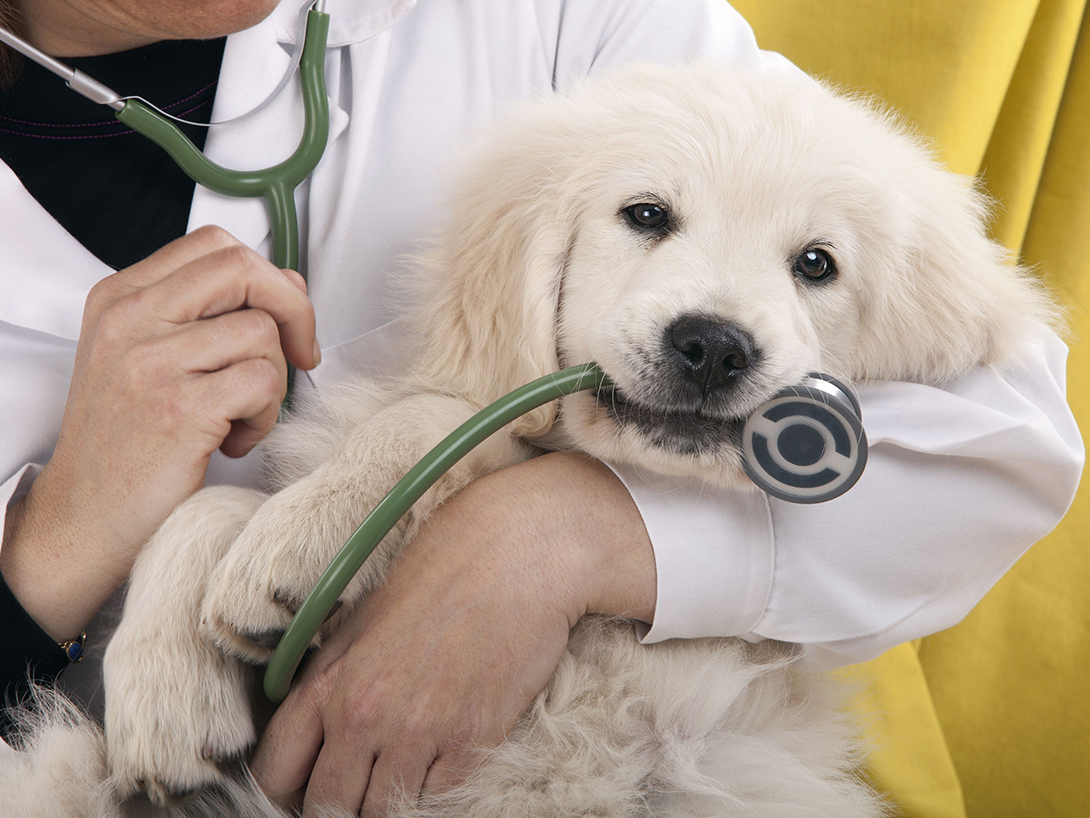
Boxer at Vet

Treatments

Thanks to advances in cancer treatment there are many options available for helping dogs with the condition. Just like humans, pets can benefit from surgical treatment, chemotherapy, and radiation. Immunotherapy is undergoing experimental research as well, wherein vaccines are used to get the immune system to help fight the disease.

Cost of cancer treatment for dogs

While costs will vary significantly depending upon where you live, diagnostics can run between a couple hundred up through $1,000. If the cancer is treatable with a commonly-utilized surgery, it could run about $1,000. If radiation or chemotherapy are also used, the costs could be as high as $15,000.

Prognosis for dogs with cancer

It’s only been in the past couple of decades that animal medical specialists learned that dogs even get cancer. Technology has advanced by leaps and bounds and now up to 60% of dogs can survive the disease, if treatment is sought. Skin tumors, mast cell tumors, and breast cancers in particular have very good cure rates. If untreated, however, a dog may only survive for a matter of months rather than years.

Prevention of cancer in dogs

This is a tricky issue because the causes are often unknown. One major step you can take in the health of your pet is to have them spayed or neutered. Spaying can cut your female dog’s chances of breast cancer by eight times, but it should be done before she goes into her first heat. Dental care can also help decrease your pup’s chances of oral cancers – regular brushing and teeth checkups should be a routine part of your animal’s care.

The most effective thing you can do is to seek regular veterinary care for your pet so that any potential problems or irregularities can be detected early on in order to begin treatment as soon as possible.

The diagnosis of any health problem in our pets can trigger a scary and anxiety-filled time. Talk to your veterinarian about all possible options. If financially feasible for you, there may be facilities that are some distance away from you that offer a higher level of care for these canine health problems. Also ask your vet about things you can do at home to make your pet as comfortable as possible. Most importantly, give your dog plenty of love and affection to keep him feeling positive and happy throughout the experience.

SaveSave

Does Your Dog Eat Too Fast?

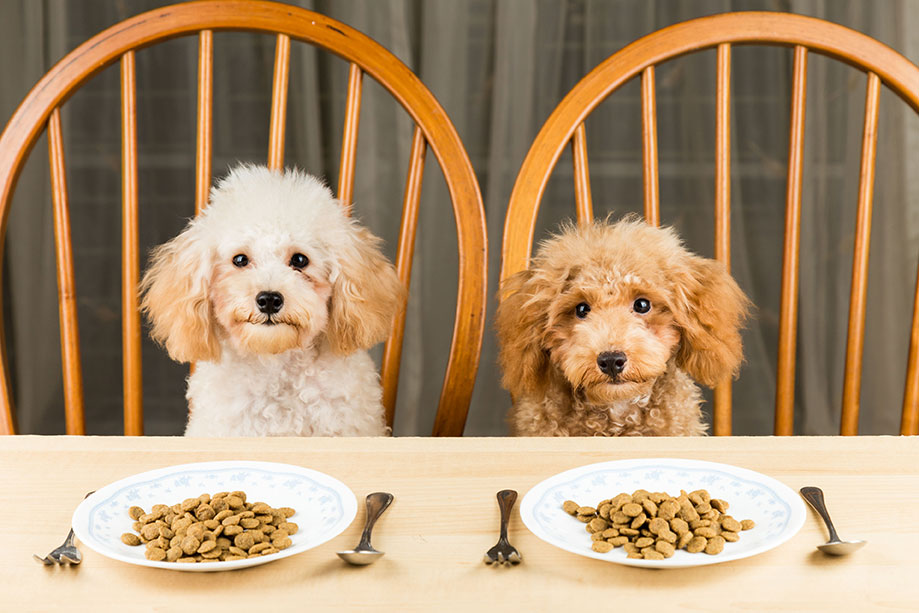
Snoopy“Oh, it’s suppertime, yes it’s suppertime, oh, it’s sup-sup-suppertime, happiest time of the day!” Remember Snoopy singing this in “You’re a Good Man, Charlie Brown”?
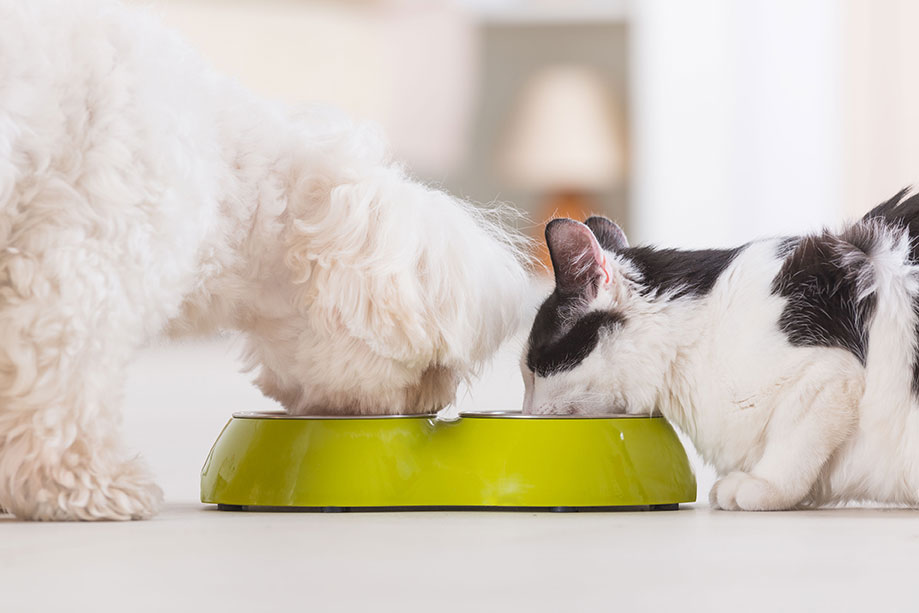
Snoopy probably ate way too fast, and chances are your dog does, too. Why? Because suppertime is an event!

Now, why should that be a problem? Well, because if your dog eats too fast, he or she could choke or gag on food. And if food is so incredibly important to your dog, anyone who gets in the way of their food could end up being bitten, because they could be seen as competition for the best meal that is being provided on any given day. Food should never be an event to a dog – it should just be something that happens in the normal course of life.

Bad Things Can Happen to Good Dogs

In addition to the dangers humans risk facing if food becomes the be-all and the end-all to a dog’s day, the dog could be harmed by gulping down food and eating too fast. This is because as the food is taken in, air can also enter the digestive tract. Selling can occur, and the stomach can actually twist around. Then, nothing can move from the stomach to the intestines. This condition is known as gastric dilation-volvulus, or GDV, and it can actually be fatal.

Make It a Non-Event

Food should never be an event to a dog. One of the best ways to prevent this from happening is actually to “free range” your dog from a very early age. Instead of bringing home a bag of dog food and parceling it out at regular intervals, dump it all in a big container. That’s right, just put it all out there! If a dog has never thought of food as an “occasion” or a reward, then he or she will eat as much or as little as they need to feel full. An added benefit to doing this is that your dog will be far less likely to develop obesity in old age.

Reduce Competition

Sometimes, if you have more than one dog in the house, they may compete for food. You could try feeding them separately for a while, and then go back to the “free range” system. If they’re full all the time, then chances are that they won’t try to compete for food.

What if it’s Too Late?

Okay, if you have been using bad feeding methods up until now, it is still not too late to change them. To keep your dog from gorging, you might try putting a ball or another toy in the food container so that your dog has to eat “around.” That will slow down the eating process. You could also consider a product like a slow feeder. This is a device that requires the dog to eat around a platform to reach the food, and encourages slower eating. This can also reduce anxiety, and make food a bit less of an event.

Don’t Use Food as a Reward

You should also avoid using food as a reward. A lot of people use food as a training aid, and this can actually encourage bad eating habits. Try to think like a dog. “Do this. Good boy, you get a treat!” Dog concludes that if he does something good, he gets food. Therefore, food is good. And that means that getting food means that he is a good boy. But that is a bad idea.

You can tell your dog that he is good without offering food. A pat on the head or words of praise work wonders in training, but keep food out of the equation.

Conclusion

Food should be just food. Never an event, and never a reward. Keep this in mind, and your dog will probably not gorge.

SaveSave

The Importance of Dog Dental Care

You know how it works, don’t you? You brush and floss regularly, and see your dentist twice a year for checkups. What about your dog, though? He has teeth too, right? What do you do to ensure your dog’s dental health?

You may have heard it said that dogs don’t have the same dental issues we have, and that when their teeth decay, they don’t feel pain the same way that we do. This is absolutely wrong.

Your dog most certainly can have, and possibly does have dental issues. Any dog can develop a cavity, break a tooth, or experience another issue, and he or she most certainly does experience pain when decay occurs. So, how are you going to ensure your beloved dog’s dental health?

Dog Dental VetTake Your Dog to the Vet

Dental problems in your dog are much the same as your own. Your dog can develop dental issues that can create other health problems, and also develop health problems that can lead to dental issues.  Your dog’s teeth and gums, the same as yours, should be checked out at least once a year in order to identify problems and prevent them.

So, just like you go to a dentist whenever you need treatment, now you know that you have to do the same for your pet. Dental treatments are essentially the same, whether they are performed on humans or on dogs. The purpose is the same – to ease pain and restore dental health.

About Veterinary Dentistry

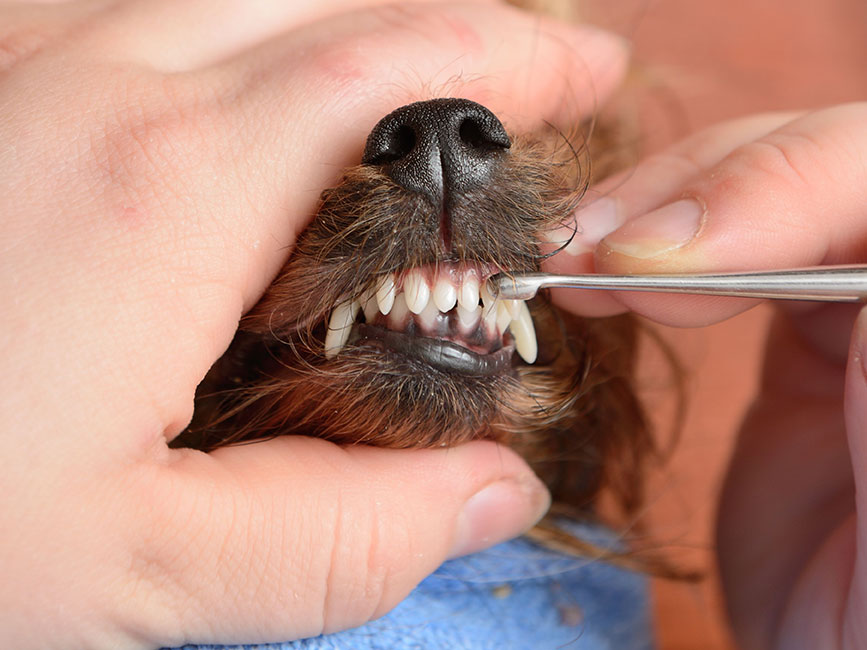
Veterinary dentistry involves the cleaning of your dog’s teeth, as well as any adjustments or repairs that may be necessary. If your dog needs a filling, an extraction, or another type of repair, it will have to be done by a veterinarian.

Now, you know that if your technician identifies any problems in your mouth, he or she will refer you to the dentist. It is much the same with your dog. The technician will clean your dog’s teeth and perform a routine oral exam. If anything out of the ordinary is found, like decay below the gumline, then the vet will become involved. If gum disease is identified, then your pet may need treatment like root planing and scaling.

Identifying Dental Problems

So, how do you identify dental problems in your dog? It is essentially the same way as you identify those issues in yourself. You need to look for bad breath, broken or discolored teeth, reduced appetite or swelling in the mouth. Also, if your dog has become unusually irritable, it could be an indication of dental problems.

Cavities are considerably less common in pets than they are in humans, but they do occur, and when they do, they can be very painful. Keep in mind, too, that even the best dog, if suffering from a dental cavity, may bite out of pain and frustration, so explore carefully.

If your pet does have a dental issue, then your vet can treat it in much the same way as you have your own dental issues dealt with, with local anesthesia to numb the pain during treatment. Your pet does not have to suffer with dental issues, and most pet dental issues can be dealt with as easily as human dental issues once they are identified.

If you think that your pet has dental issues, then the best thing you can do is book an appointment with your vet to have them diagnosed and dealt with. Remember that your pet cannot say to you “My teeth hurt.” It is up to you to identify the problem and deal with it.

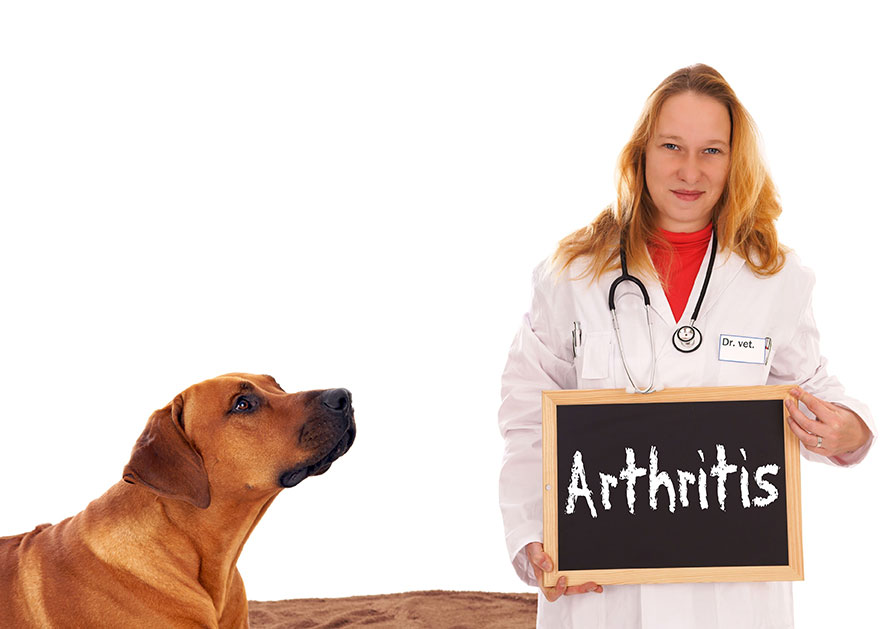
How to Detect Arthritis in Dogs

It can be frustrating and mentally distressing (for both pet and owner!) trying to figure out what’s wrong with your beloved companion. They can’t talk to you in words, so they must rely on your ability to decipher the physical signs they’re giving you. Fortunately there are typically clear indicators that can help you detect arthritis in your dog, or at least to pick up on warning signs so that your veterinarian can make a certain diagnosis.

(Please always consult your veterinarian if you suspect anything is wrong with your pet.)

Warning Signs of Canine Arthritis

Stiffness and lameness: this sign typically begins as a mild level of stiffness after periods of rest. The dog may have trouble getting up, particularly if they were engaging in active play or a vigorous walk before the rest period.

As their DJD (Degenerative Joint Disease) – commonly in the form of osteoarthritis – worsens, the stiffness will become more pronounced and last for longer periods of time. For example, rather than taking just a few seconds to get up and going after coming up from a laying position, your pup could need a few minutes to walk out the stiffness.

Swollen joints: when a dog has a joint problem, scar tissue usually forms around the troublesome area and causes the joint to enlarge. You may notice that your pet has one knee that is noticeably bigger than the other, or the two sides may swell concurrently. It is this scar tissue that causes the dog to have issues with range of movement and pain.

Grating joints: otherwise known as crepitus, this grating sound is the same as the one that humans hear in their joints when they begin to lose cartilage and experience signs of joint problems. Audible sounds from your dog’s joints don’t always mean they have osteoarthritis, but if severe, it’s a good indicator and may mean they’re in a fair amount of pain.

If your dog is experiencing problems in his spine, he may have a hunched back or hold his neck in a strange posture. You may also notice your normally friendly pooch getting cranky and snappy, especially if you pet or touch him in a specific spot.

How Does It Happen?

Osteoarthritis in dogs is often related to a previous injury or health issue. The pain and stiffness will frequently start in a joint that is near another problem area, like a damaged ligament or a hip or elbow affected by dysplasia. While this prior lameness may have ceased to cause symptoms long before, it could still cause joint problems down the road.

What Can You Do?

The first thing you should do is consult your veterinarian if you notice any issues with stiffness or swelling in your pet’s joints. Your vet will examine the dog for heat, fluid, and other signs of a problem around the joint.

If your vet determines that your dog does have osteoarthritis or another form of DJD, he or she may recommend medications, lifestyle adjustments, or other treatments to help ease the pup’s discomfort and slow the damage.

At home you should provide soft, comfortable bedding for your dog to minimize the impact on his body. You can also put steps or a ramp in front of furniture that he’s allowed on, especially if your dog is a smaller breed.

It may come as a surprise, but keeping Rover active is also important even if he suffers from arthritis. The level of activity you encourage your dog to partake in should be commensurate with his age and severity of his joint problems, but in general, all dogs should participate in some sort of physical activity to keep their joints mobile.

By paying attention to your dog’s cues and seeking diagnosis and treatment as soon as possible, you can help your precious pup live a longer, more comfortable life. To learn more, check out the video series here.

SaveSave

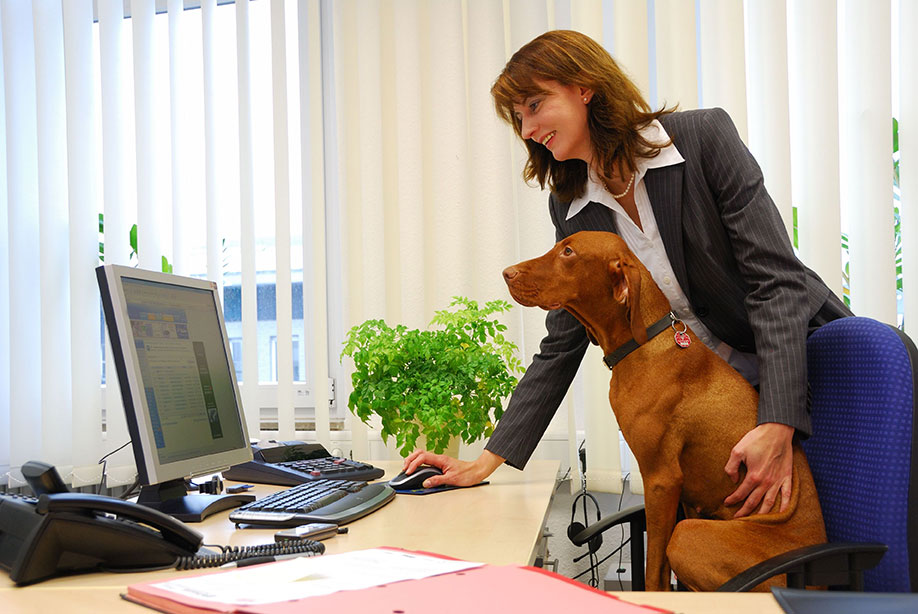
Want to Bring Your Dog to Work?

So, you’ve just had your annual review. Your supervisor looks at you and asks, “Is there anything that the company can do for you to make you happier at work? You look at her, and just to be funny, you reply, “Yeah. I want to be able to bring Clover to work with me.”

Clover is your dog. You think there’s no way in this lifetime that Sponagle is ever going to be able to go to work with you. But then your supervisor looks at you, nods, and says, “Yeah, we could work with that.”

Bringing Your Dog to Work Works!

According to a Virginia Commonwealth University study, people who bring their dogs to work with them are more productive and considerably less stressed than people who have dogs but have to leave them at home when they come to work. The study also found that people who interacted with co-workers who brought their dogs to work were more productive.

Check out the most dog friendly office.

But It Doesn’t Always Work

Now, something that you have to keep in mind is that not all workers are created equally, and not all pets are created equally. Probably no one would argue against bringing Old Yeller or Hooch to work, but they might not be overly receptive to Cujo. And not all workplaces can accommodate all animals.

A happy, smiling puppy is indisputably going to reduce stress in the workplace. But if you introduce a cranky cat into the mix, watch out.

Pick and Choose

If you are thinking about introducing animals into the workplace, it is probably a very good idea, but you are going to want to carefully vet the animals that you bring in, in the same way that you would vet potential employees. Not everyone is going to get along.

By the same token, you should not pre-judge. You don’t do that with humans, so don’t do it with animals. A sweet, gentle Rottweiler can be far more of an asset to your workplace than a nasty, ankle-biting Yorkie.

Dog OfficeInterview

If you are thinking about bringing animals into the workplace, handle it the same way you would humans. If you’re the boss, ask your employees to bring their animals in for a “meet and greet.” Some will pass the test immediately. Others might need a little work, and some will not be suitable.

Once you have identified suitable workplace animals, see how they interact with one another. You do not want a disruptive workplace with animals running all over the place and conflicting with one another. If it looks like everyone is in a good place, though, ask yourself if there is really any reason why your workers should not be able to bring their animal friends to work. It could make for a much more comforting and caring workplace.

In short, can you imagine everyone feeling very excited about coming into work because they know they will be greeted with happy animal smiles every day? Can you imagine your employees being happy coming into work because they do not have to leave their best friends at home?

For sure, this might not work in every workplace, but if it seems at all feasible, why not give it a try?

Conclusion

In conclusion, happy employees are productive employees, and people love their animal friends. Why not bring those friends into the workplace? Let that person you just reviewed, the one who needed to have Sponagle at work in order to be happy, bring Sponagle into the office. You might be surprised how well it works out for everyone.

SaveSave

Is Your Pet Food Cruelty-Free?

You see the ads on television and in magazines all the time, from pet food companies that want you to know that if you feed your dog or cat their brand, and only their brand, your pet will live a long and healthy life. But have you ever asked yourself if those ads are truthful? They’re not always. And even if they are, there is a possibility that your pet could be enjoying a better life at the expense of other animals.

Simply stated, your pet food may not be cruelty-free.


The Horror of Animal Testing

What do you suppose companies test pet food on? That’s right, pets. And is that testing always cruelty-free? No.

Okay, first off, let’s take it as a given that PETA is comprised largely of numbers of radical activists who don’t even want you to own a pet. That said, though, they do a lot in the way of investigating into animal cruelty, and in 2003, they discovered horrific conditions in a feeding trial lab, where Iams was testing pet food. They discovered dogs and cats confined in small cages, dying and bleeding, just to mention a few abhorrent conditions. Again, keeping in mind that PETA is not necessarily the most reliable source, Iams never denied any of these allegations or offered any proof to the effect that this was not happening.

Iams is still conducting animal testing on their pet food brands. The following companies have also been identified as not being cruelty-free:

  • Pedigree
  • Hill’s Science Diet
  • Friskies
  • Purina
  • Blue Buffalo
  • Natural Balance
  • Eukanuba
  • Whiskas
  • Bakers Complete
  • Sheba

Many companies refuse to use animals in feeding trials. They include:Rottie & Chi Bowl

So, you can see that there are many options for cruelty-free animal foods, but some of the brands that are the most advertised, and supposedly the most highly recommended, may not be the best for your pet.

How to Choose

One of the best pet foods that is recommended the most by veterinarians might actually surprise you. Many vets recommend that you simply buy generic. Generic pet foods are usually as high in essential nutrients as more expensive brand names, and manufacturers of generic pet foods typically do not test on animals, which is part of the reason why the prices are so low.

We recommend taking a look at the list of nutrients on your pet food bag. You will probably find that there is very little difference when you compare essential nutrients between very expensive pet foods and less expensive generic varieties, and a multivitamin once in a while can more than make up for anything that might be missing.

If you want to feed cruelty-free pet food to your best friend, your best choice might very well be a generic brand paired with an occasional multivitamin supplement. Simply stated, the “big players” want to make money off of you and your pet while other companies just want to make sure your pet gets the nutrition he or she needs. So, leave the “designer” pet food on the shelf, and just read the nutrient label – chances are the less expensive stuff is cruelty-free.

Truthfully, nothing ever has to be tested on animals.  Technology is advancing every and scientists are working on using microchips instead of animals so let’s hope that becomes the standard.

Pet food is highly regulated in the US by the AAFCO (Association of American Feed Control Organization), but we think there has to be a better way than testing on live animals.

The Unsung Heroes of Animal Rescue

While most people are aware of the countless big-hearted volunteers who work in animal shelters, rescues, and private facilities that save animals from neglect and euthanasia, there’s another side to animal rescue that very few people probably know even exists. That aspect is rescue animal transportation.

The hard work of shelter volunteers, foster families, and others involved in caring for and placing homeless animals is complemented behind the scenes by the work of another set of special people – pilots, drivers, and facilitators who transport thousands of animals away from certain death and into a safe environment every year.

Wings of RescueWings of Rescue

This truly amazing organization is a non-profit 501(c) (3) charity that transports homeless animals from high-intake shelters (where they face almost-certain euthanasia) to no-kill shelters in areas where adoptable pets are in high demand.

Wings of Rescue is unique in that it is run by volunteer pilots who use their own planes (in addition to chartered cargo planes) to fly thousands of pets each year to the safe haven of no-kill shelters in long-distance locations.

The cost to transport an animal through this incredible organization is about $100. This vaccinations, microchipping, heartworm testing, flea treatments, and spaying/neutering. To donate to the non-profit and help move yet another sweet cat or dog to safety, click here. You can also check out a listing of shelters with adoptable pets that have been transported by Wings of Rescue here.

Pilots n PawsPilots N Paws

This organization is also a 501(c) (3) charity dedicated to the task of rescuing animals from bad situations and flying them to a place where they either already have a home waiting, or can be transferred into the care of a no-kill shelter or other facility that will keep them safe.

What sets Pilots N Paws apart from Wings of Rescue is that PNP runs a facilitative website, rather than operating as one group who does the transporting themselves. The website features a forum where rescue staff can post their transportation needs, and then pilots who are conveniently located and have a plane – or access to a plane – can choose to volunteer to meet the needs of that rescue.

In order to use PNP, rescuers must register, and then post in the forum to get into contact with pilots who may be able to help them. The organization simply acts as a portal to bring people together for purposes of arranging rescue flights or other animal-saving activities, such as overnight fostering. To learn more about how to use PNP, go here.

Other Transporters

There are plenty of animal rescue transport organizations on the ground as well.

Colorado Animal Rescue Express

One such hard-working group is the Colorado Animal Rescue Express (C.A.R.E.). This volunteer charity has helped get nearly 26,000 pets to safety since its inception in 2007. C.A.R.E. moves animals mostly along a route between Colorado and Missouri.


BRATSBRATS – or Badger Rescue Animal Transport Services, Inc. – is a Wisconsin-based organization devoted to ending the euthanization of healthy, adoptable pets, by moving them from crowded shelters where they will probably be put to death, to other locations that have plenty of space and a high demand for adoptable dogs and cats. BRATS was founded in 2008 and moves approximately 2000+ animals per year.

There’s no doubt that frontline shelter volunteers make a huge difference in the lives of millions of animals across the country every year. These pilots and drivers who work behind the scenes, saving even more animals and giving of their time and resources for a worthy cause, deserve kudos and recognition as well for a job well done.

Celebs That Live Cruelty-Free

Nothing gives validity more to a social cause than having celebrities offering their names in support of its agenda.  The “cruelty-free movement” has become an international social movement that has gathered a lot of stars and superstars among followers.

Paul McCartney

Internationally, Sir Paul McCartney is perhaps the most famous voice protesting the use of animals in testing cosmetics.  Adding to his name on the roster we have Peter Dinklage of Game of Thrones notoriety, Mayim BialikThe Big Bang Theory, Ricky Gervais – The UK’s not-so-secret weapon against hypocrisy, and we can’t go wrong with Bob Barker from The Price is Right.  The list continues to grow and with it, an awareness of a voice that needs to be heard by manufactures and an empowered consumer base.  Check out some more supporters at Humane Society.

Woman Holding Beagle
The most know organizations working towards ending animal testing on products is Peta and Cruelty Free International.  The task of cruelty-free organizations is to educate consumers.  Why do they use animals to test make up products?  The reason given is that before a human either ingests or topically applies a product the manufacturer has to make sure it’s safe.  So the next question is: Can they test products without sacrificing animals? And the answer is “yes!”  One thing they can do in creating new products is to use ingredients that have already been approved.  Another alternative is invitro cell cultures that are constructed in test tubes or petri dishes outside the body.  These tests use biological material or cells that are extracted without catastrophic consequences to the animal.   That way no additional souls need be sacrificed.

bunnies_grassIf you buy products that are sold in China, they are testing on animals.  For a list of companies that are cruelty-free, you can visit Leaping Bunny.  They also have an App which comes in very handy when you’re shopping.  Get it for Apple here or Android here.

We applaud the fact that the list of celebrities who have added themselves in solidarity with the rest of us is growing, and our voice is becoming stronger.  They have given the painful and cruel testing of products on animals an international platform.  The intent behind their activism is that even though animal testing has been banned in countries such as the United States, these practices continue to exist in China and other countries.  And only by “taking to the streets” can we raise consciousness throughout the world about this practice being wrong.  It must stop! And the best way to have this end is by educating consumers.

Tips for the New Dog Parent

You’ve planned and researched and searched and anticipated; now you’ve found the perfect new dog for your family and she or he is finally coming home (rescued, of course). This is a very exciting time for both you and your pet, and it can also be a period of some stress for the animal as they adjust to a new environment. Even if the dog is a puppy and hasn’t been raised for years in another home, he will still be very worked up, excited and happy – yes, but also may experience some anxiety.

We have some new helpful dog parent tips to make the transition easier and help you get a good start on your journey as a pet owner.

Before Your Dog Comes Home

Just as when you’re having a human baby, your work in dog parenting starts even before the precious furry bundle arrives at the house. Some things you’ll want to do ahead of time include:

  • Puppy-proofing the house – particularly if your dog is a baby, he will get into plenty of mischief and you will want him to be in a safe environment. Put chemicals out of reach, make sure your plants aren’t poisonous to pets, stow breakables away for now, and install baby gates if you intend to use them.
  • Deciding on crate training – for puppies this is usually the best option, and starting young means they’ll get used to it easily. High energy breeds often do better crated at night so that they can’t get into trouble that may harm them. Choose a crate that’s large enough for your pet to stand up and turn around in, but not so big that they can get out of hand.
  • Equipping yourself with supplies – aside from dishes, leash, and toys, you’ll also want to make sure you have the same food the dog has been eating at his previous home. If you want to switch brands this should be done over a period of time, not all at once – especially when the dog’s digestive system may be going through some upheaval with the transition of homes.

After Your Pup’s Arrival

Whatever training method you’re going to use should be implemented immediately. Do not wait until the dog “gets used to his new home” or “matures a bit”. Dominance must be established from day one, for his sake as much as for yours.

Introduce your beloved new pal to his potty area right away. Keep in mind that due to the stress of changing environments he may have some accidents at first, even if he was already housebroken. Don’t worry, just be consistent and continue showing him the proper place to eliminate, along with rewarding him with positive attention and praise when he does it right.

Don’t bring strangers around your new pet too soon. They need some time to calmly observe and learn the routine you’re establishing for their daily life. Likewise do not storm the dog park in the first few days or let neighborhood children overwhelm your new dog.

Down the Road

It may take a few weeks for your dog to acclimate to his new surroundings and learn to trust each member of the family. Don’t get discouraged at setbacks, and don’t hesitate to consult your veterinarian about trainers or any health concerns you may have. Good training, consistency, patience, and lots of love are the keys to establishing a good foundation with your precious pet. Invest the time and effort into making a great start and your dog will reward you with unconditional love and years of joy.

OUR STOREBeing Pawsitive is a print on demand shop for all animal lovers, vegans, and free spirits
CUSTOMER SERVICESWe pride ourself on customer satisfaction. View our policies and reach out with any questions.

Subscribe to Our Newsletter!

Subscribe

* indicates required

Intuit Mailchimp

Copyright© 2025 Being Pawsitive. All Rights Reserved. 

Add to cart