Is it Bad to Let Your Pets Sleep in Your Bed?

Pets Sleep in Bed

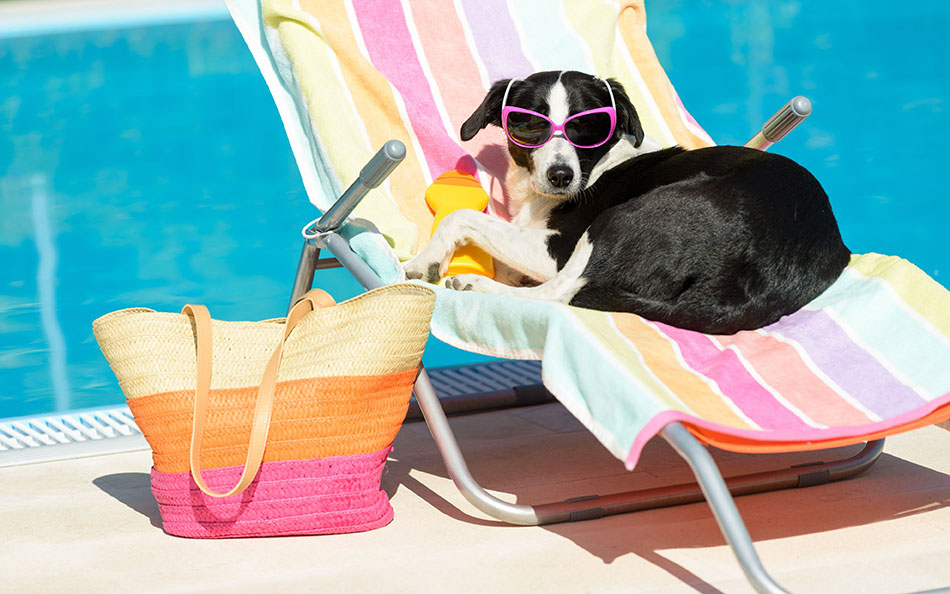
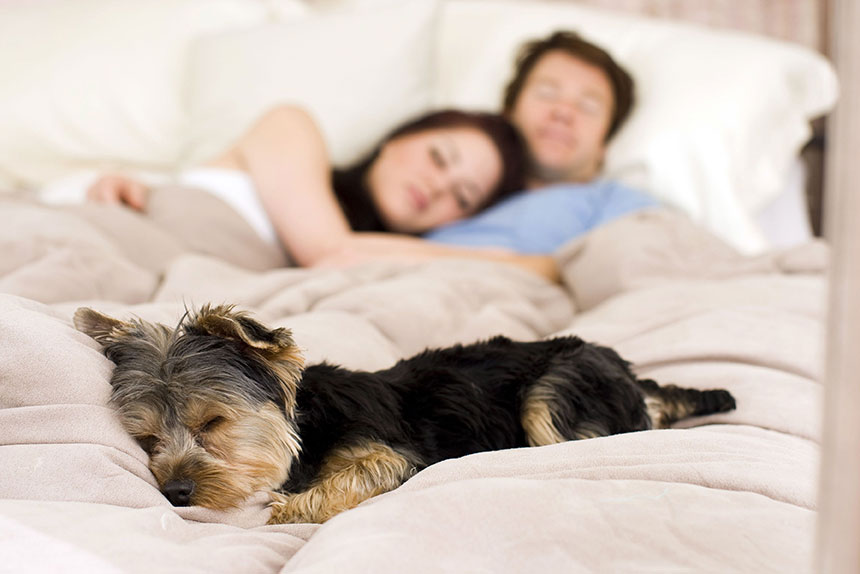
The great debate…do you let your pets sleep in your bed?

According to the 2021–2022 American Pet Products Association National Pet Owners Survey, 43 percent of pet dogs in the United States and 49 percent of pet cats sleep on their owner’s bed

Is it healthy, for you or your pet, to share a bed? There are a few reasons why it may not be, including allergies and asthma. If a pet owner experiences breathing problems, it’s probably a good idea to keep Fluffy off the bed. But most sources agree that, barring those major problems, there are no health risks to sleeping with your pets. In fact, there may be some major benefits of doing so.

Emotional Benefits

Owning a pet comes with many emotional benefits. It’s a commonly known fact that pets reduce stress, anxiety, and loneliness, especially among seniors or people who suffer from depression and other mental illnesses. Allowing your dog or cat to snuggle in bed, or even simply knowing that they are nearby, can be one way that they help reduce anxiety.

Additionally, dogs often provide a sense of safety for many owners. Alert dogs that will bark in the event that something happens make owners feel safer when they drift off to sleep.

Pet Health

Let’s face it, our pets love to be spoiled. Sleeping on a cushy bed feels good for them just as it does us, and who doesn’t want to spoil their pets? But the benefits for pets goes deeper than a simple bit of spoiling. Dogs, and to a certain extent, cats, are pack animals. Their brains are hardwired to seek the company and comfort of their pack, and that means you. Many pets feel separation anxiety when separated from their owners for too long. Knowing that you are nearby can reduce your pet’s stress, and allow them to get a good night’s sleep as well.

Potential Problems

There are a few obstacles that pet owners often face when co-sleeping with their pets. While these aren’t necessarily deal breakers, they are things to consider before you get your pet into an unbreakable habit.

While pets are warm and cozy, which may help you sleep, they can also be demanding bed mates. Dogs can snore, kick, steal covers, and take up more than their fair share of a bed. Cats have been known to “steal” air by sleeping near a child’s mouth, and to wake owner’s up in less than pleasant ways.

If your pet is used to coming to bed with just you, your spouse or partner needs to be on same page. Your pet may not understand why the door is closed on them while you and your partner enjoy some alone time. Some owners give their pets a treat, or train their pets to be equally happy sleeping with children on nights when they want to be alone.

If you want to train an animal to stay out of bed after they’ve learned that it’s okay, you’ll probably be facing many nights of distraction. Kennel training is one way to help an animal learn to love a new safe space; try putting the kennel in your room at first, until they learn to sleep on their own. Then move the kennel into a new space gradually.

Rest assured that no matter what you prefer, you won’t be harming either yourself or your pets if you do choose to cuddle up after a long day. 

What are your sleeping habits with your pets?
SaveSave

Is Your Dog a Fashionista?

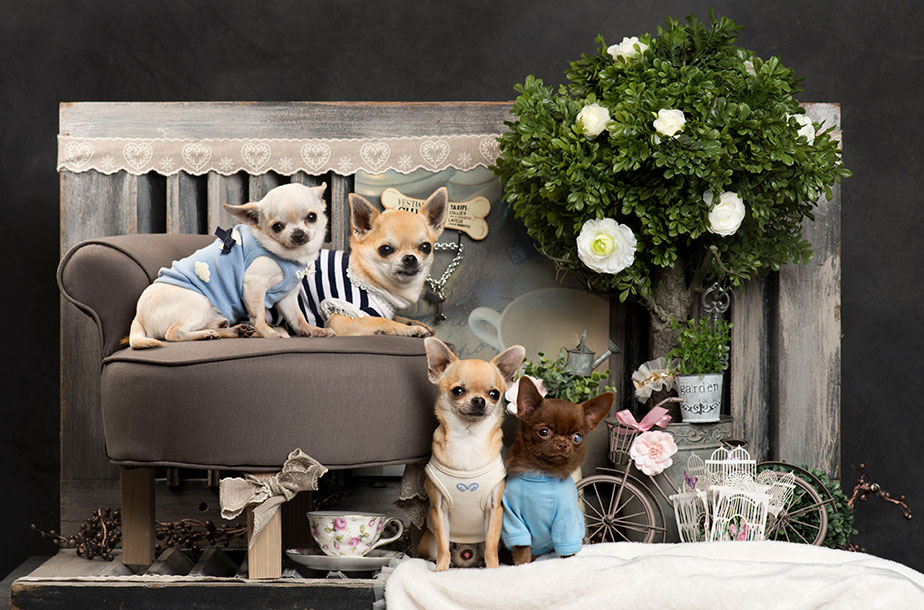
You love to dress up your pet, don’t you?


Maybe it’s Halloween and you can’t resist the cute pet costumes. Or maybe it’s Christmas, and you just love the way your little buddy looks in his light-up reindeer antlers. Or, you could just be a total fashionista, and want your pet to follow your lead. Whatever the case, there are tons of ways to dress up your best buddy.

Every year, new trends come out in both human and pet fashion. You hear that “Pink is the new black,” and that hemlines are going up or down, and that hats are in or out, and… well, you get the idea. You want to be on top of the trends, and you want your pet to be stylish as well. So, what’s new for this year?

Patterns and Textiles

This year, as was the case in 2015, contrasting textiles and patterns are at the top of the trends. You might want to mix plaids with polka dots, stripes with paisleys, wool with cotton, or any other mix of patterns and textiles. There really isn’t all that much that isn’t trendy, for both you and your pet. This is the year that you can mix and match to your heart’s content.

What’s Out

There are a few styles, though, that are definitely out and not likely to come back. Bling, for instance, is dead. You will no longer be seeing clothing embellished with faux gemstones the way they were last year.

What’s In

The trendy colors for the coming year are going to be soft and muted, or classic. Black is back. For that matter, black has ALWAYS been back, but this year, you will see it accented in tones of silver, royal blue, and mauve for the winter, and yellow and orange for spring.

Accessories

This year, you won’t see much in the way of scarves, hats, or other non-essentials. Instead, you will see jackets and boots making fashion waves.

For dogs, you can expect to see new, innovative collars with LED lighting – it only makes sense. Not only does it jazz up your dog’s outfit, it makes him or her easier to see if a “walkabout” seems like a good idea. Let’s face it, no matter how vigilant you are about looking after your dog, sooner or later, you’re going to end up with an escapee – and an LED collar is remarkably visible. They’re not just fashionable, they’re practical.

What the Stylish Dog Is Wearing

So, will people continue to dress their dogs fashionably in 2016? Certainly. In fact, dog fashion is likely to become a part of your everyday life. And designers will continue to create fashions for dogs.

Perhaps having a fashionable dog isn’t all that important to you. If it is, though, then for many people, if their dog is warm and comfortable, that’s all that really matters. But if you care about how your dog looks when you’re out taking walks, then you might want to consider what’s fashionable these days, and what is going to look best on your dog.

The Final Word

You like to look good and probably you like to have your dog look good as well. There are any number of outfits and accessories that can make your best friend stand out in the canine crowd, so why not consider dressing your dog up? It’s kind of a fun thing to do, even if you don’t take it all that seriously, so why not pick out a few great outfits and accessories for your best friend?

Some of our favorite Dog Fashion stores:

Dogo
Ruffwear
Yoyo Pet Fashion

Pet Friendly Vacation Spots

So, you want to go on vacation with your pet? That’s great – we don’t really much like people don’t want to leave your dog at home. However, you know that not all vacation spots are pet-friendly, so, where are you and your dog going to go on vacation?

Sonoma Valley, California

You will begin on the west coast of California, with its lovely vineyards. There are over 50 wineries in Sonoma, and they are almost all dog friendly. You can sample the harvests while wandering about with your dog. At the end of the day, you can visit any of a number of restaurants where dogs are welcome. They can sit next to your table, or even choose from their own menu.

Fort Collins, Colorado

The big attraction in Fort Collins is the huge number of breweries. You can sample local craft beers, and relax on patios where our dog will be welcome. At most breweries, you can even bring your furry friend inside the tasting rooms. Remember, though, it’s a very bad idea to allow a dog to consume alcohol.

Austin, Texas

There’s no such thing as a Texan who doesn’t love dogs. That means that in Austin, you and your best buddy can go wherever you like. You do have to behave yourselves, though. If your dog promises that you will behave, you can enjoy all the sights and sounds of this glorious city.

Chatanooga, Tennessee

Can you afford to board the Chattanooga ChooChoo? Sorry, we just couldn’t resist. Seriously, Chattanooga offers so much for you and your dog, including the Chickamauga Creek Pocket Wilderness trail. It’s a full 10 miles, but don’t worry about getting too warm – you can always take a dip in the creek, you and your dog together.

SaveSave

What To Do If You See Animal Abuse

No one ever wants to see an animal being abused, but sadly, it happens. So what are you going to do if you see a case of animal abuse?

First of all, you have to report it. That’s not even negotiable. After all, if you saw a person being assaulted, you would report it, wouldn’t you? Why should it be any different if the victim is an animal?

It’s the Law

The law says that animals cannot and must not be abused. Every single state has laws prohibiting animal abuse, and the law is meant to be enforced.

You know, it wasn’t all that long ago that people didn’t report child abuse. Why? Because it was thought to be a family matter. We didn’t see it as the crime it was. Now we do. We would never think of not reporting child abuse, so why would we turn a blind eye to animal cruelty?

Do What Is Right

Report animal cruelty. That is the first step toward stopping animal abuse. One of the most common types of cruelty is neglect, and we have all seen it – the dog that is left in a cold doghouse in the winter months, or is left to go without water in the hot weather. Ask yourself, how would you feel if you were left out in the cold, or if you had no water to drink in the summer heat?

Now, remember that the law is only as good as the way it is enforced. Your neighbor’s dog cannot pick up the phone, call 911, and say, “I am being abused.” That’s why it is up to you. It is your job to speak for those who cannot speak for themselves.

Be Alert to the Signs

The first thing you need to do in order to prevent, correct and punish animal abuse is to be alert to the signs. Does an animal appear to have inadequate shelter? Is the animal deprived of food or water? Does the animal appear to be in bad condition, with mangy hair or untreated wounds? Is the animal constantly chained outside?

Worse, does the animal appear to have been abandoned? You might be surprised to know that thousands of animals die every year, simply because people consider them to be disposable, “for now” pets who can just be left behind when people move away.

Worse still is direct violence. You know what we mean – you see someone beating an animal. Please don’t turn away – do something.

What to Do

If you see an animal being treated violently, consider it an emergency and call the police immediately. If it’s a case of neglect, you can also call the police or the local animal shelter. Please never do anything though. And while you are waiting for the authorities to arrive, take notes. Document what you see.

Take It a Step Further

Having called the authorities, and documented the incident, don’t stop there. If you truly care about the animal, be willing to go to court and testify to what you have seen. This is no different from any other crime – eye witnesses can be the key to a conviction.

The Final Word

Of course you would never abuse an animal. But if you see animal abuse happening, and you do nothing, you are every bit as guilty as the abuser. So do something to stop it – call the police. Testify. And maybe even adopt an animal who has been abused, and give him or her a second chance at a good life. It’s the right thing to do.

SaveSave

Want to Bring Your Dog to Work?

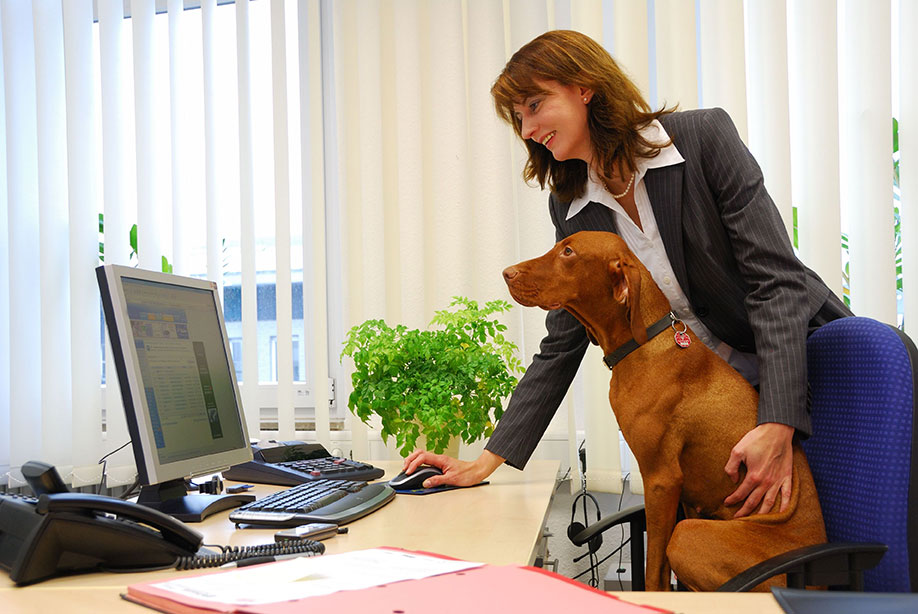
So, you’ve just had your annual review. Your supervisor looks at you and asks, “Is there anything that the company can do for you to make you happier at work? You look at her, and just to be funny, you reply, “Yeah. I want to be able to bring Clover to work with me.”

Clover is your dog. You think there’s no way in this lifetime that Sponagle is ever going to be able to go to work with you. But then your supervisor looks at you, nods, and says, “Yeah, we could work with that.”

Bringing Your Dog to Work Works!

According to a Virginia Commonwealth University study, people who bring their dogs to work with them are more productive and considerably less stressed than people who have dogs but have to leave them at home when they come to work. The study also found that people who interacted with co-workers who brought their dogs to work were more productive.

Check out the most dog friendly office.

But It Doesn’t Always Work

Now, something that you have to keep in mind is that not all workers are created equally, and not all pets are created equally. Probably no one would argue against bringing Old Yeller or Hooch to work, but they might not be overly receptive to Cujo. And not all workplaces can accommodate all animals.

A happy, smiling puppy is indisputably going to reduce stress in the workplace. But if you introduce a cranky cat into the mix, watch out.

Pick and Choose

If you are thinking about introducing animals into the workplace, it is probably a very good idea, but you are going to want to carefully vet the animals that you bring in, in the same way that you would vet potential employees. Not everyone is going to get along.

By the same token, you should not pre-judge. You don’t do that with humans, so don’t do it with animals. A sweet, gentle Rottweiler can be far more of an asset to your workplace than a nasty, ankle-biting Yorkie.

Dog OfficeInterview

If you are thinking about bringing animals into the workplace, handle it the same way you would humans. If you’re the boss, ask your employees to bring their animals in for a “meet and greet.” Some will pass the test immediately. Others might need a little work, and some will not be suitable.

Once you have identified suitable workplace animals, see how they interact with one another. You do not want a disruptive workplace with animals running all over the place and conflicting with one another. If it looks like everyone is in a good place, though, ask yourself if there is really any reason why your workers should not be able to bring their animal friends to work. It could make for a much more comforting and caring workplace.

In short, can you imagine everyone feeling very excited about coming into work because they know they will be greeted with happy animal smiles every day? Can you imagine your employees being happy coming into work because they do not have to leave their best friends at home?

For sure, this might not work in every workplace, but if it seems at all feasible, why not give it a try?

Conclusion

In conclusion, happy employees are productive employees, and people love their animal friends. Why not bring those friends into the workplace? Let that person you just reviewed, the one who needed to have Sponagle at work in order to be happy, bring Sponagle into the office. You might be surprised how well it works out for everyone.

SaveSave

What Personality Type Is Your Dog?

Westie with BooksEvery dog owner knows that their pooch is one of a kind!

Our furry friends are just like people – no two are alike, and their personalities are what make them special. But what if you tried to describe your dog’s unique characteristics? Would she be a social butterfly, or a studious Einstein? Maybe he’s the class clown or the daydreamer.

Believe it or not, scientists have actually put this topic to the research test. By using information gathered through the Dognition.com website, researchers looked at the quality of dog cognition data in a paper published in the PLoS (Public Library of Science) titled Citizen Science as a New Tool in Dog Cognition Research. Even more interesting, this research is in line with previous work on the topic.

Here are some of the personality types used in the canine analysis:

  • Socialite – these dogs, not surprisingly, aren’t about the individual problem-solving thing. They get their pack (in other words – you! – their humans) to do the work for them.
  • Expert – because of their good memories, these dogs are able to take care of many of their own problems without the help of humans.
  • Ace – these pooches are not only socially savvy but intelligent enough to exercise skilled problem-solving.
  • Maverick – these dogs bear a strong cognitive resemblance to their wolf relatives. They are fiercely independent and able to tackle a range of tasks on their own.
  • Protodog – this group is smart and skilled, but savvy enough to know when it’s prudent to get human help.
  • Renaissance dog – this category encompasses the pooches who know moderation is key. They score equally as well in all five cognitive measurements.

This is just a sampling of the cognitive types used to parse the doggy data. Check out Dognition for more info, including how to interact with your pup in order to nail down their unique personality traits.

While the PLoS piece was definitely geared toward evidence-based scientific methods, LittleThings.com has a different perspective on the matter of dogs’ personalities. They assert that your pup’s sleeping position is an indicator of his or her cognitive bents. So how do the different snoozing practices measure up?

  • Side sleepers emanate a sense of peace and utter, complete trust in their people and environment. They tend to be very loyal and happy about life in general.
  • The fox curls up with his paws underneath him and his tail wrapped all the way round his body, back up to his face. He is protecting his vital organs and preserving his body heat. These pups are sweet, gentle, and loving.
  • Crazy legs is that dog who is supremely confident in who he is and isn’t afraid to assume the most vulnerable position a canine can possibly take – belly up. He is relaxed and independent.
  • Super pup is that enviably energetic dog who wants to be at the ready whenever she needs to pop up and play. So sleeping like Superman makes total sense!
  • Passed out describes those totally adaptable, laid-back pooches who feel comfortable and confident wherever they are. They’ll typically lay flat on their back, often lifting their legs straight in the air!

These descriptions should give you a pretty good idea where your sweet little Fluffy sits on the personality scale, but if these aren’t enough to satisfy your curiosity, head on over to BarkPost and take their dog personality quiz. For a fun twist, they also have a tweaked version that helps you determine how your precious pooch would fare out in the wild.

In the end, your canine friend is who he is and the only thing that really matters is the joy and love he brings to your life!

Pit Bulls Are Misunderstood

Pit Bulls are MisunderstoodAnyone who has watched the news knows that Pit Bull attacks make for big stories in the media. Never mind that attacks by other breeds happen all over the country – they just don’t get picked up because they aren’t sensational enough. Read here about multiple instances in which the media took no interest in a mauling or death by dog attack because the dogs were not Pit Bulls.
A study by the National Canine Research Council proved this point in its four-day look at dog bites in the media. Three fatal attacks by three different non-Pit Bull dogs were each mentioned in local papers just one or two times. During the same period, one Pit Bull attack that was not fatal received coverage more than 230 times in not only national and international papers but on major networks like MSNBC, FOX, and CNN.

Pit Bulls and BSL      

Part of the mass hysteria about this breed results from the confusion over what a Pit Bull actually is. These days the term Pit Bull may refer to the standard purebred American Pit Bull Terrier, or it may reference a number of breeds which – thanks to Breed Specific Legislation – now encompass multiple “bully breeds”, like Boxers, and the American Staffordshire Terrier. BSL has been adopted by upwards of 700 cities in the United States. This legislation effectively bans certain breeds of dogs that are perceived to be particularly dangerous to humans. The problem with this kind of law is that it doesn’t address the real problem – the owners behind the dogs.

Even the CDC (Centers for Disease Control and Prevention) points out that BSL “raises constitutional and practical issues”, in part because the data is unreliable (made more difficult to ascertain due to the prevalence of mixed breeds) and also because other breeds cause injury and death and irresponsible owners are just as much of a problem as any specific breed of dog, if not more so.

Misconceptions about Pit Bulls

Over the years of repeated inundation by the media reinforcing the idea that Pit Bulls are inherently dangerous, misconceptions about these dogs have spread. Although, ironically, the publicity has also brought about increased awareness of these misconceptions and a willingness on the part of animal lovers to learn more and try to save these sweet creatures. Let’s take a look at some of the commonly accepted generalizations that have no basis in truth:

  • Pit Bulls are inherently aggressive toward humans: ironically, Pits’ history as fighting dogs speaks strongly to their ability to control themselves with humans. Because they had to “turn off” their aggressiveness when their owners would enter the ring, they were bred to be very loyal. The fact is that any breed of dog can attack if raised improperly or provoked.
  • A Pit Bull with a history of aggression cannot be saved: this is easy to disprove – Michael Vicks had 50 dogs confiscated from his dog fighting operation. 49 of these dogs were not just saved but rehabilitated!
  • Pit Bulls have a “lock jaw”: this breed’s jaw is the same as any other breed’s – it doesn’t “lock”. It is exceptionally strong, which is probably the source of this myth. That’s just one reason Pits need responsible, loving owners who will train and treat their dog with care.
  • Pits have a vicious temperament: what would you think of that myth if you knew that Pit Bulls score lower in aggression than Beagles and Collies on the American Temperament Testing Society’s scale?

The important takeaway here is that any dog can be a great, loving, loyal dog if raised in the right kind of environment. Pit Bull is just a name. Pits can be sweet, lovable, amazing pets if cared for responsibly.

Best Dog Actors

Admit it, you go to see these movies for the dogs – not the human (or cartoon) actors or the plot!  Sometimes the best actor in a movie is the dog!  Check out this list of some of our favorite dog actors.

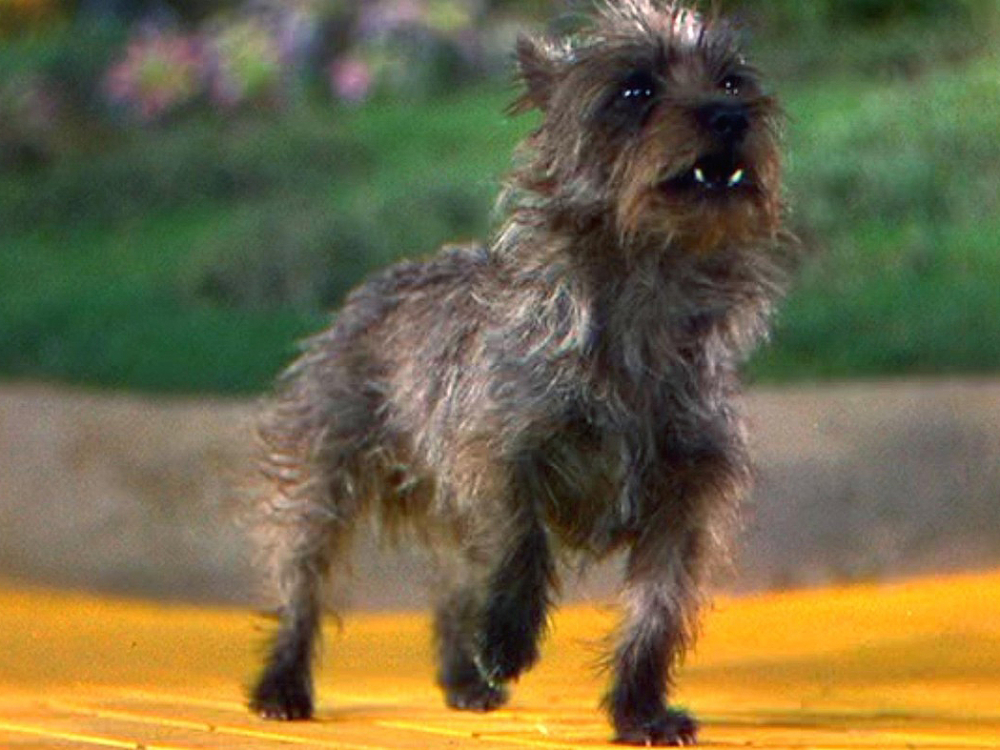
Toto Toto

The “Wizard of Oz” star – a Cairn Terrier named Terry – was paid a handsome $125 per week for her work in the timeless film (more than some of the human actors made!). Her career took off and she ended up starring in 13 movies.

Benji Benji

This popular series of films began in 1974 with a tale of a stray dog who ended up saving the day. Benji was played by a shelter dog named Higgens in the original movie, and later on his own pup Benjean played the character in “Benji” sequels. This beloved film represented one of the first on-screen uses of a dog as the primary character and depicter of various emotions throughout the plotline.

Lady and the Tramp Lady and the Tramp

From, naturally, Disney’s landmark animated film “Lady and the Tramp”. It’s tough to deny the total adorableness of the famous pampered Cocker Spaniel and her mangy suitor Tramp.

Old Yeller Old Yeller

This hero of the film by the same name was literally a lifesaver throughout the entire movie. His heart-touching actions evoked tears from even the hardest of viewers, especially when his sacrifice led to his own demise.

Beethoven Beethoven

The huge, lovable St. Bernard whose adventures with his family were chronicled throughout eight films between 1992 and 2014 was actually played by six different animals. The original Beethoven, a dog named Chris, starred in the first two films.

Rin Tin Tin Rin Tin Tin

Rin Tin Tin was amazing German Shepherd who lived to the ripe old age of 14 was actually rescued by an American Soldier on the battlefields of WWI. His first films were silent, and he went on to become so beloved a movie star that in 1963 he received his very own star on the Walk of Fame.

Marley Marley

We all know the heart-wrenching book-turned-movie features a rambunctious Labrador who keeps his owner captivated with his sweet personality. The part of Marley was actually played by an astonishing 18 different dogs.

Chance and Shadow Chance and Shadow

The sweet if hyper Chance, played by American Bulldog Rattler (voiced by Michael J. Fox) and wise old Golden Retriever Shadow, played by Ben (voiced by Don Ameche) make their way back to their family in a fun, charming, heartwarming way in the film “Homeward Bound”.

Slink Slink

The Eeyoure-esque slinky dachshund from the wildly popular Disney Pixar film “Toy Story” is well-loved for his dry humor and deadpan lines such as “I may not be a smart dog, but I know what roadkill is” (a nod to Tom Hanks’ Forrest Gump character).

Hooch Hooch

Fan of this movie remember the enormous, beer drinking, house destroying French Mastiff from the Tom Hanks film “Turner and Hooch” was played by Beasley. Beasley was born in 1978 and passed away in 1992, with “Turner and Hooch” remaining as his only film legacy.

Petey Petey

Last but certainly not least is this sweet little Pit Bull who played in the “Our Gang” series (which later become “The Little Rascals”) in the 1920s actually did have a ring around his eye. Petey was played by Pal the Wonder Dog, whose nearly complete eye ring was finished by Max Factor with the use of dye. Pal’s story has a sad ending, unfortunately, as in 1930 someone poisoned the little pup and he passed away. It was never known who committed this horribly cruel act, nor what their motivation was. Even though Pal only had a small part in one movie over the course of his career (a cameo appearance in “The Freshman”) he certainly deserves a mention.

As the presence of animals as main characters in film continues to grow, this list will surely grow too!

Famous Dogs on Social Media

[fusion_text]Everyone loves an adorable animal – whether it’s just an exceptionally cute and cuddly kitty, or the heartwarming tale of a real underdog (pun intended!), the Internet has obliged by providing a platform for pets to rise to stardom. Following are five super sweet dogs who have climbed the social media ladder and are happy to welcome you to their fandom.

Take a few minutes to check out these special dogs on social media. You won’t be disappointed, although you may lose a big chunk of time getting sucked into their cuteness!

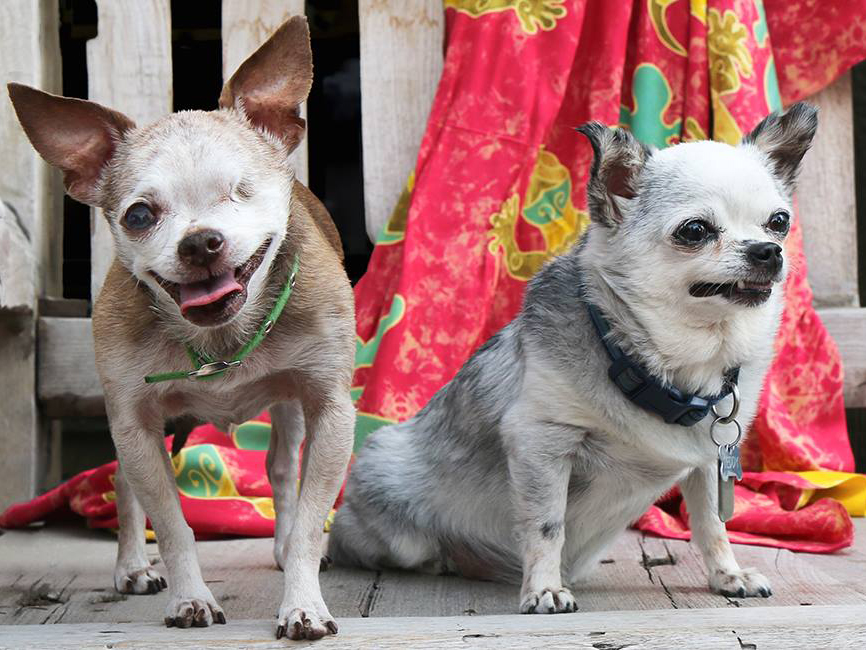
Teddy Harley – this absolutely adorable little one-eyed Chihuahua was born in a puppy mill. This precious baby served as a stud dog for years, enduring substandard care and abuse. Finally, he was discarded and an employee of the mill retrieved him and turned him over to an animal rescue who rehomed him into a loving family who obtained the medical care he needed. Though they were told Harley wouldn’t make it more than a few months, he is healthy and kicking four years later, at the ripe old age of 14! The best part is that Harley is now an activist in the fight against puppy mills. Read more at his website and follow him on Facebook, Twitter, and Instagram @harleypuppymilldog.
Teddy Teddy – another sweet little Chihuahua, Teddy was also rescued from a puppy mill. The National Mill Dog Rescue took Teddy and his little friend Gwinnie away to safety in 2012. They not only recovered, but thrived, and were adopted into a loving family with several other rescue dogs. Teddy Bear (as his new mama calls him) is also a social media activist dog against puppy mills and is a buddy of Harley. On top of that, he also boasts a long list of photo contest awards, as well as being the face of DogTV in May of 2013. Follow Teddy on Facebook and Instagram @teddybearburchfield.
Tuna Melts My Heart Tuna Melts My Heart – this adorable Chiweenie has an exaggerated overbite, recessed jawline and a wrinkly neck, but we think that makes him more adorable! He was rescued by Courtney Dasher in December of 2010 at a Farmers Market in LA when he was a four-month old puppy. Since him mom created an Instagram account (@tunameltsmyheart) he has become a social media sensation with 1.6M followers.  People love when the “underdog” comes out on top.  We love him and he is also an ambassador for animal rescue…..need we say more?!  You can also follow him on Facebook and Twitter.
Marnie Marnie – this fluffy little Shih Tzu is a great example of the joys an older dog can bring to its new owners. Marnie was adopted as a senior citizen and is enjoying a full and spoiled life, as her owner totes her around New York City and dresses her in adorable little doggie outfits. You can follow Marnie on Instagram @marniethedog.
Tonkey Bear Tonkey Bear – just try to resist the face of this bearcoat Shar Pei! Tonkey hails from Edmonton, AB, Canada and has been blessed with a rare recessive gene that causes her coat to be extra furry (and – we think – extra adorbs!). She lives in the Great White North with her canine friend Maxi, and shares her exhausting life adventures (translation – lots of sleep, puppies need their beauty rest after all!) through Facebook and Instagram @bearcoat_tonkey.
Kermit the Dog Kermit – no list of social media dogs you need to follow would be complete without Kermit, the Italian Greyhound buddy of YouTube personality Jenna Marbles. Kermit has ridden Jenna’s coattails to fame via the dog-lover’s comedic videos, including one that parodies those who spell Kermit wrongly, as “Cermet” (which Jenna pronounces “Sermit” in her signature accented Kermit the dog voice). Join Kermit on Instagram @Kermit_Thedog and Twitter.
Tugger Tugger – an adorable, fun yellow lab whose adventures are featured on Facebook, Instagram (@TuggerTails) and Twitter. Tugger has almost 1 million followers on Facebook. Let’s help get to that milestone! He was adopted as a puppy and has been living it up with new family since November 2011.
Doge Doge – while this is a concept more than an actual dog (though a real Shiba Inu named Kobasu was the inspiration behind the original meme), Doge does deserve a mention among social media dogs. Doge is simply a Shiba Inu placed in a meme and surrounded by nonsensical text like “much wow” and “so amaze”. Read more about the gorgeous Shiba behind the Doge sensation here.

[/fusion_text]

Animal Loving Celebs

Many famous people leverage their exposure to the public in order to help animals, either by promoting practices like having your pets fixed, or raising awareness and money for specific animal rescues and other charities. 

Betty WhiteBetty White

This comedically gifted star of Golden Girls and Hot in Cleveland has been a vocal animal advocate for decades. She has been involved with the Greater Los Angeles Zoo Association as well as the Morris Animal Foundation (which conducts health research for animals).  Betty’s personal sponsorship of more than 30 animal health studies through this foundation has improved health for dogs, cats, horses and wildlife.

KeshaKe$ha

Yes, that Ke$ha. The eccentric and at times troubled singer of hits like “Your Love Is My Drug” is not only a pet owner (of both dogs and cats!) but she also doesn’t hesitate to use her fame for the good of other animals like seals, sharks, and lions. The wild songstress is outspoken about cruelty to these beautiful creatures and is also an avid proponent of cruelty-free cosmetics. Her animal activism won her the Humane Society’s Wyler Award in 2013. Now that’s worth singing about.

Sarah McLaclanSarah McLachlan

The soulful crooner who rose to musical popularity through both her affiliation with the concert tour Lilith Fair as well as heart-touching songs like “I Will Remember You” is also a die-hard devotee of animal rights. Sarah’s soul-wrenching song “Angel”, which graces her commercial (yes, that one) promoting fundraising for the ASPCA, has undoubtedly been part of the reason she was able to raise upwards of $30 million for the animal rights group since 2007.

Bob BarkerBob Barker

The legendary 35-year host of The Price Is Right has long been known for his strong views on beloved pets. This celebrity animal lover used to end every episode of the popular game show with a reminder for viewers to get their pets spayed or neutered. Bob’s DJ&T Foundation has raised millions of dollars in support of spaying and neutering programs as well as animal rescues. This stand-up celebrity even relinquished his position as the host of the Miss USA Pageant because of the use of animal furs as Prizes. Bob is a true winner in the celebrity animal activism game.

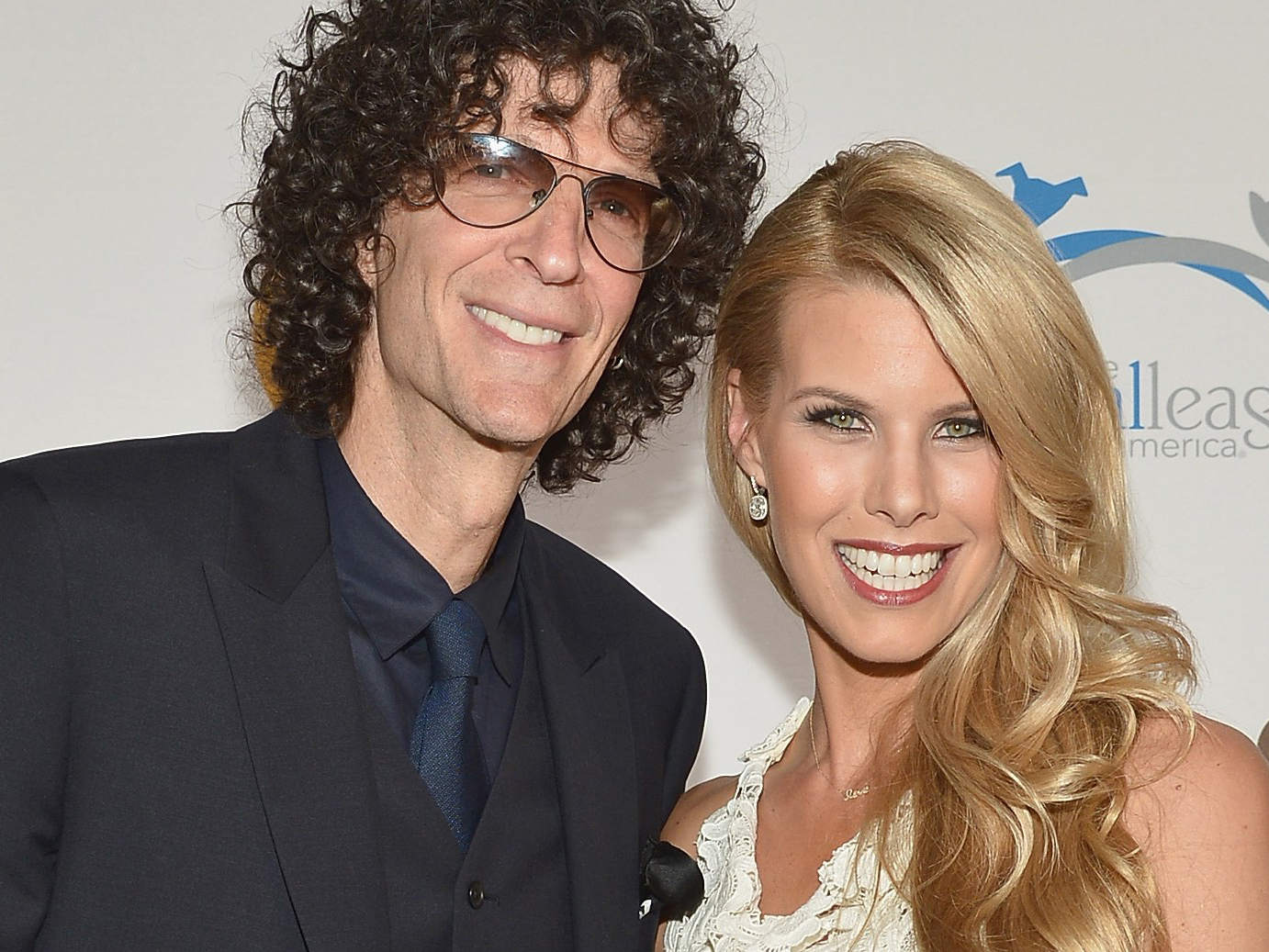
Howard and Beth SternHoward and Beth Stern

This shock jock has been lighting up the radio and television airwaves for over a quarter of a century with his controversial topics, interviews, and celebrity antics. But Howard and his wife Beth aren’t all about entertainment – they are also celebrity animal activists who are active with the North Shore Animal League. And, in 2011 they produced a calendar packed with irresistibly cute pets in order to raise money for the animal rescue. The surprisingly un-shocking behavior is a win for animals as well as Howard’s image.  Beth Stern just released a book entitled “Yoda: The Story of a Cat and His Kittens” and she is donating 100% of the proceeds to North Shore Animal League.   The book can be purchased here.

Simon CowellSimon Cowell

Indisputably the cruelest of the American Idol judges, Simon Cowell is just a softie underneath – as evidenced by his celebrity animal activism. The former talent judge has been very outspoken about leaving pets in hot cars, as well as the unethical nature of the fur trade and the benefits of adopting from an animal rescue rather than buying a designer pet. Simon put his heart where his mouth is by adopting two adorable little terriers in 2010. In addition to all of these lovable animal activism actions, Cowell leveraged his celebrity power to put a stop to an X-Factor dolphin segment. He is also active in the fight against captive dolphins and whales. It’s hard to find anything to criticize about that performance!

OUR STOREBeing Pawsitive is a print on demand shop for all animal lovers, vegans, and free spirits
CUSTOMER SERVICESWe pride ourself on customer satisfaction. View our policies and reach out with any questions.

Subscribe to Our Newsletter!

Subscribe

* indicates required

Intuit Mailchimp

Copyright© 2025 Being Pawsitive. All Rights Reserved. 

Add to cart