Secondhand Smoke is Bad for Your Pet


Most people know that secondhand smoke is bad for children or other adults nearby. In fact, the Center for Disease Control estimates that since 1964, nearly 2.5 million nonsmokers have died from health problems aggravated or caused by secondhand smoke. Those are staggering statistics that are hard for many smokers to face when they consider the health of their family or friends. But did you know that secondhand smoke is bad for your beloved pet as well?

What Counts as Secondhand Smoke

Before you can understand how secondhand smoke harms your pets, it’s important to understand what counts as secondhand smoke. Any smoke that comes from a tobacco product, such as cigarettes, pipes, or cigars counts. This include smoke that has been exhaled by a smoker.

Every cigarette creates more than 7,000 chemicals when it is burned, and about 70 of those are known to cause cancer. Many more are toxins that can affect health in other ways. Ammonia, arsenic, carbon monoxide, lead, methanol, and even formaldehyde are all toxins that are released when a cigarette burns.

Smoke in the environment can stay on fur and skin long after the smell has left the air. Animal fur is very absorbent, meaning that secondhand smoke can linger around their breathing space for days after being exposed.

Secondhand Smoke and Cats

Secondhand smoke is particularly dangerous for cats for one major reason: the way they groom. As cats clean themselves, they’ll lick and ingest any secondhand smoke lingering on their fur, which can lead to mouth cancer and lymph nodes. Remember that our pets are much smaller than we are; it takes a significantly lower amount of the toxins in cigarettes to affect them the way a lifetime of smoking would us.

One study showed that cats owned by one-pack-per-day smokers are more than three times as likely to develop lymphoma than a cat living in a nonsmoking home. And another found that any cat who is exposed to even a single cigarette every day is four times as likely to develop one of the most common types of oral cancers in cats.

Secondhand Smoke and Dogs

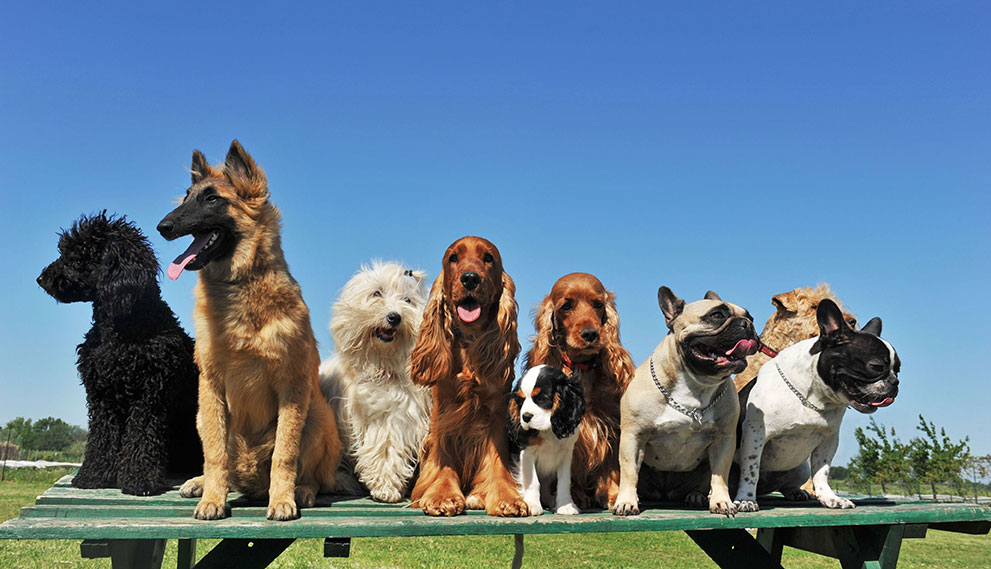
Dogs can also develop cancers of various sorts when exposed to secondhand smoke, as well as respiratory diseases like asthma and bronchitis. Studies have shown that dogs with long muzzles have a 250% higher chance of developing cancer in their nasal passages when they live with smokers than with nonsmokers. And dogs with short muzzles, like bulldogs, are more likely to develop lung cancer. Short-muzzled dogs are already at a higher risk for asthma and breathing problems; living with smokers makes it nearly impossible for these dogs to avoid developing issues.

How to Fix it

While some pet owners may think that simply smoking outside, or only in the car, is an easy way to solve this issue, that is not entirely true. Smoke travels on clothing, in hair, and in through windows and doors. When your pets cuddle or brush against you, their fur will pick up at least five to seven times as much environmental smoke residue as pets owned by nonsmokers. Vaping also isn’t an easy solution. The chemicals in many vape solutions is made up of chemicals with similar properties to ingredients in antifreeze, which can be deadly to pets when licked or ingested.

In fact, the only real way to save your pet’s life from the deadly side effects of secondhand smoke is to not expose them to it in the first place. The best option for both of you is to quit smoking altogether; don’t allow friends or family to smoke in your home; and avoid areas where smoking is allowed.
Basic Dog Obedience Tips

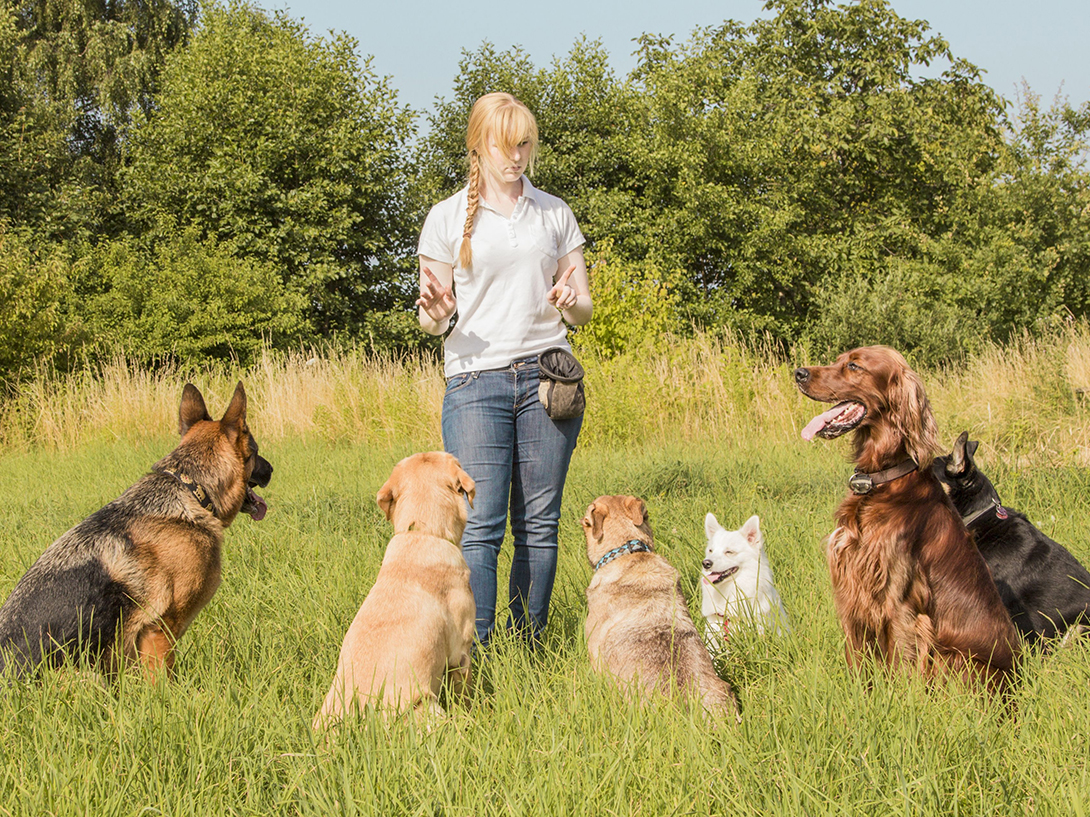
One of the best ways to teach your dog basic obedience is to take him or her to a training class. Most dog clubs offer them, and they’re a great way to train your dog while socializing him or her as well. You’ll probably even make some new friends.

Now, we have to point out that not everyone has the ability to commit to regular dog classes, and if that’s the case, you can always train your dog at home on your own time.  You can teach your dog basic obedience tips and commands at home in order to be sure that he or she behaves properly when out in public.

The Importance of a Mannerly Dog

You know the importance of good manners. They’re every bit as important for dogs as they are for people. You know how it is with people who don’t have good manners – they are not wanted in social situations, and they may find themselves left out of gatherings due to bad manners.

It’s the same with dogs. An unmannerly dog, one who pulls, barks, jumps, grabs hands or otherwise misbehaves is not going to be welcome among civilized company. Additionally, if your dog is poorly trained, he or she could, simply stated, get you evicted.

Easy Training

It’s not hard to teach your dog basic obedience. Sit, stay, down and come are very basic commands that are easily taught and reinforced, and once they are taught, you will have a well-behave dog who will be welcome in virtually any social situation.

Catch Him Doing Something Right

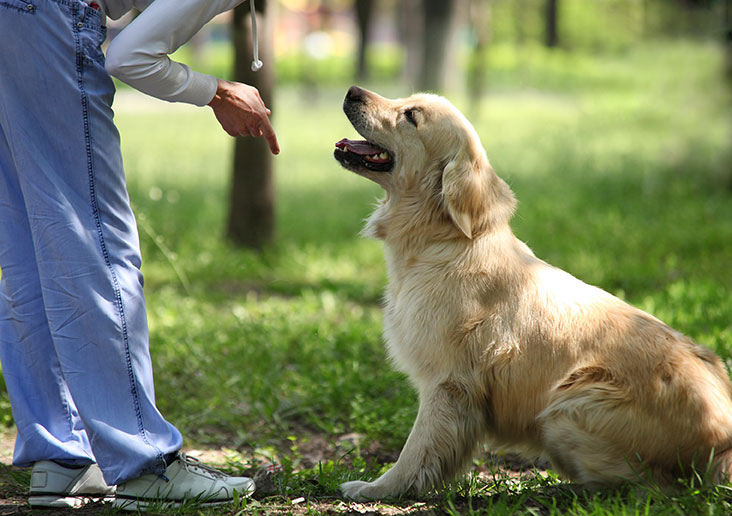
With dog training, timing is everything. As soon as your dog does what you want, reward him or her, either with words of praise or a treat. For “sit,” simply push your dog’s backside down to the floor, and once that butt is solidly on the floor, deliver praise and perhaps a treat. Your dog will immediately know that he or she has done the right thing, and will want to do it over and over.

Down

Down works the same way. Push down on the hindquarters, and then on the shoulders. When the dog gets it right, the dog gets a reward.

Stay

Tell your dog to sit. He or she already knows that. Now, hold out a treat, but don’t give it. If the dog moves toward the treat, offer a firm “No.” Then reiterate, “Stay.” The dog is going to want the treat desperately, but don’t give it until the “Stay” command has been firmly reinforced.

Basic Training Tips

Always be firm in training, but be kind. Don’t expect too much of your dog. He or she wants to please you, but has the attention span of about a two-year-old child. Don’t forget that.

Also, remember to take your training sessions out to various locations in your house. If you do it in just one place, your dog may think, “I have to do this in the kitchen… but nowhere else.”

If you work daily with your training sessions, eventually your dog will do what you want, everywhere, all the time. Therefore, start with basic obedience training and then move on to more complex training. Your dog will get the idea quickly, and you will end up with a good canine citizen who can move on to more complex training.

The Final Word

The key to good dog training is consistency and caring. Remember that you dog wants to please you, and structure your training program accordingly. With kindness and consistency, you can create a good canine citizen who will fit seamlessly into your neighborhood.

SaveSave

Biggest Mistakes You Make When Training Your Dog

Dog Training

Dogs have been companions for humans for many thousands of years. You’d think we’d have the process of training them down pat, but alas most people make some fundamental errors in their efforts to teach their pup how to be a good citizen. This can cause cracks in the bond between dog and owner, as well as cause you a lot of frustration and irritation.

Here are some basic mistakes and how to correct them.

Too Much Time Between Sessions

Training is not a simple matter of “set it and forget it”. Even after you’ve gotten your pooch to learn basic good behavior and maybe a few tricks like shake and sit, you can’t just let the whole thing go. Use commands, praise, and rewards consistently and regularly in order to keep your dog’s memory sharp and his behavior in line. Once in a while change it up, teaching something new, to keep him alert and motivated.

Using Emotion as a Training Tool

Just as with human children, it’s a bad idea to react strongly and emotionally to your pup messing up. Anger, yelling, and outbursts will not work to teach your dog how to behave properly, if anything they make matters worse by scaring him. Use a calm, neutral demeanor, and if he’s not getting the command right away, then just back up and repeat it until he does. Be confident and in charge, but not bullying. The same goes for praise – calm, positive reinforcement is more effective than over-the-top freaking out when he does something right.

Inconsistency

If you let your beloved pet sit on the couch with you one day but not the next, he will become confused and have no idea what the heck you actually want from him. Likewise, when teaching commands, you need to stick to one training method and use that technique, in the proper order, every time you work with him. Make your reactions calm and predictable so that he knows what to expect, rather than being unsure of whether you’re going to fly off the handle one day and stay quiet the next when he doesn’t obey.

Repeating Commands

We’ve all done it – our sweet little Fido won’t sit the first couple times we tell her to, so we say it 3…or 10…times more, thinking surely it will get through to her. This is a mistake, and can actually reinforce lazy behavior where the dog thinks it’s perfectly fine to take her time in obeying the command. If the first time doesn’t do it, go back to the basics and work on proper training again for that command.

Relying too Heavily upon Treats

Treats should be an initial training tool but not a long-term crutch. Focus more on praise and positive reaction on your part, and make it a goal to move away from the use of treats once the dog has begun to respond consistently to a command. Treat overuse can actually break the animal’s focus and cause them to lose sight of the desired behavior.

Not Training to the Specific Dog

While breed is partially responsible for how your dog reacts to training, your success also depends upon their individual personality. You might have a pooch that can handle the distraction of other humans, or an extraordinarily timid little guy who needs a lot of patience and repetition. Customizing your training to the dog’s characteristics will maximize both of your experiences.

Use these simple tips and your training journey is sure to be filled with rewarding results and a stronger bond than ever.

Test Your Dog IQ

How high is your canine intelligence quotient? You probably already know that dogs are loyal, protective, and pretty darn smart. But some of these little known tidbits may just blow your animal-loving mind.

Contrary to popular belief (because of their use of panting to disseminate body heat) dogs do indeed have sweat glands.  But they’re not in their armpits – they’re between their paw pads!

Remember the Michael Vicks dog fighting scandal? One of those rescued dogs, Leo (who sadly passed away in 2011 due to his seizure disorder) lived a full, happy life of servitude as a therapy dog who gave comfort to terminally ill kids.

Basic Dog Facts

(….how many of them do you already know?)

  • Dogs can actually count to five and are capable of simple math equations. Their intelligence is approximately equivalent to that of a two-year-old human.
  • The moisture on a dog’s nose actually has a purpose. It lets them identify the direction from which a smell is coming.
  • Dogs are so trainable they can even be taught to predict epileptic seizures.
  • Think you love your dog a little too much? Consider this – about one million American dog owners have named their precious pups as the beneficiaries of their wills.
  • With that devotion to our dogs comes true inclusion as a family member – 70% of pet owners sign their animal’s name to greeting cards.
  • Dogs have been man’s best friend – i.e. kept as pets – for at least 12,000 years.
  • Dogs’ olfactory abilities are 100,000 times that of humans’.
  • Dogs do not possess an appendix.
  • George Washington was a bigtime dog lover – he had 30 foxhounds, including one called Sweetlips.
  • Dogs not only have more teeth than humans, at 42 (humans have 32), but bones as well, at an impressive 321 (compared to humans at 206).
  • If you’ve ever wondered whether dogs and wolves can actually mate and produce puppies together – the answer is yes, they can.
  • Dog fossils have been discovered as far back as the year 10,000 B.C.
  • Boxers get their name from the way they move their front paws when they play. Now, that’s cute!

Other Stuff

If you thought that the spiked dog collars seen everywhere in stores were designed for the purpose of making your pooch look like a bad-a$$, you’re sort of correct. The collars originated in ancient Greece and were intended to ward off wolf attacks.

I’m sure you’ve heard an owner telling their seeing eye dog to “Get busy!” it’s because these amazing service dogs know how to do their potty business on command so that their owner is aware of it and can clean it up. Pretty dang savvy!

Does your pooch ever goes nuts at the end of the Beatles tune “A Day in the Life”? If so, it’s due to the fact that Paul McCartney added a high-pitched whistle specifically for his Shetland sheepdog’s pleasure.

Even though we want them to, dogs don’t really like hugs. To them, someone putting a “paw” over them means that animal is asserting dominance.

While humans can be positively identified by their fingerprints, a dog’s nose print is also completely unique and can be used as a way to identify them.

Raining cats and dogs” is a phrase that comes from 17th century England. It was thought that many animals drowned in heavy rainstorms, hence the idiom.

You may not know everything about your prized pup but now you know there’s a whole lot more to him than you ever thought possible!

Creative Ways to Help Animal Shelters

Perhaps you have pets you love. Maybe you hope to have a pet one day. Or maybe you can’t reasonably foresee a pet in your life, but you love animals and you want to make life better for them. Either way, you may be considering ways to help shelter animals, and fortunately, there are many ways that you can do just that. Whether you have a lot of time at your disposal, or just a bit, there are things you can do to help your animal friends who have the misfortune to be living in shelters.

In 2014, an animal shelter in Australia developed a Human Walking Program for shelter animals in Melbourne. People were encouraged to devote their lunch hour to walking dogs in Flagstaff Gardens. This was a winning situation for everyone involved – shelter dogs got exercise, people got exercise, and some people even fell so in love with the dogs that they were walking, they ended up adopting them. Other shelters all over the world got on board, and now there are Human Walking Programs in many cities.

If you don’t have the time to set up a Human Walking Program, there are still things you can do to help animal shelters, and the animals who live in them. Here are five great ideas.

Dog in CarOffer a Ride

Sometimes, animals find a home that is right around the corner. Other times, an animal has to be transported to his forever home. It might just be a drive of an hour or so, or it could be halfway across the country. Can you give an animal a ride? Or even part of a ride? Often, people cooperate, each one taking a certain leg of the journey. If you can drive for even a few miles, you can help to get an animal to a home where he will be loved forever. You really can make a difference!

Do Your Spring Cleaning

This works for both you and shelter animals. If you’ve been putting off your spring cleaning, do it now – weed out all those sheets and towels you no longer want. Shelters always need bedding.

Maybe you also have leashes, collars and toys from a pet that you loved very much and who is no longer with you. You wonder why you’re keeping them. If it would break your heart to let them go, then by all means, hold onto them. But think about how proud your lost loved one would be of you if he knew that you were giving his possessions to another animal who has nothing.

Donate

You know how, around the holiday season, everyone wants you to donate to the food bank or the homeless shelter? We’re not suggesting that you don’t do that, but think about animals, too, whose only home is a shelter. A toy or a bag of dog food can make a huge difference to a shelter animal.

Man With DogFoster

Can you take an animal, even temporarily? Fostering can open up another space in a shelter. If a pet is living with you, there is room for another homeless animal at the shelter. You don’t have to be in it for the long term, just long enough – just until that animal finds a forever home. And who knows? You might find that your lifestyle really can accommodate an animal permanently.

Read to a Dog

Okay, this isn’t as crazy as it sounds. You have heard of therapy dogs who go to libraries so that kids with reading difficulties can read to a non-judgmental dog. Have you ever wondered why that works so well? It’s because it goes both ways. Dogs love to be read to as well. They love the sound of a human voice. So why not go to an animal shelter, and read “Goodnight Moon” to a dog who is starved for human attention and the sound of a kind voice?

These are just a few ideas. You may have thought of other ways that you can help shelter dogs. Now, stop thinking about it and just do it.

SaveSave

Dealing With Cancer in Dogs

Cancer isn’t just a health concern for humans; it is also a major cause of fatality in dogs, particularly in those over 10 years old. In fact, half of all canines over age 10 will develop cancer. Dogs can be afflicted with various kinds of this overgrowth of cells, including breast, skin, and bone cancers. What do you need to know about this problem for your own pet’s sake? If your dog is getting up there in years, or has already been diagnosed with a form of canine cancer, you’ll want to be armed with some important facts.

Cancer-prone breeds

Unfortunately some dogs are more likely to be affected by this disease than others. Boxers, Bernese Mountain dogs, and Golden Retrievers are all more susceptible to cancer than other breeds. Mixed breeds have a lower incidence of hereditary disease due to their diluted gene pool but they can still be affected by environmental and random cancers.

Symptoms

These can be very much like the signs of cancer in humans. Swelling or bumps, swollen lymph nodes, or unusual bleeding should all be checked out. There can be a distinct lack of early symptoms, however, so if you sense anything at all that’s off with your pet, let your vet know.  See a list of types of cancer here along with symptoms to look for.  However, it is always beset to consult your veterinarian.

Boxer at Vet

Treatments

Thanks to advances in cancer treatment there are many options available for helping dogs with the condition. Just like humans, pets can benefit from surgical treatment, chemotherapy, and radiation. Immunotherapy is undergoing experimental research as well, wherein vaccines are used to get the immune system to help fight the disease.

Cost of cancer treatment for dogs

While costs will vary significantly depending upon where you live, diagnostics can run between a couple hundred up through $1,000. If the cancer is treatable with a commonly-utilized surgery, it could run about $1,000. If radiation or chemotherapy are also used, the costs could be as high as $15,000.

Prognosis for dogs with cancer

It’s only been in the past couple of decades that animal medical specialists learned that dogs even get cancer. Technology has advanced by leaps and bounds and now up to 60% of dogs can survive the disease, if treatment is sought. Skin tumors, mast cell tumors, and breast cancers in particular have very good cure rates. If untreated, however, a dog may only survive for a matter of months rather than years.

Prevention of cancer in dogs

This is a tricky issue because the causes are often unknown. One major step you can take in the health of your pet is to have them spayed or neutered. Spaying can cut your female dog’s chances of breast cancer by eight times, but it should be done before she goes into her first heat. Dental care can also help decrease your pup’s chances of oral cancers – regular brushing and teeth checkups should be a routine part of your animal’s care.

The most effective thing you can do is to seek regular veterinary care for your pet so that any potential problems or irregularities can be detected early on in order to begin treatment as soon as possible.

The diagnosis of any health problem in our pets can trigger a scary and anxiety-filled time. Talk to your veterinarian about all possible options. If financially feasible for you, there may be facilities that are some distance away from you that offer a higher level of care for these canine health problems. Also ask your vet about things you can do at home to make your pet as comfortable as possible. Most importantly, give your dog plenty of love and affection to keep him feeling positive and happy throughout the experience.

SaveSave

Does Your Dog Eat Too Fast?

Snoopy“Oh, it’s suppertime, yes it’s suppertime, oh, it’s sup-sup-suppertime, happiest time of the day!” Remember Snoopy singing this in “You’re a Good Man, Charlie Brown”?
Snoopy probably ate way too fast, and chances are your dog does, too. Why? Because suppertime is an event!

Now, why should that be a problem? Well, because if your dog eats too fast, he or she could choke or gag on food. And if food is so incredibly important to your dog, anyone who gets in the way of their food could end up being bitten, because they could be seen as competition for the best meal that is being provided on any given day. Food should never be an event to a dog – it should just be something that happens in the normal course of life.

Bad Things Can Happen to Good Dogs

In addition to the dangers humans risk facing if food becomes the be-all and the end-all to a dog’s day, the dog could be harmed by gulping down food and eating too fast. This is because as the food is taken in, air can also enter the digestive tract. Selling can occur, and the stomach can actually twist around. Then, nothing can move from the stomach to the intestines. This condition is known as gastric dilation-volvulus, or GDV, and it can actually be fatal.

Make It a Non-Event

Food should never be an event to a dog. One of the best ways to prevent this from happening is actually to “free range” your dog from a very early age. Instead of bringing home a bag of dog food and parceling it out at regular intervals, dump it all in a big container. That’s right, just put it all out there! If a dog has never thought of food as an “occasion” or a reward, then he or she will eat as much or as little as they need to feel full. An added benefit to doing this is that your dog will be far less likely to develop obesity in old age.

Reduce Competition

Sometimes, if you have more than one dog in the house, they may compete for food. You could try feeding them separately for a while, and then go back to the “free range” system. If they’re full all the time, then chances are that they won’t try to compete for food.

What if it’s Too Late?

Okay, if you have been using bad feeding methods up until now, it is still not too late to change them. To keep your dog from gorging, you might try putting a ball or another toy in the food container so that your dog has to eat “around.” That will slow down the eating process. You could also consider a product like a slow feeder. This is a device that requires the dog to eat around a platform to reach the food, and encourages slower eating. This can also reduce anxiety, and make food a bit less of an event.

Don’t Use Food as a Reward

You should also avoid using food as a reward. A lot of people use food as a training aid, and this can actually encourage bad eating habits. Try to think like a dog. “Do this. Good boy, you get a treat!” Dog concludes that if he does something good, he gets food. Therefore, food is good. And that means that getting food means that he is a good boy. But that is a bad idea.

You can tell your dog that he is good without offering food. A pat on the head or words of praise work wonders in training, but keep food out of the equation.

Conclusion

Food should be just food. Never an event, and never a reward. Keep this in mind, and your dog will probably not gorge.

SaveSave

The Importance of Dog Dental Care

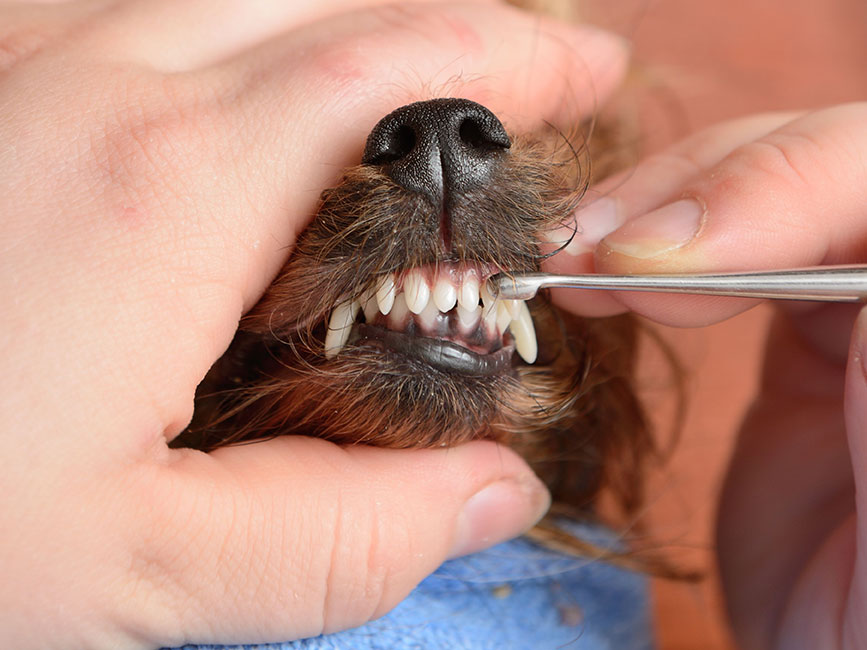
You know how it works, don’t you? You brush and floss regularly, and see your dentist twice a year for checkups. What about your dog, though? He has teeth too, right? What do you do to ensure your dog’s dental health?

You may have heard it said that dogs don’t have the same dental issues we have, and that when their teeth decay, they don’t feel pain the same way that we do. This is absolutely wrong.

Your dog most certainly can have, and possibly does have dental issues. Any dog can develop a cavity, break a tooth, or experience another issue, and he or she most certainly does experience pain when decay occurs. So, how are you going to ensure your beloved dog’s dental health?

Dog Dental VetTake Your Dog to the Vet

Dental problems in your dog are much the same as your own. Your dog can develop dental issues that can create other health problems, and also develop health problems that can lead to dental issues.  Your dog’s teeth and gums, the same as yours, should be checked out at least once a year in order to identify problems and prevent them.

So, just like you go to a dentist whenever you need treatment, now you know that you have to do the same for your pet. Dental treatments are essentially the same, whether they are performed on humans or on dogs. The purpose is the same – to ease pain and restore dental health.

About Veterinary Dentistry

Veterinary dentistry involves the cleaning of your dog’s teeth, as well as any adjustments or repairs that may be necessary. If your dog needs a filling, an extraction, or another type of repair, it will have to be done by a veterinarian.

Now, you know that if your technician identifies any problems in your mouth, he or she will refer you to the dentist. It is much the same with your dog. The technician will clean your dog’s teeth and perform a routine oral exam. If anything out of the ordinary is found, like decay below the gumline, then the vet will become involved. If gum disease is identified, then your pet may need treatment like root planing and scaling.

Identifying Dental Problems

So, how do you identify dental problems in your dog? It is essentially the same way as you identify those issues in yourself. You need to look for bad breath, broken or discolored teeth, reduced appetite or swelling in the mouth. Also, if your dog has become unusually irritable, it could be an indication of dental problems.

Cavities are considerably less common in pets than they are in humans, but they do occur, and when they do, they can be very painful. Keep in mind, too, that even the best dog, if suffering from a dental cavity, may bite out of pain and frustration, so explore carefully.

If your pet does have a dental issue, then your vet can treat it in much the same way as you have your own dental issues dealt with, with local anesthesia to numb the pain during treatment. Your pet does not have to suffer with dental issues, and most pet dental issues can be dealt with as easily as human dental issues once they are identified.

If you think that your pet has dental issues, then the best thing you can do is book an appointment with your vet to have them diagnosed and dealt with. Remember that your pet cannot say to you “My teeth hurt.” It is up to you to identify the problem and deal with it.

How to Detect Arthritis in Dogs

It can be frustrating and mentally distressing (for both pet and owner!) trying to figure out what’s wrong with your beloved companion. They can’t talk to you in words, so they must rely on your ability to decipher the physical signs they’re giving you. Fortunately there are typically clear indicators that can help you detect arthritis in your dog, or at least to pick up on warning signs so that your veterinarian can make a certain diagnosis.

(Please always consult your veterinarian if you suspect anything is wrong with your pet.)

Warning Signs of Canine Arthritis

Stiffness and lameness: this sign typically begins as a mild level of stiffness after periods of rest. The dog may have trouble getting up, particularly if they were engaging in active play or a vigorous walk before the rest period.

As their DJD (Degenerative Joint Disease) – commonly in the form of osteoarthritis – worsens, the stiffness will become more pronounced and last for longer periods of time. For example, rather than taking just a few seconds to get up and going after coming up from a laying position, your pup could need a few minutes to walk out the stiffness.

Swollen joints: when a dog has a joint problem, scar tissue usually forms around the troublesome area and causes the joint to enlarge. You may notice that your pet has one knee that is noticeably bigger than the other, or the two sides may swell concurrently. It is this scar tissue that causes the dog to have issues with range of movement and pain.

Grating joints: otherwise known as crepitus, this grating sound is the same as the one that humans hear in their joints when they begin to lose cartilage and experience signs of joint problems. Audible sounds from your dog’s joints don’t always mean they have osteoarthritis, but if severe, it’s a good indicator and may mean they’re in a fair amount of pain.

If your dog is experiencing problems in his spine, he may have a hunched back or hold his neck in a strange posture. You may also notice your normally friendly pooch getting cranky and snappy, especially if you pet or touch him in a specific spot.

How Does It Happen?

Osteoarthritis in dogs is often related to a previous injury or health issue. The pain and stiffness will frequently start in a joint that is near another problem area, like a damaged ligament or a hip or elbow affected by dysplasia. While this prior lameness may have ceased to cause symptoms long before, it could still cause joint problems down the road.

What Can You Do?

The first thing you should do is consult your veterinarian if you notice any issues with stiffness or swelling in your pet’s joints. Your vet will examine the dog for heat, fluid, and other signs of a problem around the joint.

If your vet determines that your dog does have osteoarthritis or another form of DJD, he or she may recommend medications, lifestyle adjustments, or other treatments to help ease the pup’s discomfort and slow the damage.

At home you should provide soft, comfortable bedding for your dog to minimize the impact on his body. You can also put steps or a ramp in front of furniture that he’s allowed on, especially if your dog is a smaller breed.

It may come as a surprise, but keeping Rover active is also important even if he suffers from arthritis. The level of activity you encourage your dog to partake in should be commensurate with his age and severity of his joint problems, but in general, all dogs should participate in some sort of physical activity to keep their joints mobile.

By paying attention to your dog’s cues and seeking diagnosis and treatment as soon as possible, you can help your precious pup live a longer, more comfortable life. To learn more, check out the video series here.

SaveSave

Is Your Pet Food Cruelty-Free?

You see the ads on television and in magazines all the time, from pet food companies that want you to know that if you feed your dog or cat their brand, and only their brand, your pet will live a long and healthy life. But have you ever asked yourself if those ads are truthful? They’re not always. And even if they are, there is a possibility that your pet could be enjoying a better life at the expense of other animals.

Simply stated, your pet food may not be cruelty-free.


The Horror of Animal Testing

What do you suppose companies test pet food on? That’s right, pets. And is that testing always cruelty-free? No.

Okay, first off, let’s take it as a given that PETA is comprised largely of numbers of radical activists who don’t even want you to own a pet. That said, though, they do a lot in the way of investigating into animal cruelty, and in 2003, they discovered horrific conditions in a feeding trial lab, where Iams was testing pet food. They discovered dogs and cats confined in small cages, dying and bleeding, just to mention a few abhorrent conditions. Again, keeping in mind that PETA is not necessarily the most reliable source, Iams never denied any of these allegations or offered any proof to the effect that this was not happening.

Iams is still conducting animal testing on their pet food brands. The following companies have also been identified as not being cruelty-free:

  • Pedigree
  • Hill’s Science Diet
  • Friskies
  • Purina
  • Blue Buffalo
  • Natural Balance
  • Eukanuba
  • Whiskas
  • Bakers Complete
  • Sheba

Many companies refuse to use animals in feeding trials. They include:Rottie & Chi Bowl

So, you can see that there are many options for cruelty-free animal foods, but some of the brands that are the most advertised, and supposedly the most highly recommended, may not be the best for your pet.

How to Choose

One of the best pet foods that is recommended the most by veterinarians might actually surprise you. Many vets recommend that you simply buy generic. Generic pet foods are usually as high in essential nutrients as more expensive brand names, and manufacturers of generic pet foods typically do not test on animals, which is part of the reason why the prices are so low.

We recommend taking a look at the list of nutrients on your pet food bag. You will probably find that there is very little difference when you compare essential nutrients between very expensive pet foods and less expensive generic varieties, and a multivitamin once in a while can more than make up for anything that might be missing.

If you want to feed cruelty-free pet food to your best friend, your best choice might very well be a generic brand paired with an occasional multivitamin supplement. Simply stated, the “big players” want to make money off of you and your pet while other companies just want to make sure your pet gets the nutrition he or she needs. So, leave the “designer” pet food on the shelf, and just read the nutrient label – chances are the less expensive stuff is cruelty-free.

Truthfully, nothing ever has to be tested on animals.  Technology is advancing every and scientists are working on using microchips instead of animals so let’s hope that becomes the standard.

Pet food is highly regulated in the US by the AAFCO (Association of American Feed Control Organization), but we think there has to be a better way than testing on live animals.

OUR STOREBeing Pawsitive is a print on demand shop for all animal lovers, vegans, and free spirits
CUSTOMER SERVICESWe pride ourself on customer satisfaction. View our policies and reach out with any questions.

Subscribe to Our Newsletter!

Subscribe

* indicates required

Intuit Mailchimp

Copyright© 2025 Being Pawsitive. All Rights Reserved. 

Add to cart