Does Your Dog Eat Too Fast?

Snoopy“Oh, it’s suppertime, yes it’s suppertime, oh, it’s sup-sup-suppertime, happiest time of the day!” Remember Snoopy singing this in “You’re a Good Man, Charlie Brown”?

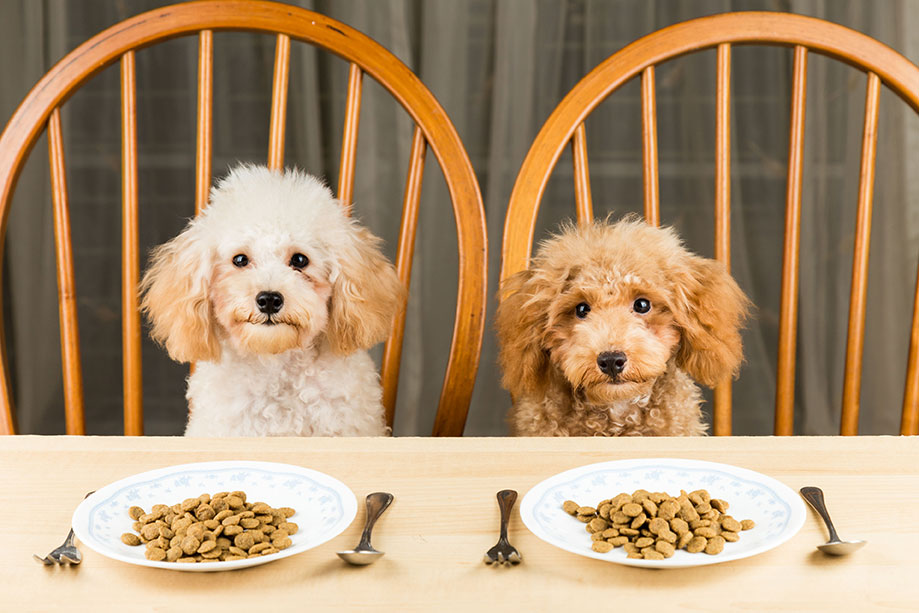
Snoopy probably ate way too fast, and chances are your dog does, too. Why? Because suppertime is an event!

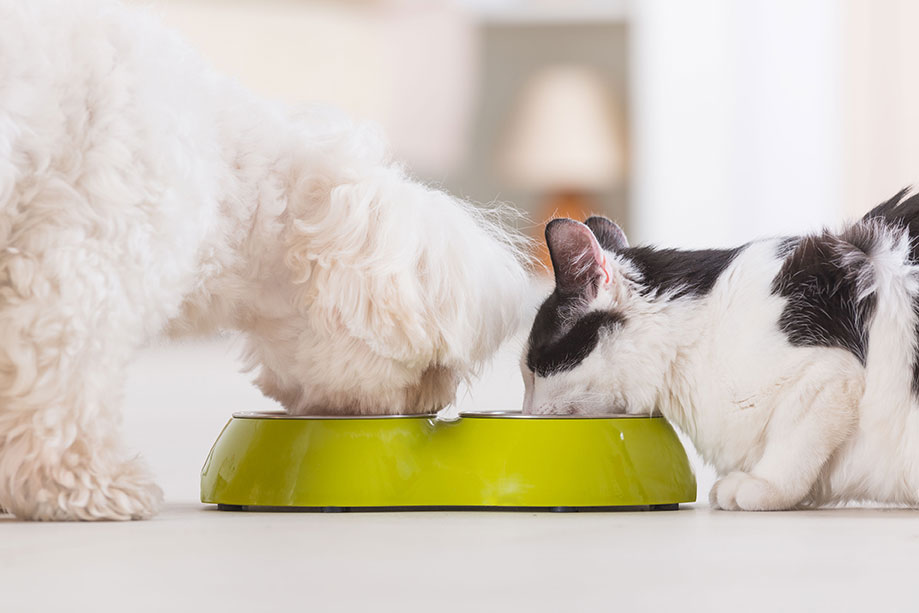
Now, why should that be a problem? Well, because if your dog eats too fast, he or she could choke or gag on food. And if food is so incredibly important to your dog, anyone who gets in the way of their food could end up being bitten, because they could be seen as competition for the best meal that is being provided on any given day. Food should never be an event to a dog – it should just be something that happens in the normal course of life.

Bad Things Can Happen to Good Dogs

In addition to the dangers humans risk facing if food becomes the be-all and the end-all to a dog’s day, the dog could be harmed by gulping down food and eating too fast. This is because as the food is taken in, air can also enter the digestive tract. Selling can occur, and the stomach can actually twist around. Then, nothing can move from the stomach to the intestines. This condition is known as gastric dilation-volvulus, or GDV, and it can actually be fatal.

Make It a Non-Event

Food should never be an event to a dog. One of the best ways to prevent this from happening is actually to “free range” your dog from a very early age. Instead of bringing home a bag of dog food and parceling it out at regular intervals, dump it all in a big container. That’s right, just put it all out there! If a dog has never thought of food as an “occasion” or a reward, then he or she will eat as much or as little as they need to feel full. An added benefit to doing this is that your dog will be far less likely to develop obesity in old age.

Reduce Competition

Sometimes, if you have more than one dog in the house, they may compete for food. You could try feeding them separately for a while, and then go back to the “free range” system. If they’re full all the time, then chances are that they won’t try to compete for food.

What if it’s Too Late?

Okay, if you have been using bad feeding methods up until now, it is still not too late to change them. To keep your dog from gorging, you might try putting a ball or another toy in the food container so that your dog has to eat “around.” That will slow down the eating process. You could also consider a product like a slow feeder. This is a device that requires the dog to eat around a platform to reach the food, and encourages slower eating. This can also reduce anxiety, and make food a bit less of an event.

Don’t Use Food as a Reward

You should also avoid using food as a reward. A lot of people use food as a training aid, and this can actually encourage bad eating habits. Try to think like a dog. “Do this. Good boy, you get a treat!” Dog concludes that if he does something good, he gets food. Therefore, food is good. And that means that getting food means that he is a good boy. But that is a bad idea.

You can tell your dog that he is good without offering food. A pat on the head or words of praise work wonders in training, but keep food out of the equation.

Conclusion

Food should be just food. Never an event, and never a reward. Keep this in mind, and your dog will probably not gorge.
SaveSave

The Importance of Dog Dental Care

You know how it works, don’t you? You brush and floss regularly, and see your dentist twice a year for checkups. What about your dog, though? He has teeth too, right? What do you do to ensure your dog’s dental health?

You may have heard it said that dogs don’t have the same dental issues we have, and that when their teeth decay, they don’t feel pain the same way that we do. This is absolutely wrong.

Your dog most certainly can have, and possibly does have dental issues. Any dog can develop a cavity, break a tooth, or experience another issue, and he or she most certainly does experience pain when decay occurs. So, how are you going to ensure your beloved dog’s dental health?

Dog Dental VetTake Your Dog to the Vet

Dental problems in your dog are much the same as your own. Your dog can develop dental issues that can create other health problems, and also develop health problems that can lead to dental issues.  Your dog’s teeth and gums, the same as yours, should be checked out at least once a year in order to identify problems and prevent them.

So, just like you go to a dentist whenever you need treatment, now you know that you have to do the same for your pet. Dental treatments are essentially the same, whether they are performed on humans or on dogs. The purpose is the same – to ease pain and restore dental health.

About Veterinary Dentistry

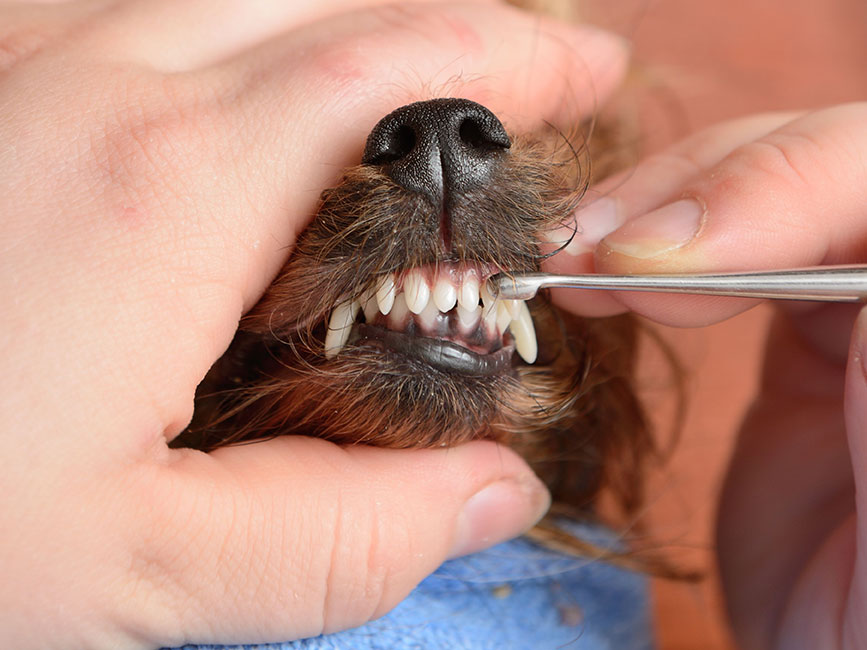
Veterinary dentistry involves the cleaning of your dog’s teeth, as well as any adjustments or repairs that may be necessary. If your dog needs a filling, an extraction, or another type of repair, it will have to be done by a veterinarian.

Now, you know that if your technician identifies any problems in your mouth, he or she will refer you to the dentist. It is much the same with your dog. The technician will clean your dog’s teeth and perform a routine oral exam. If anything out of the ordinary is found, like decay below the gumline, then the vet will become involved. If gum disease is identified, then your pet may need treatment like root planing and scaling.

Identifying Dental Problems

So, how do you identify dental problems in your dog? It is essentially the same way as you identify those issues in yourself. You need to look for bad breath, broken or discolored teeth, reduced appetite or swelling in the mouth. Also, if your dog has become unusually irritable, it could be an indication of dental problems.

Cavities are considerably less common in pets than they are in humans, but they do occur, and when they do, they can be very painful. Keep in mind, too, that even the best dog, if suffering from a dental cavity, may bite out of pain and frustration, so explore carefully.

If your pet does have a dental issue, then your vet can treat it in much the same way as you have your own dental issues dealt with, with local anesthesia to numb the pain during treatment. Your pet does not have to suffer with dental issues, and most pet dental issues can be dealt with as easily as human dental issues once they are identified.

If you think that your pet has dental issues, then the best thing you can do is book an appointment with your vet to have them diagnosed and dealt with. Remember that your pet cannot say to you “My teeth hurt.” It is up to you to identify the problem and deal with it.

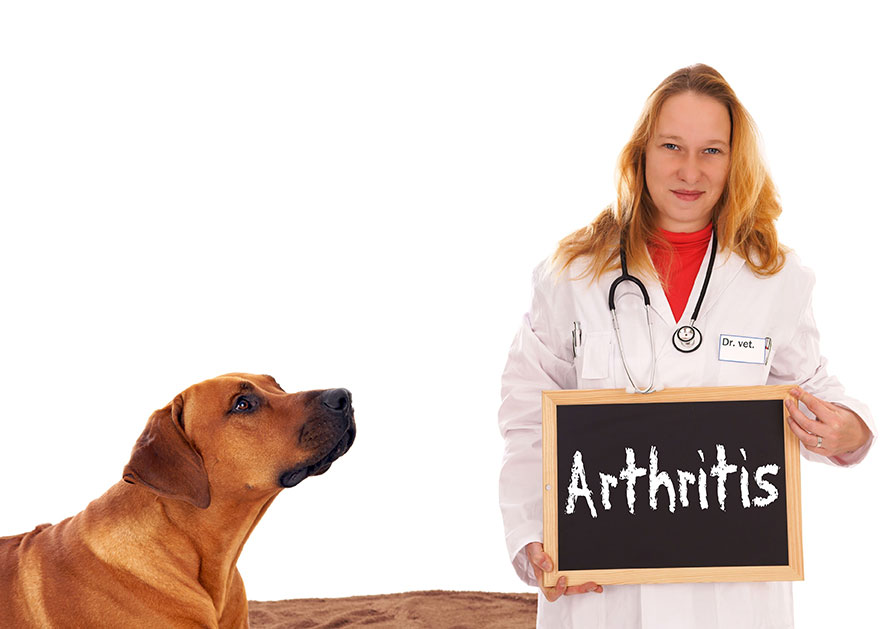
How to Detect Arthritis in Dogs

It can be frustrating and mentally distressing (for both pet and owner!) trying to figure out what’s wrong with your beloved companion. They can’t talk to you in words, so they must rely on your ability to decipher the physical signs they’re giving you. Fortunately there are typically clear indicators that can help you detect arthritis in your dog, or at least to pick up on warning signs so that your veterinarian can make a certain diagnosis.

(Please always consult your veterinarian if you suspect anything is wrong with your pet.)

Warning Signs of Canine Arthritis

Stiffness and lameness: this sign typically begins as a mild level of stiffness after periods of rest. The dog may have trouble getting up, particularly if they were engaging in active play or a vigorous walk before the rest period.

As their DJD (Degenerative Joint Disease) – commonly in the form of osteoarthritis – worsens, the stiffness will become more pronounced and last for longer periods of time. For example, rather than taking just a few seconds to get up and going after coming up from a laying position, your pup could need a few minutes to walk out the stiffness.

Swollen joints: when a dog has a joint problem, scar tissue usually forms around the troublesome area and causes the joint to enlarge. You may notice that your pet has one knee that is noticeably bigger than the other, or the two sides may swell concurrently. It is this scar tissue that causes the dog to have issues with range of movement and pain.

Grating joints: otherwise known as crepitus, this grating sound is the same as the one that humans hear in their joints when they begin to lose cartilage and experience signs of joint problems. Audible sounds from your dog’s joints don’t always mean they have osteoarthritis, but if severe, it’s a good indicator and may mean they’re in a fair amount of pain.

If your dog is experiencing problems in his spine, he may have a hunched back or hold his neck in a strange posture. You may also notice your normally friendly pooch getting cranky and snappy, especially if you pet or touch him in a specific spot.

How Does It Happen?

Osteoarthritis in dogs is often related to a previous injury or health issue. The pain and stiffness will frequently start in a joint that is near another problem area, like a damaged ligament or a hip or elbow affected by dysplasia. While this prior lameness may have ceased to cause symptoms long before, it could still cause joint problems down the road.

What Can You Do?

The first thing you should do is consult your veterinarian if you notice any issues with stiffness or swelling in your pet’s joints. Your vet will examine the dog for heat, fluid, and other signs of a problem around the joint.

If your vet determines that your dog does have osteoarthritis or another form of DJD, he or she may recommend medications, lifestyle adjustments, or other treatments to help ease the pup’s discomfort and slow the damage.

At home you should provide soft, comfortable bedding for your dog to minimize the impact on his body. You can also put steps or a ramp in front of furniture that he’s allowed on, especially if your dog is a smaller breed.

It may come as a surprise, but keeping Rover active is also important even if he suffers from arthritis. The level of activity you encourage your dog to partake in should be commensurate with his age and severity of his joint problems, but in general, all dogs should participate in some sort of physical activity to keep their joints mobile.

By paying attention to your dog’s cues and seeking diagnosis and treatment as soon as possible, you can help your precious pup live a longer, more comfortable life. To learn more, check out the video series here.

SaveSave

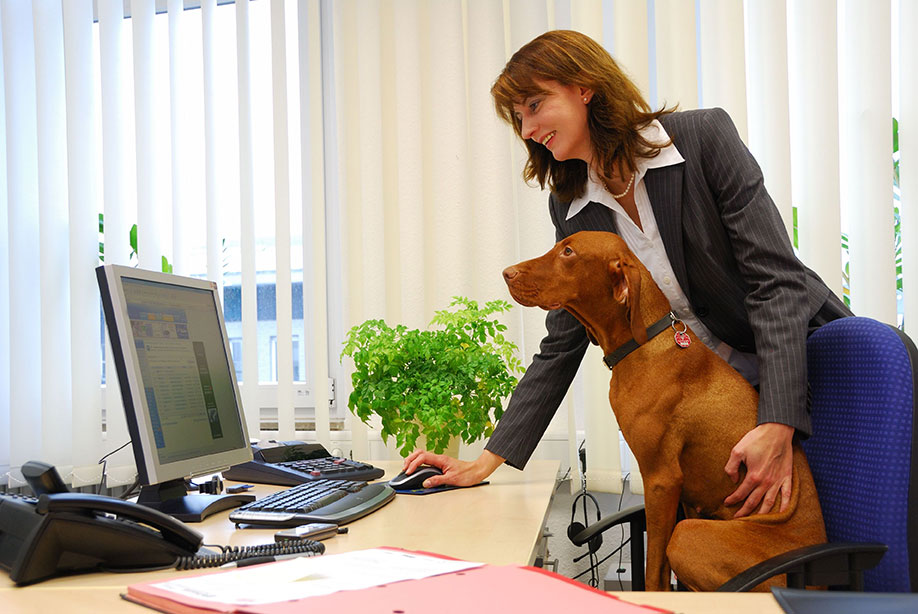
Want to Bring Your Dog to Work?

So, you’ve just had your annual review. Your supervisor looks at you and asks, “Is there anything that the company can do for you to make you happier at work? You look at her, and just to be funny, you reply, “Yeah. I want to be able to bring Clover to work with me.”

Clover is your dog. You think there’s no way in this lifetime that Sponagle is ever going to be able to go to work with you. But then your supervisor looks at you, nods, and says, “Yeah, we could work with that.”

Bringing Your Dog to Work Works!

According to a Virginia Commonwealth University study, people who bring their dogs to work with them are more productive and considerably less stressed than people who have dogs but have to leave them at home when they come to work. The study also found that people who interacted with co-workers who brought their dogs to work were more productive.

Check out the most dog friendly office.

But It Doesn’t Always Work

Now, something that you have to keep in mind is that not all workers are created equally, and not all pets are created equally. Probably no one would argue against bringing Old Yeller or Hooch to work, but they might not be overly receptive to Cujo. And not all workplaces can accommodate all animals.

A happy, smiling puppy is indisputably going to reduce stress in the workplace. But if you introduce a cranky cat into the mix, watch out.

Pick and Choose

If you are thinking about introducing animals into the workplace, it is probably a very good idea, but you are going to want to carefully vet the animals that you bring in, in the same way that you would vet potential employees. Not everyone is going to get along.

By the same token, you should not pre-judge. You don’t do that with humans, so don’t do it with animals. A sweet, gentle Rottweiler can be far more of an asset to your workplace than a nasty, ankle-biting Yorkie.

Dog OfficeInterview

If you are thinking about bringing animals into the workplace, handle it the same way you would humans. If you’re the boss, ask your employees to bring their animals in for a “meet and greet.” Some will pass the test immediately. Others might need a little work, and some will not be suitable.

Once you have identified suitable workplace animals, see how they interact with one another. You do not want a disruptive workplace with animals running all over the place and conflicting with one another. If it looks like everyone is in a good place, though, ask yourself if there is really any reason why your workers should not be able to bring their animal friends to work. It could make for a much more comforting and caring workplace.

In short, can you imagine everyone feeling very excited about coming into work because they know they will be greeted with happy animal smiles every day? Can you imagine your employees being happy coming into work because they do not have to leave their best friends at home?

For sure, this might not work in every workplace, but if it seems at all feasible, why not give it a try?

Conclusion

In conclusion, happy employees are productive employees, and people love their animal friends. Why not bring those friends into the workplace? Let that person you just reviewed, the one who needed to have Sponagle at work in order to be happy, bring Sponagle into the office. You might be surprised how well it works out for everyone.

SaveSave

Is Your Pet Food Cruelty-Free?

You see the ads on television and in magazines all the time, from pet food companies that want you to know that if you feed your dog or cat their brand, and only their brand, your pet will live a long and healthy life. But have you ever asked yourself if those ads are truthful? They’re not always. And even if they are, there is a possibility that your pet could be enjoying a better life at the expense of other animals.

Simply stated, your pet food may not be cruelty-free.


The Horror of Animal Testing

What do you suppose companies test pet food on? That’s right, pets. And is that testing always cruelty-free? No.

Okay, first off, let’s take it as a given that PETA is comprised largely of numbers of radical activists who don’t even want you to own a pet. That said, though, they do a lot in the way of investigating into animal cruelty, and in 2003, they discovered horrific conditions in a feeding trial lab, where Iams was testing pet food. They discovered dogs and cats confined in small cages, dying and bleeding, just to mention a few abhorrent conditions. Again, keeping in mind that PETA is not necessarily the most reliable source, Iams never denied any of these allegations or offered any proof to the effect that this was not happening.

Iams is still conducting animal testing on their pet food brands. The following companies have also been identified as not being cruelty-free:

  • Pedigree
  • Hill’s Science Diet
  • Friskies
  • Purina
  • Blue Buffalo
  • Natural Balance
  • Eukanuba
  • Whiskas
  • Bakers Complete
  • Sheba

Many companies refuse to use animals in feeding trials. They include:Rottie & Chi Bowl

So, you can see that there are many options for cruelty-free animal foods, but some of the brands that are the most advertised, and supposedly the most highly recommended, may not be the best for your pet.

How to Choose

One of the best pet foods that is recommended the most by veterinarians might actually surprise you. Many vets recommend that you simply buy generic. Generic pet foods are usually as high in essential nutrients as more expensive brand names, and manufacturers of generic pet foods typically do not test on animals, which is part of the reason why the prices are so low.

We recommend taking a look at the list of nutrients on your pet food bag. You will probably find that there is very little difference when you compare essential nutrients between very expensive pet foods and less expensive generic varieties, and a multivitamin once in a while can more than make up for anything that might be missing.

If you want to feed cruelty-free pet food to your best friend, your best choice might very well be a generic brand paired with an occasional multivitamin supplement. Simply stated, the “big players” want to make money off of you and your pet while other companies just want to make sure your pet gets the nutrition he or she needs. So, leave the “designer” pet food on the shelf, and just read the nutrient label – chances are the less expensive stuff is cruelty-free.

Truthfully, nothing ever has to be tested on animals.  Technology is advancing every and scientists are working on using microchips instead of animals so let’s hope that becomes the standard.

Pet food is highly regulated in the US by the AAFCO (Association of American Feed Control Organization), but we think there has to be a better way than testing on live animals.

Tips for the New Dog Parent

You’ve planned and researched and searched and anticipated; now you’ve found the perfect new dog for your family and she or he is finally coming home (rescued, of course). This is a very exciting time for both you and your pet, and it can also be a period of some stress for the animal as they adjust to a new environment. Even if the dog is a puppy and hasn’t been raised for years in another home, he will still be very worked up, excited and happy – yes, but also may experience some anxiety.

We have some new helpful dog parent tips to make the transition easier and help you get a good start on your journey as a pet owner.

Before Your Dog Comes Home

Just as when you’re having a human baby, your work in dog parenting starts even before the precious furry bundle arrives at the house. Some things you’ll want to do ahead of time include:

  • Puppy-proofing the house – particularly if your dog is a baby, he will get into plenty of mischief and you will want him to be in a safe environment. Put chemicals out of reach, make sure your plants aren’t poisonous to pets, stow breakables away for now, and install baby gates if you intend to use them.
  • Deciding on crate training – for puppies this is usually the best option, and starting young means they’ll get used to it easily. High energy breeds often do better crated at night so that they can’t get into trouble that may harm them. Choose a crate that’s large enough for your pet to stand up and turn around in, but not so big that they can get out of hand.
  • Equipping yourself with supplies – aside from dishes, leash, and toys, you’ll also want to make sure you have the same food the dog has been eating at his previous home. If you want to switch brands this should be done over a period of time, not all at once – especially when the dog’s digestive system may be going through some upheaval with the transition of homes.

After Your Pup’s Arrival

Whatever training method you’re going to use should be implemented immediately. Do not wait until the dog “gets used to his new home” or “matures a bit”. Dominance must be established from day one, for his sake as much as for yours.

Introduce your beloved new pal to his potty area right away. Keep in mind that due to the stress of changing environments he may have some accidents at first, even if he was already housebroken. Don’t worry, just be consistent and continue showing him the proper place to eliminate, along with rewarding him with positive attention and praise when he does it right.

Don’t bring strangers around your new pet too soon. They need some time to calmly observe and learn the routine you’re establishing for their daily life. Likewise do not storm the dog park in the first few days or let neighborhood children overwhelm your new dog.

Down the Road

It may take a few weeks for your dog to acclimate to his new surroundings and learn to trust each member of the family. Don’t get discouraged at setbacks, and don’t hesitate to consult your veterinarian about trainers or any health concerns you may have. Good training, consistency, patience, and lots of love are the keys to establishing a good foundation with your precious pet. Invest the time and effort into making a great start and your dog will reward you with unconditional love and years of joy.

Fospice: Hospice for Dogs

There’s a new movement afoot – or should that be a-paw – in the world of animal fostering, and it all started with one person’s inspiration from the ASPCA’s end of life fostering program.

As a part of their comprehensive pet fostering program, the ASPCA sponsors a fospice (foster + hospice) program for animals who are either too young, sick, or injured to go to a forever home. While some of those pets will eventually recuperate and be adopted, there are those who are at the end of their lives due to age or terminal illness.  They deserve love and care at the end of their lives – doesn’t everyone?

Foster Dogs NYC

Sarah Brasky of New York decided that this was a truly rewarding idea and took the fospice concept and ran with it. She founded Foster Dogs NYC which finds and sponsors foster parents for dogs who are living out their golden years in less than optimal conditions. These sweet pooches may be in a shelter, at a rescue, or in danger of owner surrender. Sarah believes that these dogs deserve all the love, dignity, and medical care that a real family offers and her organization provides them with just that.

Foster Dogs NYC started out in 2009, when Brasky was fresh out of college, as a way to help connect rescue dogs with foster families that could give them temporary haven in order to save them from euthanization. Then, in 2013, Brasky added the Fospice program, specifically designed to address the needs of older and terminally ill dogs who need a place to live the rest of their months or years in comfort and peace. She took the ASPCA concept and embellished upon it, making it her own and adding some twists.

How It Works

When a foster parent takes a dog in through Foster Dogs NYC, the organization provides the animal with veterinarian care, supplies, and an array of fun and indulgent gifts from local NYC vendors. When you sponsor a pet through this amazing organization, you’re facilitating:

  • Assistance finding a dog in need a fospice family
  • A dog bed donation from Harry Barker
  • A private photo shoot for the dog and its foster owner so that the owner has a memento to remember his or her foster pet by
  • A 6-month subscription to BarkBox – a service that sends treats and toys to that special pet

Every company that Foster Dogs NYC partners with is based in New York, because supporting local business matters to Brasky.

In order to qualify for the fospice program, the animal must be elderly and/or terminally ill, in the custody of a non-profit 501(c)(3) rescue organization or a shelter, or be in danger of losing their home due to owner surrender.

Foster Dogs NYC doesn’t just serve the animals, they serve people too. The organization offers free Foster Workshops in order to help potential foster parents learn about fostering as well as dog health and care. These workshops are also open to anyone who wants to learn how to be a better dog owner. As a bonus, adoptable pooches also attend the workshops in order to socialize them and allow the attendees to see up close and personal how beneficial the program is for the animals.

Volunteers

Brasky’s group is always looking for volunteers to help spread the word and assist with adoption events, fundraisers, shelter visits, and educational workshops. Those who have the ability to assist with things like photography, event planning, and marketing are always in demand. If you’d like to help out you can check out their volunteer page here.

While Brasky’s fospice program was only able to sponsor five dogs per year in its first couple years, the organization obtained 501(c)(3) status in 2014 and has now been able to place over 20 dogs (and counting!). The worthy cause is growing every day and giving dogs without much time left the love, pampering, and care they deserve.

The Value of Service Dogs

Dogs have been helping humans since ancient times. Both ancient Chinese and Roman artifacts depict dogs acting as guides to the blind or assisting people in other ways. This tradition of canine-human cooperation has persisted for tens of thousands of years, right up until today when we specifically train animals to be companions and assistants to people with disabilities.

Who Uses Service Dogs?

Anyone with a qualifying condition under the Americans with Disabilities Act may be eligible to apply for a service animal. Some common types of working dogs include:

  • Hearing
  • Seeing eye
  • Autism
  • Seizure alert
  • Mobility

Veterans

Argus Service DogThere are also organizations that provide animals to former veterans, including those with PTSD (Post-Traumatic Stress Disorder) as well as vets with injuries sustained in combat. One such organization is Argus Service Dog Foundation, co-founded by animal trainer and host of the CBS hit show “Lucky Dog” Brandon McMillan.

McMillan founded Argus along with Mike Herstik – a renowned trainer of military and law enforcement canines – and psychologist Eric Brotman, PhD. McMillan and Herstik came up with the idea after working with a vet named Tyler who had lost both his legs in combat in Afghanistan. The pair trained a dog to assist Tyler, who was having trouble with day-to-day tasks, and the experience made them realize that there was a huge need for these helpful animals in the lives of wounded American soldiers. Thus, Argus was born.

Autism

Service dogs can not only protect children with autism from bolting and getting lost, they can also provide a psychological anchor that gives the child security and helps them to function better and stay calmer in day-to-day life. Organizations like 4 Paws for Ability help kids with autism to obtain a service animal. They do ask that families participate in fundraising for their pet but they act as a partner in that effort, giving guidance and assistance along the way.

Benefits of Service Dogs

These amazing animals serve a number of functions in the lives of those with disabilities. Although the value of a service dog is incalculable, here are a few specific benefits of the heroic canines:

  • They provide disabled people with self-sufficiency. Because these animals are with the person 24 hours a day, helping them with everyday tasks, they offer the individual a sense of independence rather than having to continually request help from others just to accomplish day-to-day goals.
  • They can reduce caregiver costs. In some cases a service dog can completely replace a disabled individual’s daily helper. Because the skillfully trained pups can assist with tasks like shopping and household chores, the need for an assistant may be diminished or eliminated completely.
  • Canine companions provide a form of physical therapy. With interactive tasks like grooming or playing fetch, not only the dog benefits from the exercise but its owner does as well.
  • These animals offer unconditional love, and psychological support on days that might be hard for the person with disabilities. The emotional benefits of a devoted canine helper are difficult to quantify.
  • The dogs can improved a person’s social life as well. Disabled people often isolate themselves, or are trapped in their home because they lack the help they need to get out and about. Service dogs change all that by being the individual’s guide and personal assistant. These animals also tend to make it much easier to interact with other people because they generate interest and provide a topic of conversation.

While service dogs are very expensive to train (the total bill can run about $25,000), the advantages for both the owner and the animal are innumerable. Most organizations provide dogs at no cost to the recipient (although there are usually wait lists) and some, like 4 Paws for Ability, enlist the help of clients to raise funds to cover the cost of training. For those in need of one of these amazing companions, where there’s a will, there’s a way.

What Personality Type Is Your Dog?

Westie with BooksEvery dog owner knows that their pooch is one of a kind!
Our furry friends are just like people – no two are alike, and their personalities are what make them special. But what if you tried to describe your dog’s unique characteristics? Would she be a social butterfly, or a studious Einstein? Maybe he’s the class clown or the daydreamer.

Believe it or not, scientists have actually put this topic to the research test. By using information gathered through the Dognition.com website, researchers looked at the quality of dog cognition data in a paper published in the PLoS (Public Library of Science) titled Citizen Science as a New Tool in Dog Cognition Research. Even more interesting, this research is in line with previous work on the topic.

Here are some of the personality types used in the canine analysis:

  • Socialite – these dogs, not surprisingly, aren’t about the individual problem-solving thing. They get their pack (in other words – you! – their humans) to do the work for them.
  • Expert – because of their good memories, these dogs are able to take care of many of their own problems without the help of humans.
  • Ace – these pooches are not only socially savvy but intelligent enough to exercise skilled problem-solving.
  • Maverick – these dogs bear a strong cognitive resemblance to their wolf relatives. They are fiercely independent and able to tackle a range of tasks on their own.
  • Protodog – this group is smart and skilled, but savvy enough to know when it’s prudent to get human help.
  • Renaissance dog – this category encompasses the pooches who know moderation is key. They score equally as well in all five cognitive measurements.

This is just a sampling of the cognitive types used to parse the doggy data. Check out Dognition for more info, including how to interact with your pup in order to nail down their unique personality traits.

While the PLoS piece was definitely geared toward evidence-based scientific methods, LittleThings.com has a different perspective on the matter of dogs’ personalities. They assert that your pup’s sleeping position is an indicator of his or her cognitive bents. So how do the different snoozing practices measure up?

  • Side sleepers emanate a sense of peace and utter, complete trust in their people and environment. They tend to be very loyal and happy about life in general.
  • The fox curls up with his paws underneath him and his tail wrapped all the way round his body, back up to his face. He is protecting his vital organs and preserving his body heat. These pups are sweet, gentle, and loving.
  • Crazy legs is that dog who is supremely confident in who he is and isn’t afraid to assume the most vulnerable position a canine can possibly take – belly up. He is relaxed and independent.
  • Super pup is that enviably energetic dog who wants to be at the ready whenever she needs to pop up and play. So sleeping like Superman makes total sense!
  • Passed out describes those totally adaptable, laid-back pooches who feel comfortable and confident wherever they are. They’ll typically lay flat on their back, often lifting their legs straight in the air!

These descriptions should give you a pretty good idea where your sweet little Fluffy sits on the personality scale, but if these aren’t enough to satisfy your curiosity, head on over to BarkPost and take their dog personality quiz. For a fun twist, they also have a tweaked version that helps you determine how your precious pooch would fare out in the wild.

In the end, your canine friend is who he is and the only thing that really matters is the joy and love he brings to your life!

Can You Teach an Old Dog New Tricks?

Training Senior DogWe’ve all heard the old saying “you can’t teach an old dog new tricks”. This idiom is often used as a commentary on the fact that you can’t change people, but its origin was indeed a reference to actual aged canines. In 1523 an Englishman named Fitzherbert, in his book on animal husbandry, cautioned that dogs must be taught when they are puppies otherwise it will be too late (in so many words…the original phrasing was old-timey English with all sorts of funky spelling, of course).

While people have come to accept this phrase’s truth with regard to both dogs as well as humans, it only took four days of training for Discovery Channel’s “Myth Busters” team Jamie Hyneman and Adam Savage to prove Fitzherbert’s theory wrong.  Are we really surprised??

According to certified dog trainer Michelle Mullins, aging may cause older dogs to learn a bit more slowly, but training can help keep their minds sharp and improve their quality of life. Older dogs may even be easier to train than puppies because their attention span is longer and they tend to have more self-control.

Things to Consider When Training an Older Dog

Physical limitations can have an impact on your dog’s training. Muscle or joint problems – such as arthritis (fairly common in mature dogs) – can affect their ability to do tricks that involve running, jumping, or repetitively lying down. That doesn’t mean you can’t train them though! Choose alternative commands like speak, heel, or shake. Some older dogs may also have vision or hearing problems. If your dog’s sight isn’t the greatest, they can still be taught to respond to voice commands, and for the hard of hearing dog, you can convert oral commands to hand signals.

Mental challenges can also pose an obstacle for your pet. Just like humans, old dogs can develop cognitive issues like anxiety or memory problems. In addition, their sleep behaviors may change. These challenges can usually be worked around; just exercise extra patience with your pet and show him lots of love and compassion.

When training your older dog, start by rewarding his response with praise, then a small treat. You want him to eventually obey commands with only praise as a reward (too many treats can cause stomach upset and put extra weight on your beloved pup at a time when his metabolism is already slowing down!). Work with your dog for at least a few minutes every day (consistency is key) and give him about a month to learn his new habits.

Good Tricks to Start With

Where should you begin when training an older dog? Here are some great commands to start out with:

  • Speak
  • Dance (great for high energy, wriggly dogs!)
  • Shake
  • Kiss
  • Crawl
  • Roll over
  • Get your leash
  • Drop (lie down)
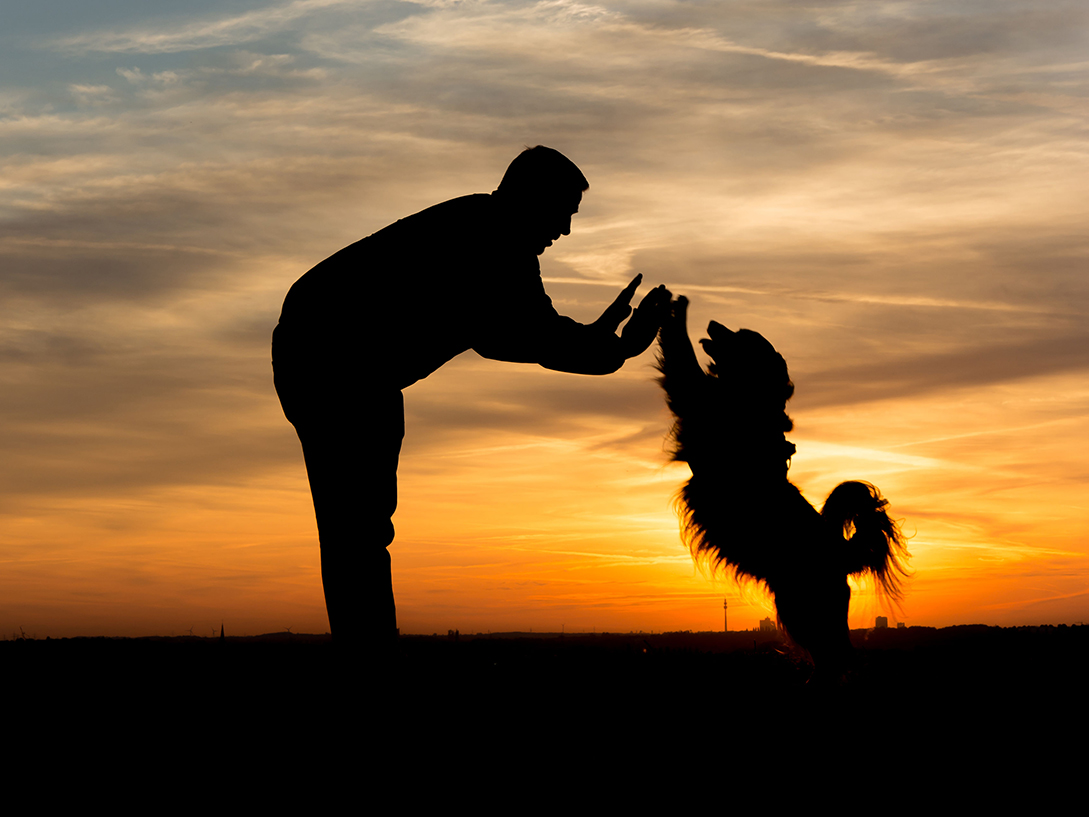
  • High five

Training can also be used to discourage destructive behaviors, like digging, chewing non-toy household items, and excessive barking. The same principles apply – command, praise, reward, and patience.

Like any puppy, it will take some time for your dog to learn how to perform these unfamiliar actions. The important thing to remember is that while showing off your sweet pooch’s talents can be a fun part of the process, the real benefit to training your older dog is that you will forge an even stronger bond with him. In addition, he will get valuable brain stimulation and exercise that is great for his overall health.

If you run into roadblocks while trying to train your mature pup, don’t hesitate to consult a professional. Ask your veterinarian for their suggestions on any issues you may encounter. Most of all, have fun!

OUR STOREBeing Pawsitive is a print on demand shop for all animal lovers, vegans, and free spirits
CUSTOMER SERVICESWe pride ourself on customer satisfaction. View our policies and reach out with any questions.

Subscribe to Our Newsletter!

Subscribe

* indicates required

Intuit Mailchimp

Copyright© 2025 Being Pawsitive. All Rights Reserved. 

Add to cart