
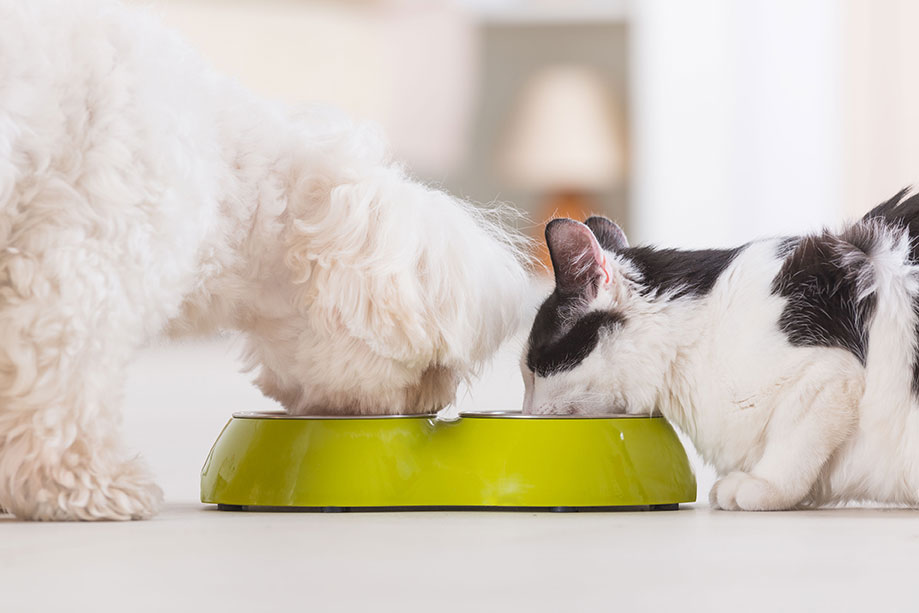
You see the ads on television and in magazines all the time, from pet food companies that want you to know that if you feed your dog or cat their brand, and only their brand, your pet will live a long and healthy life. But have you ever asked yourself if those ads are truthful? They’re not always. And even if they are, there is a possibility that your pet could be enjoying a better life at the expense of other animals.
Simply stated, your pet food may not be cruelty-free.
The Horror of Animal Testing
What do you suppose companies test pet food on? That’s right, pets. And is that testing always cruelty-free? No.
Okay, first off, let’s take it as a given that PETA is comprised largely of numbers of radical activists who don’t even want you to own a pet. That said, though, they do a lot in the way of investigating into animal cruelty, and in 2003, they discovered horrific conditions in a feeding trial lab, where Iams was testing pet food. They discovered dogs and cats confined in small cages, dying and bleeding, just to mention a few abhorrent conditions. Again, keeping in mind that PETA is not necessarily the most reliable source, Iams never denied any of these allegations or offered any proof to the effect that this was not happening.
Iams is still conducting animal testing on their pet food brands. The following companies have also been identified as not being cruelty-free:
- Pedigree
- Hill’s Science Diet
- Friskies
- Purina
- Blue Buffalo
- Natural Balance
- Eukanuba
- Whiskas
- Bakers Complete
- Sheba
Many companies refuse to use animals in feeding trials. They include:
- The Honest Kitchen
- Almo Nature
- Halo
- Flinch River Ranch (Vegan)
- Solid Gold
- Yarrah (Organic)
- Nutri-Vet
- Holistic Blend
- Burns
- Stella & Chewy’s
- Pooch & Mutt
- Happy Dog Food
- Fish4Dogs
- Newman’s Own
- Timberwolf Organics (Organic)
- Dr. Harvey’s
- Feline’s Pride
- Pet Guard (Organic)
- Oma’s Pride
- Fromm Family Foods
- Dingonatura
- Pet Chef Express (Pet Food Delivery Service)
- Artemis
- Raw Advantage (Organic)
- Sauder Feeds
- Wysong Professional Diets
- Azmira Holistic Animal Care
- Bravo Raw Diet
- Sojourner Farms
So, you can see that there are many options for cruelty-free animal foods, but some of the brands that are the most advertised, and supposedly the most highly recommended, may not be the best for your pet.
How to Choose
One of the best pet foods that is recommended the most by veterinarians might actually surprise you. Many vets recommend that you simply buy generic. Generic pet foods are usually as high in essential nutrients as more expensive brand names, and manufacturers of generic pet foods typically do not test on animals, which is part of the reason why the prices are so low.
We recommend taking a look at the list of nutrients on your pet food bag. You will probably find that there is very little difference when you compare essential nutrients between very expensive pet foods and less expensive generic varieties, and a multivitamin once in a while can more than make up for anything that might be missing.
If you want to feed cruelty-free pet food to your best friend, your best choice might very well be a generic brand paired with an occasional multivitamin supplement. Simply stated, the “big players” want to make money off of you and your pet while other companies just want to make sure your pet gets the nutrition he or she needs. So, leave the “designer” pet food on the shelf, and just read the nutrient label – chances are the less expensive stuff is cruelty-free.
Truthfully, nothing ever has to be tested on animals. Technology is advancing every and scientists are working on using microchips instead of animals so let’s hope that becomes the standard.
Pet food is highly regulated in the US by the AAFCO (Association of American Feed Control Organization), but we think there has to be a better way than testing on live animals.
