Does Your Dog Eat Too Fast?

Snoopy“Oh, it’s suppertime, yes it’s suppertime, oh, it’s sup-sup-suppertime, happiest time of the day!” Remember Snoopy singing this in “You’re a Good Man, Charlie Brown”?

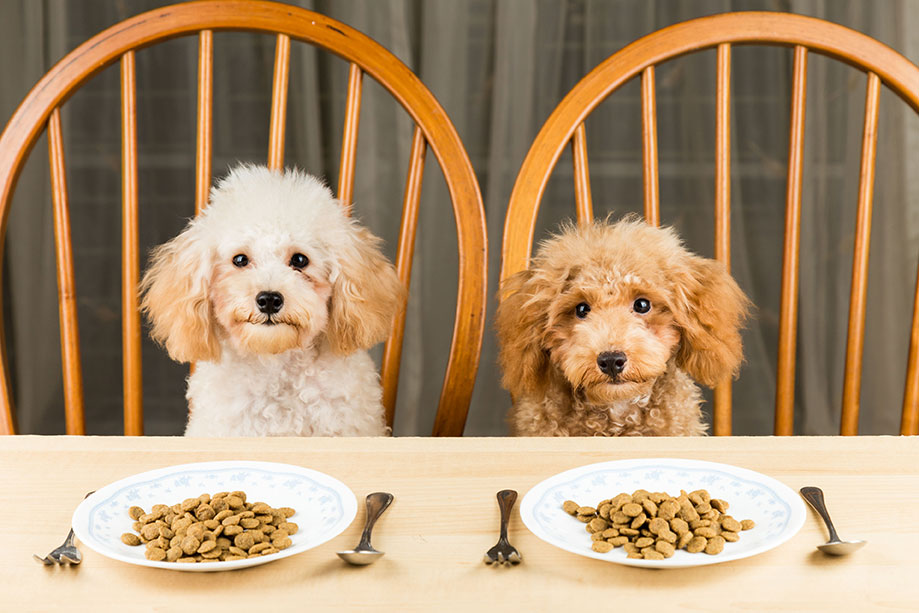
Snoopy probably ate way too fast, and chances are your dog does, too. Why? Because suppertime is an event!

Now, why should that be a problem? Well, because if your dog eats too fast, he or she could choke or gag on food. And if food is so incredibly important to your dog, anyone who gets in the way of their food could end up being bitten, because they could be seen as competition for the best meal that is being provided on any given day. Food should never be an event to a dog – it should just be something that happens in the normal course of life.

Bad Things Can Happen to Good Dogs

In addition to the dangers humans risk facing if food becomes the be-all and the end-all to a dog’s day, the dog could be harmed by gulping down food and eating too fast. This is because as the food is taken in, air can also enter the digestive tract. Selling can occur, and the stomach can actually twist around. Then, nothing can move from the stomach to the intestines. This condition is known as gastric dilation-volvulus, or GDV, and it can actually be fatal.

Make It a Non-Event

Food should never be an event to a dog. One of the best ways to prevent this from happening is actually to “free range” your dog from a very early age. Instead of bringing home a bag of dog food and parceling it out at regular intervals, dump it all in a big container. That’s right, just put it all out there! If a dog has never thought of food as an “occasion” or a reward, then he or she will eat as much or as little as they need to feel full. An added benefit to doing this is that your dog will be far less likely to develop obesity in old age.

Reduce Competition

Sometimes, if you have more than one dog in the house, they may compete for food. You could try feeding them separately for a while, and then go back to the “free range” system. If they’re full all the time, then chances are that they won’t try to compete for food.

What if it’s Too Late?

Okay, if you have been using bad feeding methods up until now, it is still not too late to change them. To keep your dog from gorging, you might try putting a ball or another toy in the food container so that your dog has to eat “around.” That will slow down the eating process. You could also consider a product like a slow feeder. This is a device that requires the dog to eat around a platform to reach the food, and encourages slower eating. This can also reduce anxiety, and make food a bit less of an event.

Don’t Use Food as a Reward

You should also avoid using food as a reward. A lot of people use food as a training aid, and this can actually encourage bad eating habits. Try to think like a dog. “Do this. Good boy, you get a treat!” Dog concludes that if he does something good, he gets food. Therefore, food is good. And that means that getting food means that he is a good boy. But that is a bad idea.

You can tell your dog that he is good without offering food. A pat on the head or words of praise work wonders in training, but keep food out of the equation.

Conclusion

Food should be just food. Never an event, and never a reward. Keep this in mind, and your dog will probably not gorge.
SaveSave

Want to Bring Your Dog to Work?

So, you’ve just had your annual review. Your supervisor looks at you and asks, “Is there anything that the company can do for you to make you happier at work? You look at her, and just to be funny, you reply, “Yeah. I want to be able to bring Clover to work with me.”

Clover is your dog. You think there’s no way in this lifetime that Sponagle is ever going to be able to go to work with you. But then your supervisor looks at you, nods, and says, “Yeah, we could work with that.”

Bringing Your Dog to Work Works!

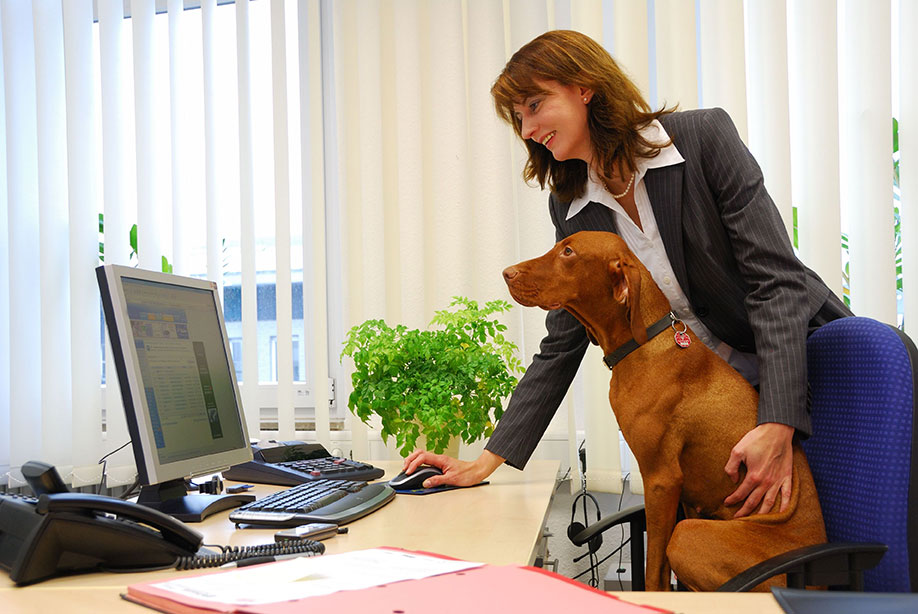
According to a Virginia Commonwealth University study, people who bring their dogs to work with them are more productive and considerably less stressed than people who have dogs but have to leave them at home when they come to work. The study also found that people who interacted with co-workers who brought their dogs to work were more productive.

Check out the most dog friendly office.

But It Doesn’t Always Work

Now, something that you have to keep in mind is that not all workers are created equally, and not all pets are created equally. Probably no one would argue against bringing Old Yeller or Hooch to work, but they might not be overly receptive to Cujo. And not all workplaces can accommodate all animals.

A happy, smiling puppy is indisputably going to reduce stress in the workplace. But if you introduce a cranky cat into the mix, watch out.

Pick and Choose

If you are thinking about introducing animals into the workplace, it is probably a very good idea, but you are going to want to carefully vet the animals that you bring in, in the same way that you would vet potential employees. Not everyone is going to get along.

By the same token, you should not pre-judge. You don’t do that with humans, so don’t do it with animals. A sweet, gentle Rottweiler can be far more of an asset to your workplace than a nasty, ankle-biting Yorkie.

Dog OfficeInterview

If you are thinking about bringing animals into the workplace, handle it the same way you would humans. If you’re the boss, ask your employees to bring their animals in for a “meet and greet.” Some will pass the test immediately. Others might need a little work, and some will not be suitable.

Once you have identified suitable workplace animals, see how they interact with one another. You do not want a disruptive workplace with animals running all over the place and conflicting with one another. If it looks like everyone is in a good place, though, ask yourself if there is really any reason why your workers should not be able to bring their animal friends to work. It could make for a much more comforting and caring workplace.

In short, can you imagine everyone feeling very excited about coming into work because they know they will be greeted with happy animal smiles every day? Can you imagine your employees being happy coming into work because they do not have to leave their best friends at home?

For sure, this might not work in every workplace, but if it seems at all feasible, why not give it a try?

Conclusion

In conclusion, happy employees are productive employees, and people love their animal friends. Why not bring those friends into the workplace? Let that person you just reviewed, the one who needed to have Sponagle at work in order to be happy, bring Sponagle into the office. You might be surprised how well it works out for everyone.

SaveSave

Tips for the New Dog Parent

You’ve planned and researched and searched and anticipated; now you’ve found the perfect new dog for your family and she or he is finally coming home (rescued, of course). This is a very exciting time for both you and your pet, and it can also be a period of some stress for the animal as they adjust to a new environment. Even if the dog is a puppy and hasn’t been raised for years in another home, he will still be very worked up, excited and happy – yes, but also may experience some anxiety.

We have some new helpful dog parent tips to make the transition easier and help you get a good start on your journey as a pet owner.

Before Your Dog Comes Home

Just as when you’re having a human baby, your work in dog parenting starts even before the precious furry bundle arrives at the house. Some things you’ll want to do ahead of time include:

  • Puppy-proofing the house – particularly if your dog is a baby, he will get into plenty of mischief and you will want him to be in a safe environment. Put chemicals out of reach, make sure your plants aren’t poisonous to pets, stow breakables away for now, and install baby gates if you intend to use them.
  • Deciding on crate training – for puppies this is usually the best option, and starting young means they’ll get used to it easily. High energy breeds often do better crated at night so that they can’t get into trouble that may harm them. Choose a crate that’s large enough for your pet to stand up and turn around in, but not so big that they can get out of hand.
  • Equipping yourself with supplies – aside from dishes, leash, and toys, you’ll also want to make sure you have the same food the dog has been eating at his previous home. If you want to switch brands this should be done over a period of time, not all at once – especially when the dog’s digestive system may be going through some upheaval with the transition of homes.

After Your Pup’s Arrival

Whatever training method you’re going to use should be implemented immediately. Do not wait until the dog “gets used to his new home” or “matures a bit”. Dominance must be established from day one, for his sake as much as for yours.

Introduce your beloved new pal to his potty area right away. Keep in mind that due to the stress of changing environments he may have some accidents at first, even if he was already housebroken. Don’t worry, just be consistent and continue showing him the proper place to eliminate, along with rewarding him with positive attention and praise when he does it right.

Don’t bring strangers around your new pet too soon. They need some time to calmly observe and learn the routine you’re establishing for their daily life. Likewise do not storm the dog park in the first few days or let neighborhood children overwhelm your new dog.

Down the Road

It may take a few weeks for your dog to acclimate to his new surroundings and learn to trust each member of the family. Don’t get discouraged at setbacks, and don’t hesitate to consult your veterinarian about trainers or any health concerns you may have. Good training, consistency, patience, and lots of love are the keys to establishing a good foundation with your precious pet. Invest the time and effort into making a great start and your dog will reward you with unconditional love and years of joy.

What Personality Type Is Your Dog?

Westie with BooksEvery dog owner knows that their pooch is one of a kind!

Our furry friends are just like people – no two are alike, and their personalities are what make them special. But what if you tried to describe your dog’s unique characteristics? Would she be a social butterfly, or a studious Einstein? Maybe he’s the class clown or the daydreamer.

Believe it or not, scientists have actually put this topic to the research test. By using information gathered through the Dognition.com website, researchers looked at the quality of dog cognition data in a paper published in the PLoS (Public Library of Science) titled Citizen Science as a New Tool in Dog Cognition Research. Even more interesting, this research is in line with previous work on the topic.

Here are some of the personality types used in the canine analysis:

  • Socialite – these dogs, not surprisingly, aren’t about the individual problem-solving thing. They get their pack (in other words – you! – their humans) to do the work for them.
  • Expert – because of their good memories, these dogs are able to take care of many of their own problems without the help of humans.
  • Ace – these pooches are not only socially savvy but intelligent enough to exercise skilled problem-solving.
  • Maverick – these dogs bear a strong cognitive resemblance to their wolf relatives. They are fiercely independent and able to tackle a range of tasks on their own.
  • Protodog – this group is smart and skilled, but savvy enough to know when it’s prudent to get human help.
  • Renaissance dog – this category encompasses the pooches who know moderation is key. They score equally as well in all five cognitive measurements.

This is just a sampling of the cognitive types used to parse the doggy data. Check out Dognition for more info, including how to interact with your pup in order to nail down their unique personality traits.

While the PLoS piece was definitely geared toward evidence-based scientific methods, LittleThings.com has a different perspective on the matter of dogs’ personalities. They assert that your pup’s sleeping position is an indicator of his or her cognitive bents. So how do the different snoozing practices measure up?

  • Side sleepers emanate a sense of peace and utter, complete trust in their people and environment. They tend to be very loyal and happy about life in general.
  • The fox curls up with his paws underneath him and his tail wrapped all the way round his body, back up to his face. He is protecting his vital organs and preserving his body heat. These pups are sweet, gentle, and loving.
  • Crazy legs is that dog who is supremely confident in who he is and isn’t afraid to assume the most vulnerable position a canine can possibly take – belly up. He is relaxed and independent.
  • Super pup is that enviably energetic dog who wants to be at the ready whenever she needs to pop up and play. So sleeping like Superman makes total sense!
  • Passed out describes those totally adaptable, laid-back pooches who feel comfortable and confident wherever they are. They’ll typically lay flat on their back, often lifting their legs straight in the air!

These descriptions should give you a pretty good idea where your sweet little Fluffy sits on the personality scale, but if these aren’t enough to satisfy your curiosity, head on over to BarkPost and take their dog personality quiz. For a fun twist, they also have a tweaked version that helps you determine how your precious pooch would fare out in the wild.

In the end, your canine friend is who he is and the only thing that really matters is the joy and love he brings to your life!

National Mill Dog Rescue

National Mill Dog Rescue is an organization doing amazing work – 10,000+ rescued mill dogs worth of amazing. The Peyton, CO based 501(c)(3) was established in 2007 by Theresa Strader, all because of one sweet, neglected little Italian Greyhound named Lily.

About Lily

Lily - National Mill Dog RescueLily spent the first seven years of her life in servitude to breeders. Like many mill dogs, Lily was expected to produce lucrative puppies without so much as a veterinary checkup in return. Due to this horrifying treatment Lily suffered the effects of multiple health problems – from the degenerated roof of her mouth and lower jaw to tumors throughout her mammary glands. She was worn out, used up, and terrified of humans (justifiably so).

Finally, poor little Lily’s luck turned when Strader rescued her along with a dozen other abused dogs from a dog auction in Missouri. Strader, despite being a veteran of the dog rescue scene, vouches that the months after bringing Lily home were an eye-opening experience even for her. Yet even with her horrifying start in life, Lily thrived on the medical care and love she received and eventually allowed humans into her heart. She passed away in peace in the loving arms of family in May 2008.

It is in Lily’s honor that Strader and her team of volunteers have continued the work of saving these precious creatures from a caged life of fear and pain. Strader is determined that her sweet pup’s life of suffering will not be in vain, and thus far she has excelled at accomplishing that goal.

NMDR Facts

The rescue runs on 95% volunteer power. Volunteers number over 800, and the only paid staff are a veterinarian, three veterinary technicians, kennel cleaners, a rescue coordinator, an adoptions manager, a foster care manager, two part-time office staffers, and an accountant.

NMDR makes dog runs twice a month and takes in over 70 neglected animals each trip (half of whom are transferred to partner rescues nationwide). In 2011 Petco gifted the rescue with a Sprinter van to assist them in their dog rescue efforts.

It takes about 6-8 weeks to rehabilitate a mill dog, and the average age of the animal taken in by the rescue is seven years, although among the 100+ dogs available for adoption on the website, ages range from under a year old up to senior pets.

Adopting from NMDR

Strader runs a tight ship in order to ensure that her pups go to good, loving homes. While the adoption requirements are strict, this helps ensure that these animals who have already gone through so much don’t have to endure more suffering in life. Some of the non-negotiables include:

  • Yard must be fenced (occasionally – rarely – we will place a dog in a condo or townhouse with a small outside area)
  • Dog must be an inside pet (no outside dogs)
  • Dog will not be chained
  • Adoptive families must adhere to local pet laws and maintain routine medical care and treatment
  • Safe collar with ID tags must be worn at all times
  • If something happens that causes the adoptive family to need to return the dog, the dog must be returned to NMDR

The work that National Mill Dog Rescue does is heartbreaking, heartwarming, physically and emotionally demanding, and everything in between. But it’s paying off. In addition to the more than 10,000 dogs who have been given a new lease on life since 2007, the organization has received much media attention as well as being named one of the best non-profits of 2015 by GreatNonprofits.org.

If you are in the market for a new dog, please consider adopting one of their available dogs.  There are things you can do to help, even from afar. Visit the NMDR website for more information.

OUR STOREBeing Pawsitive is a print on demand shop for all animal lovers, vegans, and free spirits
CUSTOMER SERVICESWe pride ourself on customer satisfaction. View our policies and reach out with any questions.

Subscribe to Our Newsletter!

Subscribe

* indicates required

Intuit Mailchimp

Copyright© 2025 Being Pawsitive. All Rights Reserved. 

Add to cart