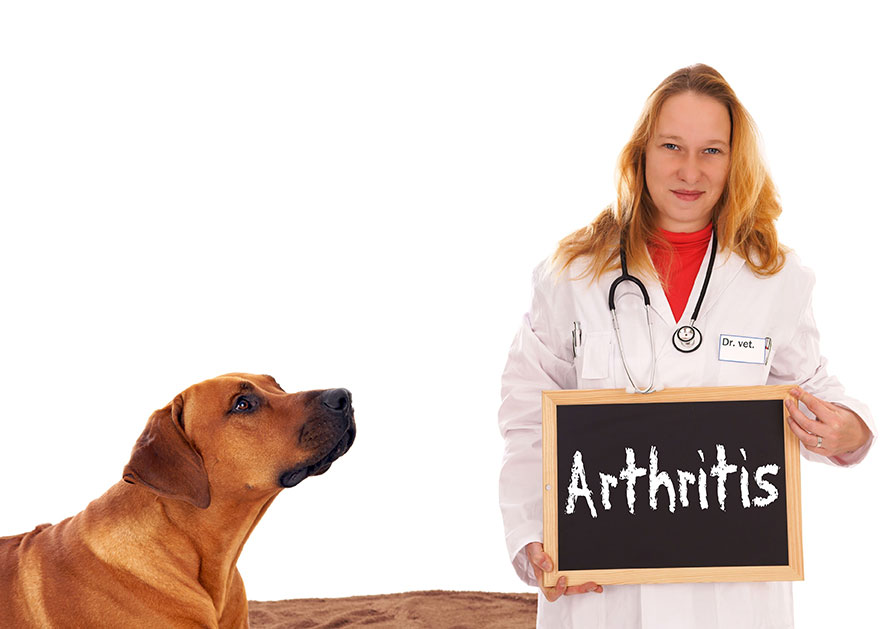
How to Detect Arthritis in Dogs

It can be frustrating and mentally distressing (for both pet and owner!) trying to figure out what’s wrong with your beloved companion. They can’t talk to you in words, so they must rely on your ability to decipher the physical signs they’re giving you. Fortunately there are typically clear indicators that can help you detect arthritis in your dog, or at least to pick up on warning signs so that your veterinarian can make a certain diagnosis.

(Please always consult your veterinarian if you suspect anything is wrong with your pet.)

Warning Signs of Canine Arthritis

Stiffness and lameness: this sign typically begins as a mild level of stiffness after periods of rest. The dog may have trouble getting up, particularly if they were engaging in active play or a vigorous walk before the rest period.

As their DJD (Degenerative Joint Disease) – commonly in the form of osteoarthritis – worsens, the stiffness will become more pronounced and last for longer periods of time. For example, rather than taking just a few seconds to get up and going after coming up from a laying position, your pup could need a few minutes to walk out the stiffness.

Swollen joints: when a dog has a joint problem, scar tissue usually forms around the troublesome area and causes the joint to enlarge. You may notice that your pet has one knee that is noticeably bigger than the other, or the two sides may swell concurrently. It is this scar tissue that causes the dog to have issues with range of movement and pain.

Grating joints: otherwise known as crepitus, this grating sound is the same as the one that humans hear in their joints when they begin to lose cartilage and experience signs of joint problems. Audible sounds from your dog’s joints don’t always mean they have osteoarthritis, but if severe, it’s a good indicator and may mean they’re in a fair amount of pain.

If your dog is experiencing problems in his spine, he may have a hunched back or hold his neck in a strange posture. You may also notice your normally friendly pooch getting cranky and snappy, especially if you pet or touch him in a specific spot.

How Does It Happen?

Osteoarthritis in dogs is often related to a previous injury or health issue. The pain and stiffness will frequently start in a joint that is near another problem area, like a damaged ligament or a hip or elbow affected by dysplasia. While this prior lameness may have ceased to cause symptoms long before, it could still cause joint problems down the road.

What Can You Do?

The first thing you should do is consult your veterinarian if you notice any issues with stiffness or swelling in your pet’s joints. Your vet will examine the dog for heat, fluid, and other signs of a problem around the joint.

If your vet determines that your dog does have osteoarthritis or another form of DJD, he or she may recommend medications, lifestyle adjustments, or other treatments to help ease the pup’s discomfort and slow the damage.

At home you should provide soft, comfortable bedding for your dog to minimize the impact on his body. You can also put steps or a ramp in front of furniture that he’s allowed on, especially if your dog is a smaller breed.

It may come as a surprise, but keeping Rover active is also important even if he suffers from arthritis. The level of activity you encourage your dog to partake in should be commensurate with his age and severity of his joint problems, but in general, all dogs should participate in some sort of physical activity to keep their joints mobile.

By paying attention to your dog’s cues and seeking diagnosis and treatment as soon as possible, you can help your precious pup live a longer, more comfortable life. To learn more, check out the video series here.
SaveSave

Fospice: Hospice for Dogs

There’s a new movement afoot – or should that be a-paw – in the world of animal fostering, and it all started with one person’s inspiration from the ASPCA’s end of life fostering program.

As a part of their comprehensive pet fostering program, the ASPCA sponsors a fospice (foster + hospice) program for animals who are either too young, sick, or injured to go to a forever home. While some of those pets will eventually recuperate and be adopted, there are those who are at the end of their lives due to age or terminal illness.  They deserve love and care at the end of their lives – doesn’t everyone?

Foster Dogs NYC

Sarah Brasky of New York decided that this was a truly rewarding idea and took the fospice concept and ran with it. She founded Foster Dogs NYC which finds and sponsors foster parents for dogs who are living out their golden years in less than optimal conditions. These sweet pooches may be in a shelter, at a rescue, or in danger of owner surrender. Sarah believes that these dogs deserve all the love, dignity, and medical care that a real family offers and her organization provides them with just that.

Foster Dogs NYC started out in 2009, when Brasky was fresh out of college, as a way to help connect rescue dogs with foster families that could give them temporary haven in order to save them from euthanization. Then, in 2013, Brasky added the Fospice program, specifically designed to address the needs of older and terminally ill dogs who need a place to live the rest of their months or years in comfort and peace. She took the ASPCA concept and embellished upon it, making it her own and adding some twists.

How It Works

When a foster parent takes a dog in through Foster Dogs NYC, the organization provides the animal with veterinarian care, supplies, and an array of fun and indulgent gifts from local NYC vendors. When you sponsor a pet through this amazing organization, you’re facilitating:

  • Assistance finding a dog in need a fospice family
  • A dog bed donation from Harry Barker
  • A private photo shoot for the dog and its foster owner so that the owner has a memento to remember his or her foster pet by
  • A 6-month subscription to BarkBox – a service that sends treats and toys to that special pet

Every company that Foster Dogs NYC partners with is based in New York, because supporting local business matters to Brasky.

In order to qualify for the fospice program, the animal must be elderly and/or terminally ill, in the custody of a non-profit 501(c)(3) rescue organization or a shelter, or be in danger of losing their home due to owner surrender.

Foster Dogs NYC doesn’t just serve the animals, they serve people too. The organization offers free Foster Workshops in order to help potential foster parents learn about fostering as well as dog health and care. These workshops are also open to anyone who wants to learn how to be a better dog owner. As a bonus, adoptable pooches also attend the workshops in order to socialize them and allow the attendees to see up close and personal how beneficial the program is for the animals.

Volunteers

Brasky’s group is always looking for volunteers to help spread the word and assist with adoption events, fundraisers, shelter visits, and educational workshops. Those who have the ability to assist with things like photography, event planning, and marketing are always in demand. If you’d like to help out you can check out their volunteer page here.

While Brasky’s fospice program was only able to sponsor five dogs per year in its first couple years, the organization obtained 501(c)(3) status in 2014 and has now been able to place over 20 dogs (and counting!). The worthy cause is growing every day and giving dogs without much time left the love, pampering, and care they deserve.

OUR STOREBeing Pawsitive is a print on demand shop for all animal lovers, vegans, and free spirits
CUSTOMER SERVICESWe pride ourself on customer satisfaction. View our policies and reach out with any questions.

Subscribe to Our Newsletter!

Subscribe

* indicates required

Intuit Mailchimp

Copyright© 2025 Being Pawsitive. All Rights Reserved. 

Add to cart